
shift work sleep disorder Key Takeaways
Remote workers whose schedules fall outside the traditional 9-to-5—whether by choice or employer demand—face a unique sleep challenge known as shift work sleep disorder ( SWSD ).
- shift work sleep disorder is a recognized medical condition caused by working during your body and #8217;s natural sleep window.
- Flexible work hours, time zone differences, and meeting demands can trigger SWSD in remote workers just as night shifts do for on-site employees.
- Simple changes to light exposure, meal timing, and sleep hygiene significantly reduce SWSD symptoms.
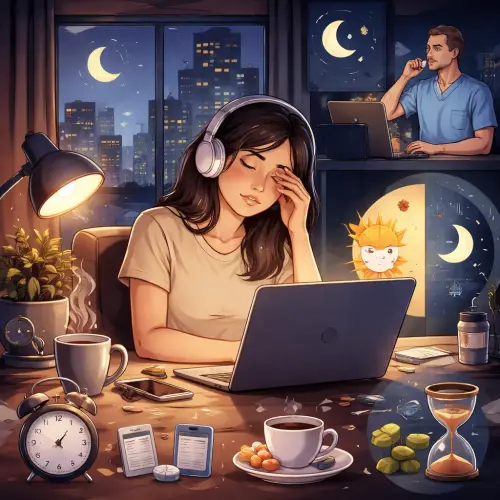
Why Remote Workers Are at Risk for shift work sleep disorder
The line between work and rest blurs easily when your office is your living room. Many remote workers juggle calls across time zones, start early or finish late, and struggle to set boundaries. This irregular schedule directly conflicts with your body’s internal clock, or circadian rhythm, which relies on consistent light-dark cues. When that rhythm is constantly disrupted, the result can be shift work sleep disorder (SWSD)—a condition characterized by chronic difficulty falling asleep, staying asleep, or feeling refreshed after sleep. For a related guide, see 15 Natural Ways to Sleep Better and Wake Up Refreshed.
Over time, remote workers sleep quality degrades, cognitive performance drops, and long-term health consequences such as cardiovascular issues, metabolic problems, and mood disorders may emerge. Recognizing the signs early is critical for maintaining both well-being and productivity.
11 Essential Facts About shift work sleep disorder Every Remote Worker Should Know
Fact 1: SWSD Is a Recognized Clinical Condition
Shift work sleep disorder is classified in the International Classification of Sleep Disorders and the DSM-5. It is not simply a case of “not sleeping well” but a legitimate circadian rhythm disorder caused by working when your body expects to rest. This diagnosis matters because it validates your experience and opens the door to medical support, including cognitive behavioral therapy for insomnia and light therapy protocols.
Fact 2: You Don’t Need Night Shifts to Develop SWSD
Working as a remote software developer in India while your team operates on US Eastern time, or taking calls at 5 a.m. to accommodate European clients, can trigger the same desynchronization as a graveyard shift. Any schedule that repeatedly forces you to be alert during your natural sleep phase can lead to shift work sleep disorder remote workers experience.
Fact 3: The Key Culprit Is You Are Chronically Misaligned
Your body uses light as its primary timekeeper. When you work at night, light exposure during sleep hours suppresses melatonin, making restorative sleep harder to achieve. Even a dim screen or bedside lamp can disrupt your internal timing. This misalignment is the core mechanism behind SWSD. For a related guide, see 12 Surprising Links Between ADHD and Sleep Problems: Essential Insights.
Fact 4: Fatigue Is Not Just “Being Tired”
SWSD fatigue is a persistent, debilitating exhaustion that doesn’t go away after a nap or a weekend off. It can impair concentration, reaction time, and decision-making as severely as alcohol intoxication. For remote workers who drive, operate machinery, or manage finances, this risk is especially alarming.
Fact 5: SWSD Increases Your Risk of Chronic Illness
Research links untreated SWSD to higher rates of heart disease, diabetes, obesity, depression, and certain cancers. The disruption of sleep hormones like melatonin and cortisol affects nearly every organ system. Addressing SWSD is a preventive health priority, not just a convenience issue. For a related guide, see 15 Warning Signs of Undiagnosed Sleep Apnea You Should Know.
Fact 6: Your Diet and Meal Timing Matter
Eating at irregular times or consuming heavy, sugary meals near the end of your shift signals your body to stay awake when it should be winding down. Aligning your largest meals with your active period and avoiding food close to bedtime can improve both sleep quality and alertness during work hours.
Fact 7: Light Exposure Is the Single Most Powerful Reset Tool
Bright light in the first few hours of your “day” (even if that day starts at midnight) helps shift your internal clock. Conversely, wearing blue-light-blocking glasses 2–3 hours before your planned sleep time can protect melatonin production. Using a light therapy lamp correctly is a first-line intervention for SWSD.
Fact 8: Napping Is a Valid Strategy, Not a Failure
Strategic naps—especially a short 20-minute nap before a shift or a 90-minute prophylactic nap during a long break—can boost vigilance without causing sleep inertia. The key is timing: naps taken too close to your main sleep block can backfire.
Fact 9: Consistency Beats Total Sleep Hours
A remote worker who sleeps 6 hours at the same time every day often feels more rested than someone who sleeps 8 hours but at wildly different times. Your brain craves predictability. Creating a consistent sleep-window—even on weekends—helps stabilize your circadian rhythm and reduces SWSD severity.
Fact 10: Your Workspace Design Influences Your Sleep
Working from your bedroom or using the same desk for focused tasks and late-night gaming blurs the mental boundary between work and rest. A dedicated, well-lit workspace away from your sleeping area reinforces the association that your bed is only for sleep and intimacy—a core principle of sleep hygiene.
Fact 11: SWSD Can Be Managed Without Medication
While some cases require short-term sleep aids, many remote workers respond well to non-pharmacologic approaches: timed light exposure, consistent meal scheduling, strategic napping, and cognitive behavioral therapy for insomnia (CBT-I). Working with a sleep specialist who understands non-traditional schedules is often the fastest path to improvement.
Practical Tips to Combat shift work sleep disorder for Remote Workers
After reviewing these sleep disorder facts, you may wonder what actionable steps you can take today. Here is a quick checklist:
- Create a wind-down routine: Start 30–60 minutes before your planned bedtime. Dim lights, put away screens, and do a relaxing activity like reading or stretching.
- Use blackout curtains or a sleep mask to simulate total darkness, especially if you sleep during daylight hours.
- Schedule your most demanding tasks during your peak alertness window. Track your energy levels for a week to discover that window.
- Avoid caffeine and nicotine at least 6 hours before sleep. Avoid large meals within 2 hours.
Useful Resources
For a deeper dive into evidence-based strategies, visit the Sleep Foundation’s comprehensive guide to shift work disorder. For employer-focused insights on supporting remote staff, see the CDC NIOSH guidelines on work schedules and health.
Frequently Asked Questions About shift work sleep disorder
What exactly is shift work sleep disorder ?
Shift work sleep disorder (SWSD) is a circadian rhythm disorder characterized by excessive sleepiness during work hours and insomnia during attempted sleep, caused by a work schedule that conflicts with your natural sleep-wake cycle.
Can a remote worker get shift work sleep disorder ?
Yes. Any schedule that consistently forces you to be awake when your body expects to sleep can trigger SWSD. Remote workers with irregular hours, early starts, late finishes, or cross-time-zone meetings are at risk.
What are the first signs of SWSD ?
Early signs include difficulty falling asleep after a shift, waking up feeling unrefreshed, excessive sleepiness during working hours, poor concentration, irritability, and reliance on caffeine to stay alert.
How is shift work sleep disorder diagnosed?
Diagnosis usually involves a clinical interview and a sleep diary kept for 1–2 weeks. In some cases, a sleep specialist may recommend actigraphy (a wrist device that tracks rest-activity patterns) to confirm the circadian disruption.
Can SWSD go away on its own?
If the disruptive schedule is temporary (e.g., a short-term project) and you return to a consistent routine, symptoms may resolve. However, for most remote workers with ongoing irregular hours, SWSD persists unless actively managed.
Is SWSD dangerous?
Yes, untreated SWSD increases the risk of accidents, errors, and long-term health problems including cardiovascular disease, diabetes, and depression. It also impairs cognitive performance, which can affect work quality and safety.
What is the best treatment for shift work sleep disorder ?
The most effective treatments are behavioral: strategic light exposure, consistent sleep-wake timing, controlled napping, and good sleep hygiene. Medications like melatonin or prescription sleep aids may help short-term but should be used under medical guidance.
Does melatonin help SWSD ?
Melatonin can be helpful when taken at the right time—usually a low dose (0.5–3 mg) 30–60 minutes before the desired sleep time. Timing is critical; taking it at the wrong time can worsen circadian misalignment.
How does light therapy work for SWSD ?
Bright light exposure (2,500–10,000 lux) during the first hours of your workday signals your brain to stay alert and shifts your internal clock. Use a light therapy lamp positioned at eye level, but avoid bright light near the end of your shift.
Can exercise help shift work sleep disorder ?
Moderate exercise can improve sleep quality and regulate circadian rhythms. However, vigorous exercise within 90 minutes of bedtime may delay sleep. Aim for exercise earlier in your active period.
Should I nap before a night shift?
A 20-minute nap taken just before the start of a shift can improve alertness. A longer nap (90 minutes) can provide deeper restorative sleep but may cause grogginess unless you allow time to wake fully before working.
How can I simulate a night shift environment at home?
Use blackout curtains or an eye mask to create total darkness during your sleep period, and wear blue-light-blocking glasses 2–3 hours before bed. Keep your workspace brightly lit during your work period to reinforce alertness.
Will caffeine affect my SWSD ?
Yes, caffeine can mask sleepiness temporarily but also worsens insomnia if consumed too close to bedtime. Limit caffeine to the first half of your shift and avoid it at least 6 hours before your planned sleep time.
Can I work from bed with SWSD ?
Working from bed weakens the mental association between your bed and sleep, making it harder to fall asleep later. It’s strongly recommended to maintain a separate workspace, even if it is just a desk in the corner of your room.
How long does it take to adjust to a new shift schedule?
Most people need about 7–10 days of consistent timing to shift their circadian rhythm by 8–12 hours. However, your body may never fully adapt if the schedule changes frequently. Consistency is more important than the exact hours.
Should I eat before sleeping after a shift?
A light, easily digestible snack before sleep is okay, but a heavy meal can interfere with sleep quality. Avoid high-fat, high-sugar, or high-protein meals within 1–2 hours of your bedtime.
Can shift work sleep disorder affect my mental health?
Yes. Chronic sleep disruption is strongly linked to anxiety, depression, and mood swings. Addressing SWSD often improves emotional regulation and overall mental well-being.
Is there a genetic component to SWSD ?
Research suggests that certain clock gene variants can make individuals more susceptible to circadian disruption. However, lifestyle and environmental factors are the primary triggers for most remote workers.
What should I tell my employer about SWSD ?
If your schedule is causing significant sleep disruption, you may request accommodations such as a more consistent schedule, protected time off between shifts, or a later start time. Many employers are receptive when you present medical documentation from a sleep specialist.
Can I recover fully from shift work sleep disorder ?
Yes. With consistent behavioral changes and, if needed, professional support, most people can significantly reduce or eliminate SWSD symptoms. The key is to prioritize sleep as a non-negotiable part of your health routine.