
screen time habits causing sleep disorders in children Key Takeaways
Nearly 1 in 3 children now experience sleep difficulties linked directly to digital overuse.
- Screen time within 90 minutes of bedtime is one of the most damaging screen time habits causing sleep disorders in children due to blue light suppression of melatonin.
- Passive consumption, such as endless video scrolling, can overstimulate the brain and delay sleep onset by 30 to 60 minutes.
- Replacing just two high-risk habits with calm, screen-free wind-downs can significantly improve total sleep time and sleep quality.
Understanding the Link Between Screen Habits and Sleep Disorders in Children
Sleep disorders in children are rising at an alarming rate. Pediatric sleep clinics report a 40 percent increase in referrals over the past five years, with excessive screen exposure cited as a primary contributor. The mechanisms are well understood: blue light from screens delays melatonin production, mentally stimulating content keeps the brain alert, and irregular timing disrupts the natural circadian rhythm. But the real culprit is often a combination of daily micro-habits that accumulate into a serious sleep debt. Recognizing these patterns early gives parents the power to reverse the trend before it affects school performance, mood, and immune health. For a related guide, see 10 Ways Blue Light Exposure Is Ruining Your Sleep (Avoid These).
12 Screen Time Habits That Are Risking Your Child’s Sleep
Each of the following habits has been identified by sleep researchers as a direct risk factor. We break down why each one matters and what you can do about it today.
1. Using Screens in the Last Hour Before Bed
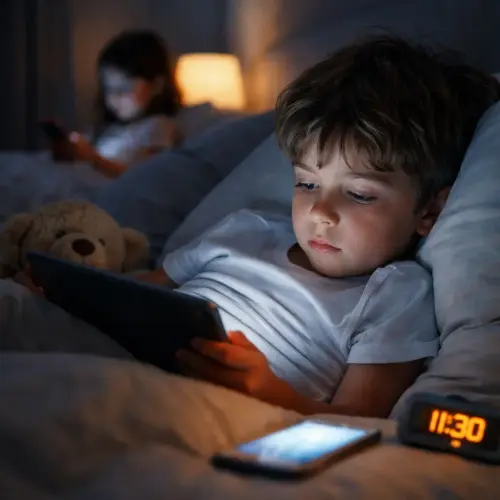
This is the most common and most damaging screen time habit causing sleep disorders in children. Blue light emitted by phones, tablets, and laptops suppresses melatonin for up to 90 minutes after exposure. Children who use devices in bed take an average of 30 minutes longer to fall asleep. For a related guide, see 10 Bedtime Habits That Improve Sleep Quality Naturally.
Impact on sleep: Delayed sleep onset, reduced deep sleep, and morning grogginess.
Actionable tip: Establish a “device curfew” 60 to 90 minutes before lights out. Replace the phone with a book, a puzzle, or quiet conversation.
2. Sleeping with a Smartphone in the Room
Even if the screen is off, the mere presence of a phone in the bedroom can disrupt sleep. Notifications, vibrations, and the temptation to check the device fragment sleep cycles. Research from the National Sleep Foundation found that children who keep a phone in their bedroom lose an average of 20 minutes of sleep per night.
Impact on sleep: Frequent night wakings, lighter sleep stages, and reduced total sleep time.
Actionable tip: Charge all devices in a centralized location outside the bedroom. Use a traditional alarm clock if needed.
3. Unsupervised Social Media Scrolling Before Bed
Social media platforms are designed for endless engagement, which activates the brain’s reward system. For children, this creates a state of heightened arousal just when the body should be winding down. Even 15 minutes of scrolling can delay sleep by 45 minutes.
Impact on sleep: Racing thoughts, anxiety, and prolonged sleep latency.
Actionable tip: Set a social media cut-off time 90 minutes before bedtime and use built-in screen time limits to enforce it.
4. Watching Fast-Paced or Violent Content at Night
Action movies, intense video games, or scary shows trigger the body’s stress response, releasing cortisol and adrenaline. This physiological state is the opposite of the relaxation needed for sleep. The effect can last for hours after the screen is turned off.
Impact on sleep: Nightmares, difficulty settling, and fragmented sleep.
Actionable tip: Choose only calm, slow-paced content in the evening—think nature documentaries or audiobooks with a gentle narrator.
5. Skipping Physical Activity in Favor of Screen Time
Children who accumulate more than three hours of daily recreational screen time often have lower physical activity levels. Exercise helps regulate the sleep-wake cycle by promoting deeper sleep and reducing stress. Without it, sleep disorders become more likely.
Impact on sleep: Lighter sleep, less time in restorative deep sleep, and increased nighttime restlessness.
Actionable tip: Encourage at least 60 minutes of outdoor play or structured activity each day. Replace one hour of screen time with active movement.
6. Keeping an Irregular Screen Schedule
Inconsistent screen exposure—long hours one day and almost none the next—confuses the body’s internal clock. Children’s circadian rhythms thrive on predictability. When screen time varies wildly, sleep onset and wake times shift, mimicking jet lag.
Impact on sleep: Difficulty falling asleep, early waking, and daytime fatigue.
Actionable tip: Create a consistent daily schedule for screen use, including a fixed end time each evening. Stick to it even on weekends.
7. Using Screens During Mealtime
When children watch videos or play games while eating, they eat more mindlessly and often consume more caffeine or sugar. Both substances are known to interfere with sleep. Additionally, the habit disconnects the brain from natural hunger and fullness cues.
Impact on sleep: Poor nutrition choices that lead to blood sugar spikes and crashes, disrupting sleep quality.
Actionable tip: Implement a “no screens at the table” rule. Use meal times for family conversation to build connection instead of digital distraction.
8. Playing High-Energy Video Games Late at Night
Video games are especially potent sleep disruptors because they combine bright screens, cognitive engagement, and emotional highs and lows. Multiplayer games that continue past bedtime create social pressure to stay on, further delaying sleep.
Impact on sleep: Sleep debt accumulates quickly, leading to poor attention and mood swings the next day.
Actionable tip: Set a hard stop for gaming at least two hours before bedtime. Use parental controls to lock the console or app after the cut-off time.
9. Binge-Watching Series in Bed
The “just one more episode” trap is real. Streaming platforms auto-play content, making it easy for children to lose track of time. Binge-watching also keeps the brain engaged in storylines, making it hard to disconnect mentally.
Impact on sleep: Shortened sleep duration, delayed bedtime, and increased sleep debt over the week.
Actionable tip: Limit bedtime viewing to a single episode of a calm show, and turn off auto-play in the platform’s settings.
10. Using Blue Light Filter Settings Incorrectly
Many parents rely on “night mode” or blue light filters as a quick fix. While these settings help reduce blue light, they are not a cure-all. If the screen brightness is still high, or if the child uses the device for more than 30 minutes after activating the filter, the sleep disruption persists.
Impact on sleep: False sense of security leads to continued late-night use without full protection.
Actionable tip: Combine night mode with a reduced brightness setting and limit total after-filter screen time to 20 minutes.
11. Using Screens as a Sleep Aid
Some parents let children fall asleep to videos or music on a tablet, assuming it helps. In reality, the brain stays partially alert, monitoring the audio and visual stimuli. This prevents the child from entering the deepest stages of sleep.
Impact on sleep: Lower sleep quality, more frequent awakenings, and dependence on the screen to fall back asleep.
Actionable tip: Replace the screen with white noise from a simple audio player or a soft lullaby. Gradually wean off any sleep association tied to a screen.
12. Lack of Parental Screen Time Boundaries
Children model what they see. When parents themselves use phones or laptops in bed, or have inconsistent rules, kids are less likely to follow digital boundaries. A household culture of constant screen presence normalizes the screen time habits causing sleep disorders in children.
Impact on sleep: Whole-family sleep patterns suffer, making individual changes harder to sustain.
Actionable tip: Lead by example. Create a family wind-down routine that includes all members—no devices after a certain hour, shared calm activities, and a consistent bedtime for everyone.
How to Reduce Screen Time Kids for Better Sleep
Understanding the problem is only half the battle. Implementing lasting change requires a family-wide commitment and practical strategies. Here are evidence-based approaches to reduce screen time kids and protect their sleep.
Step 1: Create a Family Media Plan
The American Academy of Pediatrics recommends a personalized family media plan that includes designated screen-free times (like during meals and one hour before bed) and screen-free zones (like bedrooms). Involve your child in creating the plan so they feel ownership.
Step 2: Replace Screen Time with Calming Activities
Replace the high-risk screen habits with activities that naturally promote sleep: reading physical books, puzzles, gentle stretching, coloring, or listening to audio stories. The goal is to lower arousal levels before bedtime.
Step 3: Use Technology to Enforce Boundaries
Parental control apps and device settings can automatically lock screens at the designated bedtime. Tools like Apple’s Screen Time, Google Family Link, or third-party apps like Qustodio help enforce limits without constant parental nagging.
Step 4: Prioritize Morning Light Exposure
Exposure to natural light in the morning helps reset the circadian rhythm. Encourage your child to spend 15–30 minutes outside after waking up. This strengthens the body’s natural sleep-wake cycle, making it easier to fall asleep at night.
Useful Resources
For a deeper dive into screen time habits causing sleep disorders in children, the following resources offer authoritative guidance:
- National Sleep Foundation – Children and Sleep – Comprehensive sleep guidelines for children of all ages.
- American Academy of Pediatrics – Media and Children – Evidence-based recommendations for screen use and children’s health.
Final Thoughts: Small Changes, Restored Sleep
The link between screen time habits causing sleep disorders in children is clear, but the solution does not require drastic measures. By identifying the specific patterns that affect your child and implementing consistent, family-wide boundaries, you can protect their sleep and overall well-being. Start with one or two of the habits listed here—the one that feels most manageable. Over time, small changes accumulate into a deeply restorative sleep routine that benefits every member of the family.
Frequently Asked Questions About screen time habits causing sleep disorders in children
What are the most common screen time habits causing sleep disorders in children?
The most common habits include using screens in the hour before bedtime, sleeping with a phone in the room, watching stimulating content late at night, and playing high-energy video games after 8 PM.
How long before bed should screens be turned off?
Most sleep experts recommend a screen-free period of at least 60 to 90 minutes before bedtime to allow melatonin levels to rise naturally.
Does blue light from screens really affect children’s sleep?
Yes, blue light suppresses melatonin production in the brain. Children’s eyes are more sensitive to blue light than adults’, so the effect is even more pronounced.
Can using a “night mode” filter solve the problem?
Night mode reduces blue light but does not eliminate the cognitive stimulation from screen content. It helps but should not be the only strategy.
What is the best screen time limit for children by age?
The American Academy of Pediatrics suggests no more than one hour per day for children ages 2 to 5, and consistent limits for older children that prioritize sleep, physical activity, and schoolwork.
Should I allow my child to fall asleep with a video playing?
No, falling asleep with a screen prevents the brain from reaching deep sleep stages. It is better to use a simple audio player or white noise machine instead.
How do I enforce screen time rules without a power struggle?
Use a family media plan created together, set automatic device shutdown times via parental controls, and offer appealing screen-free alternatives like board games or nature walks.
What are the signs that screen use is causing a sleep disorder?
Signs include difficulty falling asleep on most nights, daytime sleepiness, irritability, trouble waking up, and a consistent pattern of late screen use before bed.
Can weekends with more screen time undo the week’s progress?
Yes, irregular screen schedules on weekends can shift the circadian rhythm, leading to “social jet lag.” Consistency across all days is important.
How does screen time affect teenagers differently?
Teenagers naturally have a delayed sleep phase, and late-night screen time exacerbates this. They are also more likely to engage with social media and gaming, which are highly stimulating.
Is reading on a tablet at night better than watching videos?
Reading on a backlit tablet still exposes the eyes to blue light. A physical book or an e-reader with no backlight is a better choice.
What role does physical activity play in preventing screen-related sleep issues?
Regular physical activity helps regulate the sleep-wake cycle and reduces the stress that often leads to bedtime resistance. It also naturally limits the time available for screens.
How quickly can sleep improve after changing screen habits?
Many parents report noticeable improvements within 3 to 7 days of consistent screen reduction. Full restoration of healthy sleep patterns can take two to three weeks.
Should I remove all screens from my child’s bedroom?
Yes, all screens including phones, tablets, laptops, and gaming devices should be kept outside the bedroom to create a sleep sanctuary.
What about educational screen time? Is it equally harmful?
Educational content is less stimulating than games or social media, but the blue light effect remains. It is still best to schedule educational screen use earlier in the day.
Can screen time during the day affect sleep at night?
Yes, excessive daytime screen use reduces physical activity and exposure to natural light, both of which are critical for healthy sleep. However, the effect is strongest in the evening.
Do screen time habits causing sleep disorders in children also affect adults?
Adults experience similar effects, but children are more vulnerable because their eyes absorb more blue light and their brains are still developing.
How do I get my child to cooperate with screen-free bedtime routines?
Start the transition gently—reduce screen time by 15 minutes each night. Offer engaging alternatives and make the wind-down routine something to look forward to, like a special story or a warm bath.
What are some good screen-free bedtime activities for children?
Calming activities include reading a physical book, telling stories, drawing, listening to audiobooks, gentle yoga, puzzles, or simply talking about the day.
Where can I find help if my child already has a diagnosed sleep disorder?
Consult your pediatrician or a board-certified sleep specialist. They can provide a comprehensive evaluation and a tailored treatment plan that includes screen management.