social media addiction sleep quality Key Takeaways
Your nightly scroll through feeds, notifications, and short videos may be quietly sabotaging your rest.
- Social media addiction sleep quality is disrupted through blue light, cognitive arousal, and displaced bedtime.
- Each of the 14 points explains a distinct pathway — from dopamine hijacking to anxiety loops — that harms sleep architecture.
- Practical, actionable tips at the end help you break the cycle without giving up social media entirely.
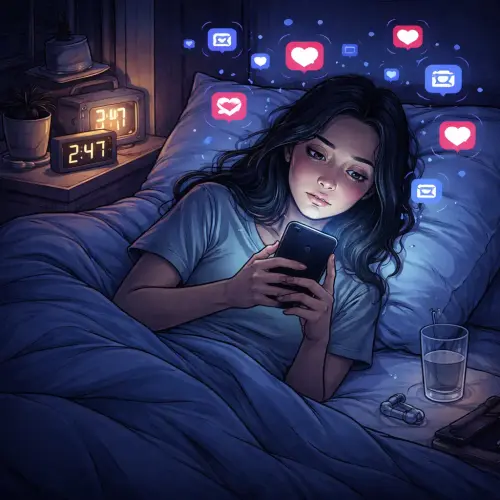
The Rising Toll of Social Media Addiction Sleep Quality
More than 4.9 billion people use social media worldwide, and the average adult spends nearly 2.5 hours per day on these platforms. For many, the last activity before lights out is a quick feed check — but that habit comes with a heavy cost. A growing body of evidence confirms that social media and sleep quality are inversely related: the more addicted you are, the worse you sleep. Understanding exactly how the damage happens is the first step toward reversing it. For a related guide, see 15 Sleepmaxxing Trends Everyone Is Following for Better Sleep.
14 Ways Social Media Addiction Destroys Your Sleep
1. Blue Light Suppresses Melatonin Production
Smartphone and tablet screens emit high levels of blue-wavelength light. When you scroll before bed, your brain interprets this light as daytime, reducing the secretion of melatonin — the hormone that signals it’s time to sleep. Even 30 minutes of screen time can delay melatonin release by up to 90 minutes, making it harder to fall asleep and stay asleep.
2. Dopamine Loops Keep Your Brain Awake
Every like, share, or new piece of content triggers a small dopamine release in your brain’s reward center. This creates a craving cycle: you keep scrolling because each post offers a tiny hit of pleasure. That same dopamine surge is a stimulant that directly counteracts the calm needed for sleep initiation. For a related guide, see 12 Risky Ways Energy Drinks Disrupt Teen Sleep Patterns.
3. Fear of Missing Out Fuels Bedtime Procrastination
The fear of missing out (FOMO) is a powerful driver of effects of social media on sleep. You tell yourself you’ll stop after one more video, but the anxiety of being out of the loop keeps you tethered to the screen. This cognitive conflict — knowing you should sleep but wanting to stay connected — delays bedtime by 30 to 60 minutes on average.
4. Passive Scrolling Increases Cognitive Arousal
Even if the content is boring, the act of scrolling keeps your brain in a state of low-level alertness. Your visual cortex, decision-making areas, and working memory all remain active. This mental arousal makes it difficult to transition into the parasympathetic nervous system state required for restful sleep.
5. Emotional Triggers Elevate Cortisol Levels
Social media feeds are emotional minefields — an angry post, an argument in comments, or an envy-inducing vacation photo can spike cortisol, the primary stress hormone. Elevated cortisol before bed disrupts the natural decline that should occur as you approach sleep, leading to lighter, more fragmented rest.
6. Disrupted Circadian Rhythms
Consistent late-night screen use trains your body’s internal clock to expect light at a time when darkness should prevail. Over weeks and months, this shifts your circadian rhythm later, making it progressively harder to fall asleep at a reasonable hour. This pattern is especially pronounced among teens and young adults, who already have a natural tendency toward delayed sleep phases.
7. Notifications Fragment Sleep Throughout the Night
Even if you manage to fall asleep, smartphones left on the nightstand often buzz or light up with notifications. Each interruption briefly rouses you from deep sleep, even if you don’t fully wake. Over a full night, these micro-arousals accumulate, reducing total slow-wave and REM sleep — the most restorative stages.
8. Social Comparison Fuels Rumination
Seeing curated highlight reels of others’ lives can spark envy and self-doubt. You lie in bed replaying your own perceived shortcomings, a mental loop scientists call rumination. This obsessive thinking is a core mechanism linking social media addiction sleep quality deterioration because it directly activates the brain’s default mode network, which stays active when you should be sleeping.
9. Displacement of Wind-Down Activities
Every minute spent on TikTok or Instagram is a minute not spent doing sleep-promoting activities like reading a physical book, taking a warm bath, or practicing meditation. The displacement effect is simple: social media crowds out the very rituals that signal your body it’s time to rest, leaving you with no transition period between wakefulness and sleep.
10. Increased Daytime Sleepiness Creates a Vicious Cycle
Poor sleep from nighttime scrolling leads to daytime fatigue. To compensate, you might reach for caffeine or nap, which further disrupts the sleep drive. Come evening, you feel tired but wired — a state that paradoxically makes you reach for your phone again, perpetuating the cycle of screen time and insomnia.
11. Blue Light Suppresses Alertness Rhythm Imbalance
Blue light exposure in the evening doesn’t just delay melatonin; it also shifts the timing of your core body temperature minimum and the cortisol awakening response. This misalignment between your internal clock and your environment is a hallmark of social jetlag, a condition linked to poorer sleep efficiency and increased risk of mood disorders.
12. Algorithmic Content Keeps You Hooked Past Bedtime
Platforms like TikTok, Instagram Reels, and YouTube Shorts use algorithms designed to maximize engagement. They serve you an endless stream of high-interest content that is intentionally unpredictable — the same variable reward schedule that makes slot machines addictive. This design makes it extremely difficult to voluntarily stop scrolling before you intend to, directly stealing sleep time.
13. Social Media Induces Anxiety and Depression
Long-term heavy social media use is associated with increased rates of anxiety and depression. Both conditions are well-documented disruptors of sleep architecture: anxiety typically delays sleep onset, while depression can cause fragmented sleep and early morning awakening. Treating social media addiction sleep quality issues often requires addressing the underlying mood disorder.
14. Blue Light Exposure Impairs REM Sleep Quality
Even after you finally fall asleep, blue light exposure earlier in the evening can reduce the proportion of REM sleep — the stage associated with emotional regulation, memory consolidation, and dreaming. Less REM sleep means you wake up feeling less refreshed and more emotionally reactive the next day, further fueling the urge to seek comfort in social media.
How to Break the Cycle: Actionable Tips for Better Sleep
Reversing the damage doesn’t require quitting social media entirely. Start with these evidence-based strategies:
- Set a digital curfew: Put your phone away 60 minutes before bedtime.
- Enable blue light filters: Use Night Shift (iOS) or Night Light (Android) after sunset, but note these are not as effective as reducing screen time.
- Keep the phone out of the bedroom: Charge it in another room so notifications can’t disturb you.
- Replace scrolling with a wind-down ritual: Try a warm bath, light stretching, or reading a physical book.
- Use app timers: Set a daily limit on social media apps, especially in the evening.
- Track your sleep: Use a sleep diary or wearable to see how screen time correlates with your sleep quality.
Consistency is key. Within one to two weeks of reducing evening screen exposure, most people report falling asleep faster, staying asleep longer, and waking up more refreshed.
Useful Resources
To learn more about the mechanisms linking screens and sleep, visit the following authoritative sources:
- Sleep Foundation: Blue Light and Sleep — A detailed explanation of how blue light from electronics affects melatonin and circadian rhythms.
- National Institute of Mental Health: Social Media and Mental Health — Research on the connection between social media use, anxiety, depression, and sleep disturbance.
Frequently Asked Questions About social media addiction sleep quality
What is the most direct way social media affects sleep?
The most direct mechanism is blue light from screens suppressing melatonin production, which delays sleep onset and reduces sleep quality. For a related guide, see 10 Ways Blue Light Exposure Is Ruining Your Sleep (Avoid These).
How long before bed should I stop using social media?
Experts recommend at least 60 minutes of screen-free time before bed to allow melatonin levels to rise naturally.
Does social media addiction cause insomnia?
Yes, social media addiction sleep quality studies show a strong correlation between intense use and insomnia symptoms, particularly difficulty falling asleep.
Can using Night Mode on my phone solve the problem?
Night Mode reduces blue light but does not eliminate the cognitive arousal from content. It helps but is not a complete solution.
What is the relationship between social media and REM sleep?
Evening social media use can reduce the total amount and quality of REM sleep, which is essential for emotional processing and memory consolidation.
Why do I feel more tired after scrolling before bed, even if I slept 8 hours?
Light sleep and frequent micro-arousals from notifications or cognitive activity mean your sleep is less restorative, leaving you fatigued.
Does the type of content matter for sleep disruption?
Yes. Emotionally charged content (arguments, envy-provoking posts) elevates cortisol more than neutral content, worsening sleep.
Can social media use before bed affect children or teens more?
Yes. Young people are more sensitive to blue light and more susceptible to FOMO and emotional triggers, making social media and sleep quality a particular concern during adolescence.
How quickly can reducing social media improve sleep?
Many people notice improvements in falling asleep and sleep quality within a few days to two weeks of establishing a digital curfew.
Is it the light or the content that harms sleep more?
Both play significant roles. Blue light delays melatonin, while content triggers cognitive and emotional arousal — together they compound the damage.
What is social jetlag?
Social jetlag refers to the mismatch between your internal clock and your social schedule, often worsened by late-night screen use that shifts circadian timing.
Are some social media platforms worse for sleep than others?
Platforms with infinite scroll and algorithmic feeds, such as TikTok and Instagram Reels, tend to keep users engaged longer, potentially causing more sleep disruption.
Can social media addiction cause sleep apnea?
There is no direct evidence linking social media to sleep apnea, but poor sleep due to addiction can worsen existing respiratory or sleep disorders.
Does deleting social media apps improve sleep?
Yes. Even a temporary break from social media often results in earlier bedtimes, longer sleep duration, and better perceived sleep quality.
How do notifications affect sleep when I don’t check them?
A light flash or buzz can still cause a partial arousal from deep sleep, subtly reducing sleep quality even if you remain asleep.
Is it better to sleep next to my phone for the alarm?
No. Use a dedicated alarm clock instead. Keeping the phone out of the bedroom is one of the most effective steps to improve social media addiction sleep quality.
Can social media use cause nightmares?
Disturbing content watched before bed can trigger nightmares or vivid, anxious dreams in sensitive individuals.
What role does dopamine play in bedtime procrastination?
Dopamine from social media creates a reward loop that makes it difficult to stop scrolling, directly delaying bedtime.
How does FOMO specifically affect sleep?
FOMO produces anxiety about missing social interactions, which keeps the brain alert and prevents the relaxation needed for sleep onset.
What is the single best tip to reduce social media’s effect on sleep?
Charge your phone outside the bedroom and set a consistent 60-minute digital curfew before lights out.