
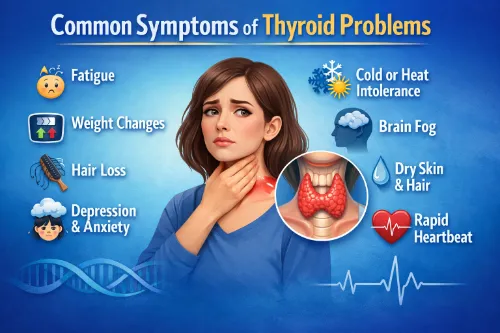
Thyroid problems can cause a wide range of symptoms because thyroid hormones influence metabolism, energy, mood, heart function, and many other body systems. Symptoms often fall into two opposite patterns: hypothyroidism (underactive thyroid, slowed metabolism) and hyperthyroidism (overactive thyroid, sped‑up metabolism).
For a full overview of how thyroid conditions fit together, see Thyroid Problems Explained: Symptoms, Causes, Diagnosis, Treatment & Living Well and Types of Thyroid Problems, and patient resources from Cleveland Clinic and the American Association of Clinical Endocrinology (AACE). You can explore this topic in more depth at Common Symptoms of Thyroid Problems.
Symptoms of Thyroid Problems
Thyroid problems often cause vague, overlapping symptoms that can be mistaken for stress, aging, or lifestyle changes. Common signs include unexplained weight gain or loss, feeling unusually tired, or having trouble tolerating heat or cold.
Many people also notice changes in mood (such as anxiety, irritability, or low mood), dry or thinning hair and skin, and changes in heart rate (either faster or slower than usual). Women may experience irregular menstrual periods or fertility difficulties, while others develop muscle weakness, constipation or diarrhea, and a puffy face or neck swelling (goiter).
Because these symptoms are nonspecific, persistent changes—especially when several appear together—should prompt a visit to a healthcare provider for thyroid blood tests.
General Signs Something May Be Wrong with Your Thyroid
- Persistent fatigue or low energy that doesn’t improve with rest or caffeine.
- Unexplained weight changes: weight gain with an underactive thyroid, or weight loss with an overactive thyroid, even when diet and activity haven’t changed.
- Feeling “slowed down” (moving and thinking more slowly) with hypothyroidism, or feeling “revved up” or restless with hyperthyroidism.
- Sleep problems: trouble staying asleep, insomnia, or feeling unrefreshed on waking.
Temperature, skin, hair, and nails
- Trouble tolerating cold (wanting more layers than others, cold hands and feet) with an underactive thyroid.
- Trouble tolerating heat, sweating more than usual, or feeling flushed with an overactive thyroid.
- Dry, rough, or itchy skin; dry, thinning hair; or increased hair shedding, including from the outer part of the eyebrows, more common in hypothyroidism.
- Brittle nails that split or peel easily, or loose nails and increased sweating with hyperthyroidism.
Mood, brain, and nerves
- Mood changes: increased anxiety, irritability, nervousness, or feeling “on edge” with hyperthyroidism.
- Low mood or depression, apathy, or loss of interest with hypothyroidism.
- Brain fog: trouble concentrating, memory lapses, feeling mentally “sluggish.”
- Tremor or shakiness in the hands, inner shakiness, or feeling jittery (more common in hyperthyroidism).
Heart, circulation, and breathing
- Noticeable changes in heart rate:
- Slower than usual heart rate with hypothyroidism (bradycardia).
- Faster than usual heart rate, palpitations, or pounding heartbeat with hyperthyroidism.
- Shortness of breath on exertion or feeling more easily winded than before.
- High blood pressure or new/worsening arrhythmias in some people with thyroid disease.
Digestion and metabolism
- Constipation that is persistent or worse than your usual pattern (common in hypothyroidism).
- More frequent bowel movements or diarrhea (common in hyperthyroidism).
- Bloating, nausea, or changes in appetite (increased appetite often with hyperthyroidism, reduced appetite sometimes with severe hypothyroidism).
Muscles, joints, and general aches
- Muscle weakness, especially in the thighs, hips, shoulders, or arms; difficulty climbing stairs, rising from a chair, or lifting objects.
- Muscle cramps, aches, or stiffness, and joint pain or swelling, more often in hypothyroidism.
- Feeling generally achy or “flu‑ish” without a clear cause.
Reproductive health and hormones
- Menstrual changes:
- Heavier, more painful, or more frequent periods with hypothyroidism.
- Lighter, shorter, or less frequent periods with hyperthyroidism.
- Fertility issues or difficulty conceiving.
- Low libido or sexual dysfunction in any sex.
- Worsening of premenstrual symptoms or perimenopausal symptoms, sometimes confusing the picture.
Neck, eyes, and physical appearance
- Swelling in the front of the neck (goiter), a feeling of fullness, tightness, or a visible lump where the thyroid sits.
- Hoarseness or voice changes, or a sense of choking when lying down if the thyroid is enlarged.
- Eye symptoms (more typical with Graves’ disease): redness, dryness, gritty feeling, bulging eyes, double vision, or eye pain.
- Puffy face, especially around the eyes, more common in hypothyroidism.
When to test and what to ask for
Because these symptoms overlap with many other conditions, labs are the only reliable way to confirm a thyroid problem.
Commonly ordered tests include:
- TSH (thyroid‑stimulating hormone): the most sensitive screening test for most people.
- Free T4: helps distinguish hypo‑ vs hyperthyroidism and assess severity.
- Sometimes free T3 and thyroid antibodies (like TPO and TRAb) to evaluate autoimmune conditions such as Hashimoto’s or Graves’ disease.
Because these symptoms are nonspecific, blood tests (TSH, free T4, sometimes T3 and antibodies) are essential to confirm a thyroid problem. You can learn more about testing in How Thyroid Problems Are Diagnosed and in basic summaries from AACE’s Diagnosis page.
Symptoms of Hypothyroidism (Underactive Thyroid)
Hypothyroidism slows down many body processes. Symptoms often develop gradually and may be subtle at first.
Typical symptoms include (explained in more detail in Symptoms of Hypothyroidism and Hypothyroidism (Underactive Thyroid), and echoed by NIDDK and Mayo Clinic):
- Fatigue and low energy – feeling tired most of the time, even after rest.
- Weight gain or difficulty losing weight – often modest but persistent.
- Increased sensitivity to cold – feeling cold when others are comfortable.
- Dry, rough skin and dry, thinning hair.
- Constipation and slowed digestion.
- Slow heart rate and feeling sluggish.
- Muscle weakness, aches, or joint stiffness.
- Low mood, depression, slowed thinking, or “brain fog.”
Women may also notice heavier or irregular periods and fertility problems, while men may experience low libido or erectile dysfunction. For more detail, see our full article on Hypothyroidism (Underactive Thyroid) and the NIDDK hypothyroidism page.
Symptoms of Hyperthyroidism (Overactive Thyroid)
Hyperthyroidism speeds up many body processes. Symptoms can be quite noticeable but sometimes appear gradually.
Typical features include (covered in Symptoms of Hyperthyroidism and Hyperthyroidism (Overactive Thyroid), and described by NHS and Mayo Clinic):
- Nervousness, anxiety, and irritability.
- Fast or irregular heartbeat (palpitations).
- Unintentional weight loss, often despite a normal or increased appetite.
- Heat intolerance, sweating, and warm, moist skin.
- Tremors or shaky hands.
- Difficulty sleeping (insomnia) and restlessness.
- Muscle weakness, especially in upper arms and thighs.
- More frequent bowel movements or diarrhea.
Women may notice lighter or less frequent periods, and some people with Graves’ disease develop eye symptoms like redness, dryness, or bulging eyes. You can read more in Hyperthyroidism (Overactive Thyroid) and patient pages from Cleveland Clinic and NIDDK.
Symptoms in Women
Thyroid disorders are more common in women and can strongly affect menstrual and reproductive health. We cover this in depth in Thyroid Symptoms in Women.
Possible symptoms include (similar to those listed in women’s health fact sheets and AACE materials):
- Irregular, heavier, or lighter periods.
- Fertility problems or repeated miscarriages.
- Worsening or new symptoms during pregnancy or after childbirth (postpartum thyroiditis).
- Hair thinning, weight changes, and mood swings.
Because these symptoms overlap with many gynecologic and hormonal conditions, thyroid testing is often part of the work‑up for menstrual or fertility issues. For causes, see What Causes Thyroid Disorders?.
Symptoms in Men
Thyroid disease in men may be overlooked because symptoms can be attributed to stress, aging, or other health problems. We discuss this further in Thyroid Symptoms in Men.
Men may notice:
- Low libido and sexual dysfunction (for example, erectile difficulties).
- Unexplained weight change and fatigue.
- Mood changes, such as irritability, anxiety, or depression.
- Hair thinning, temperature intolerance, and changes in heart rate (slow in hypothyroidism, fast in hyperthyroidism).
Persisting symptoms should prompt a discussion with a healthcare provider and consideration of thyroid testing.
When to See a Doctor
If you’re unsure whether your symptoms could be thyroid‑related, our guide When Should You See a Doctor for Thyroid Problems? can help, as can checklists from AACE and Mayo Clinic.
Speak with a healthcare professional if you notice:
- Ongoing fatigue, low energy, or “brain fog” lasting more than a few weeks.
- Unexplained weight gain or loss.
- New or worsening anxiety, irritability, or low mood.
- Noticeable changes in heart rate (too slow, too fast, or irregular).
- Feeling unusually cold or heat‑intolerant compared with others.
- Changes in periods, fertility, or sexual function.
- A lump or swelling in the front of your neck (possible nodule or goiter).
You can read more about nodules and enlargement in Thyroid Nodules & Goiter and in patient pages from the American Thyroid Association and Mayo Clinic. Early evaluation and simple blood tests can confirm or rule out a thyroid problem and help guide treatment.
How Symptoms Relate to Tests, Causes, and Treatment
If your doctor suspects a thyroid condition based on symptoms, they will typically:
- Order blood tests described in Blood Tests for Thyroid Problems and How Thyroid Problems Are Diagnosed, similar to the testing pathways highlighted by AACE and Mayo Clinic.
- Consider causes outlined in What Causes Thyroid Disorders? – such as autoimmune disease, iodine imbalance, pregnancy, medications, or radiation.
- Discuss management options from Treatment Options for Thyroid Disorders, including Medication, Radioactive Iodine, Surgery, and Long‑Term Monitoring, which align with treatment overviews from Mayo Clinic and Cleveland Clinic.
Diet and daily habits can support symptom control; see Diet & Lifestyle and Thyroid Healthfor practical tips on iodine, selenium, exercise, sleep, stress, and medication timing, and compare with public health advice from Healthdirect. Day‑to‑day coping is covered further in Living with a Thyroid Condition.
Pro Tip for Daily Living
- If you suspect thyroid issues, write down your main symptoms, when they started, and what makes them better or worse; bring this list to your appointment to make the most of your time with your provider.
- Track weight, heart rate, sleep, and mood for a few weeks using a notebook or phone app – patterns over time can help your doctor decide which tests to order and how urgent they are.
- Remember that many thyroid symptoms overlap with other conditions; avoid self‑diagnosing based on a single symptom and instead use symptoms as a prompt to seek proper evaluation. AACE’s How to Check Your Thyroid offers a simple neck‑check you can perform at home, but this never replaces professional assessment.
Frequently Asked Questions (FAQ)
1. What are the most common early signs of a thyroid problem?
Early signs can include unexplained tiredness, weight change (gain or loss), feeling unusually cold or hot, changes in heart rate, and mood changes such as anxiety or low mood. Because these symptoms are nonspecific, a simple blood test (TSH and thyroid hormones) is needed to confirm if the thyroid is involved.
2. How do I know if my symptoms are from hypothyroidism or hyperthyroidism?
Hypothyroidism usually causes fatigue, weight gain, feeling cold, dry skin, constipation, and slow thinking, while hyperthyroidism tends to cause anxiety, weight loss, feeling hot, palpitations, tremors, and trouble sleeping. Our detailed pages on Hypothyroidism and Hyperthyroidism explain these patterns; your doctor will also interpret blood tests to distinguish between them, as described by AACE and Mayo Clinic.
3. Can thyroid problems cause anxiety or depression?
Yes. Both underactive and overactive thyroid can affect mood: hypothyroidism is often linked with low mood and “brain fog,” while hyperthyroidism commonly causes anxiety, irritability, and nervousness. Mood changes that persist should be evaluated, especially if they come with other physical symptoms like weight or energy changes.
4. When should I get my thyroid checked?
You should ask about thyroid testing if you have several persistent symptoms (for example, fatigue plus weight change plus temperature intolerance) for more than a few weeks, or if you have a neck lump, irregular heartbeat, or strong family history of thyroid disease. Our article When Should You See a Doctor for Thyroid Problems? offers more guidance, and AACE’s Patient Journey outlines when to seek screening and diagnosis. Women with menstrual or fertility problems, or symptoms during or after pregnancy, are also often advised to have thyroid tests.
5. Can thyroid symptoms come and go?
Yes. Some conditions, like thyroiditis or postpartum thyroiditis, can cause phases of hyperthyroidism followed by hypothyroidism and then recovery. Even in long‑term thyroid disease, symptoms may fluctuate if medication doses, other illnesses, or lifestyle factors change.
6. Do older adults have the same thyroid symptoms as younger people?
Not always. Older adults may have fewer classic signs and instead present mainly with fatigue, weight changes, or heart rhythm problems, which can be mistaken for aging or heart disease alone. This is why a low threshold for thyroid testing is recommended in older adults with unexplained symptoms, as emphasised by the American Geriatrics Society and Mayo Clinic.
7. Are there symptoms that mean I should seek urgent care?
Yes. Seek urgent medical attention if you have severe shortness of breath, chest pain, very rapid or irregular heartbeat, sudden confusion, or a rapidly enlarging, painful neck swelling. These could signal serious complications such as thyroid storm, severe hypothyroidism, or a compressive goiter and need immediate evaluation.
Disclaimer: This information is for educational purposes only and does not replace medical advice, diagnosis, or treatment from your own healthcare provider.
Written by: Eden Grace Ramos-Arsenio, RN
Sources: Cleveland Clinic; Mayo Clinic; NIDDK/NIH; Healthdirect Australia; American Association of Clinical Endocrinology (AACE); American Thyroid Association (ATA); NHS; American Geriatrics Society; peer‑reviewed medical and nursing journals.