
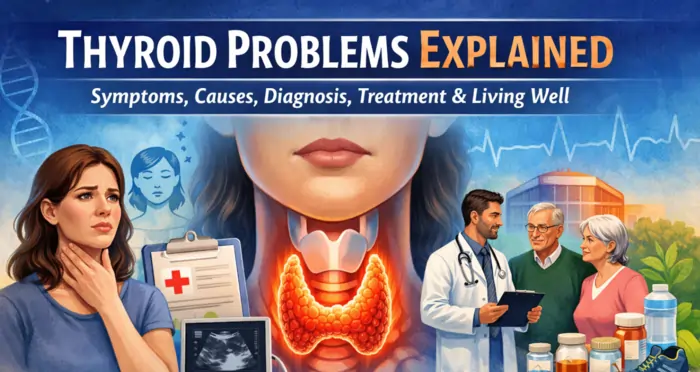
Thyroid problems are common, often lifelong conditions that affect how your body uses energy, but with the right diagnosis and management most people can live full, active lives.
For a structured overview, you can also review our main guide, Thyroid Problems Explained: Symptoms, Causes, Diagnosis, Treatment & Living Well and patient information from the Cleveland Clinic.
What Is the Thyroid and What Does It Do?
The thyroid is a small, butterfly-shaped gland located at the front of your neck, just below the Adam’s apple, wrapped around your windpipe (trachea). It produces two main hormones, triiodothyronine (T3) and thyroxine (T4), which circulate in your blood and help regulate how fast your body’s cells work.
Thyroid hormones play a key role in your metabolism, or how your body turns food into energy. They influence:
- Heart rate and blood circulation (too much hormone can cause a fast heartbeat, too little can slow it).
- Energy levels and fatigue.
- Body weight and how easily you gain or lose weight.
- Mood and mental sharpness, including anxiety or depression.
- Body temperature, such as feeling unusually cold or hot.
If your doctor suspects a thyroid problem, they may order thyroid blood tests and sometimes imaging; you can learn more in our article on How Thyroid Problems Are Diagnosed and in basic overviews from the CDC thyroid disease guide.
Types of Thyroid Problems
You can explore each condition in more detail in our dedicated guide, Types of Thyroid Problems, and in patient information from the American Thyroid Association (ATA).
Hypothyroidism (Underactive Thyroid)
Hypothyroidism means the thyroid is not making enough thyroid hormone for the body’s needs. When hormone levels are low, many body functions slow down, which can affect your heart, digestion, brain, skin, and muscles. A deeper overview of this condition is available in Hypothyroidism (Underactive Thyroid) and in the NIDDK (NIH) hypothyroidism guide.
Common causes include:
- Hashimoto’s thyroiditis – an autoimmune disease where the immune system slowly damages the thyroid.
- Thyroid surgery or radioactive iodine – treatment for thyroid nodules, goiter, or hyperthyroidism can reduce or remove thyroid tissue, leading to low hormone levels.
- Iodine deficiency – in some parts of the world, not getting enough iodine in the diet can cause an underactive thyroid and goiter; this is highlighted in public health resources like the Healthdirect thyroid problems page and the CDC thyroid disease overview.
Hyperthyroidism (Overactive Thyroid)
Hyperthyroidism happens when the thyroid makes too much hormone, causing body processes to speed up. This can lead to symptoms like anxiety, rapid heartbeat, heat intolerance, and weight loss. You can read more in Hyperthyroidism (Overactive Thyroid)and in the Healthdirect hyperthyroidism guide.
Key causes include:
- Graves’ disease – an autoimmune condition that stimulates the thyroid to produce excess hormone.
- Toxic nodules or toxic multinodular goiter – overactive lumps in the thyroid that produce thyroid hormone without normal control.
Thyroid Nodules & Goiter
Thyroid nodules are lumps or growths in the thyroid gland, while a goiter is an overall enlargement of the thyroid. Many nodules are benign and harmless, especially when small and not changing. You can find more details in Thyroid Nodules & Goiter and in CDC and Cleveland Clinic resources.
However, nodules or goiter need medical evaluation if they:
- Are large or growing.
- Cause swallowing or breathing symptoms.
- Are associated with abnormal thyroid function tests.
Thyroid Cancer (Brief Overview)
Thyroid cancer is a malignant growth that starts in thyroid cells, but most types are relatively rare and often highly treatable, especially when found early. Many people with thyroid cancer can be successfully treated and continue normal activities with ongoing follow-up care.
For a gentle, reassuring overview, see Thyroid Cancer and thyroid cancer information from the American Thyroid Association.
Common Symptoms of Thyroid Problems
For a symptom-focused overview, you can also visit Common Symptoms of Thyroid Problems as well as symptom lists in the Healthdirect thyroid problems page.
Symptoms of Hypothyroidism
Because hypothyroidism slows the body’s processes, common symptoms include (explained in more detail in Symptoms of Hypothyroidism):
- Fatigue or low energy, often persistent.
- Unexplained weight gain or difficulty losing weight.
- Cold intolerance, such as feeling cold when others are comfortable.
- Dry skin and coarse, dry hair.
- Hair thinning or hair loss.
- Low mood or depression and difficulty concentrating.
Symptoms of Hyperthyroidism
With hyperthyroidism, everything tends to speed up, which may lead to the symptoms described in Symptoms of Hyperthyroidism:
- Anxiety, nervousness, and irritability.
- Rapid heartbeat or palpitations.
- Unintentional weight loss, sometimes despite a good appetite.
- Sweating, heat intolerance, and warm, moist skin.
- Tremors or shaky hands.
- Difficulty sleeping or insomnia and feeling restless.
Symptoms in Women
Women are more likely to develop thyroid disease, and symptoms can overlap with menstrual and reproductive health. Our article on Thyroid Symptoms in Women covers:
- Irregular or heavier/lighter periods.
- Fertility issues, including trouble getting pregnant or recurrent pregnancy loss.
- Postpartum thyroid changes, such as postpartum thyroiditis.
Symptoms in Men
Thyroid disorders in men can be missed because symptoms may be attributed to stress or aging. In Thyroid Symptoms in Men, we discuss:
- Low libido or reduced interest in sex.
- Persistent fatigue or low energy and reduced exercise tolerance.
- Mood shifts, such as irritability, anxiety, or depression.
What Causes Thyroid Disorders?
Thyroid problems usually develop from a combination of factors rather than a single cause. You can explore these in more depth in What Causes Thyroid Disorders?.
Common contributors include:
- Autoimmune diseases – conditions like Hashimoto’s thyroiditis and Graves’ disease where the immune system mistakenly attacks or overstimulates the thyroid.
- Genetics – thyroid disease often runs in families, suggesting a genetic predisposition.
- Pregnancy and postpartum changes – hormonal shifts can trigger or unmask thyroid disorders, particularly in women with underlying risk.
- Iodine imbalance – too little iodine can cause goiter and hypothyroidism, while excessive iodine can also disturb thyroid function; these patterns are discussed in public health summaries such as Healthdirect and the CDC thyroid disease overview.
- Medications – certain drugs, such as amiodarone, lithium, and some immune therapies, can affect thyroid hormone production.
- Radiation exposure – radiation therapy to the neck or prior radiation exposure can increase the risk of thyroid disease and thyroid cancer.
How Thyroid Problems Are Diagnosed
A step-by-step overview is available in How Thyroid Problems Are Diagnosed and in clinical summaries from the CDC and Cleveland Clinic.
Blood Tests
Blood tests are the main way to check thyroid function. Our article on Thyroid Blood Testsexplains:
- TSH (thyroid-stimulating hormone) – usually the first test.
- Free T4 (thyroxine) – measures the active thyroid hormone.
- Free T3 (triiodothyronine) – sometimes used in hyperthyroidism or to clarify borderline results.
- Thyroid antibodies (such as TPOAb, TRAb) – help diagnose autoimmune thyroid conditions.
Imaging Tests
Imaging gives more detail about the structure of the thyroid; see Imaging Tests for Thyroid Problems and the Cleveland Clinic thyroid disease page for more details.
- Ultrasound – uses sound waves to look at thyroid size, nodules, and other structural changes.
- Fine-needle aspiration biopsy – if a nodule looks suspicious or is large, a small needle biopsy may be done to check for cancer cells.
What Do Thyroid Test Results Mean?
Interpreting thyroid tests depends on how TSH, free T4, and sometimes free T3 relate to each other and your symptoms. We break down common patterns in What Do Thyroid Test Results Mean?.
Treatment Options for Thyroid Disorders
Management plans are individualized and focus on long-term control and managementrather than a quick cure. For an overview, see Treatment Options for Thyroid Disorders and patient-friendly information from Cleveland Clinic.
Medication
Medication is covered in detail in Medication for Thyroid Disorders, including:
- Levothyroxine – a synthetic form of T4 used to replace missing thyroid hormone in hypothyroidism.
- Antithyroid drugs (such as methimazole or propylthiouracil) – medications that reduce thyroid hormone production and help control hyperthyroidism.
Radioactive Iodine
Radioactive Iodine for Thyroid Disorders explains how a capsule or liquid form of radioactive iodine can selectively damage overactive thyroid tissue, commonly used to manage hyperthyroidism and toxic nodules.
Surgery
Thyroid surgery (thyroidectomy) removes part or all of the thyroid gland and may be recommended for large goiters, suspicious or confirmed cancer, or hyperthyroidism that is not well-controlled by other treatments. You can read more in Thyroid Surgery.
Long-Term Monitoring
Thyroid conditions usually require ongoing follow-up, which we explain in Long-Term Monitoring of Thyroid Conditions:
- Regular blood tests.
- Periodic imaging or exams.
- Dose adjustments during life changes such as pregnancy or major weight change.
Diet & Lifestyle and Thyroid Health
Diet and daily habits can support overall thyroid health and treatment, but they do not replace medical therapy. For a practical guide, see Diet & Lifestyle and Thyroid Health and dietary advice from Healthdirect.
Key points include:
- Iodine – usually obtained from iodized salt, dairy, and seafood; both deficiency and excess can cause problems.
- Selenium – found in foods like Brazil nuts, fish, and eggs; supports thyroid hormone metabolism.
- Exercise – supports energy, mood, weight management, and heart health.
- Sleep – consistent, good-quality sleep supports hormone balance.
- Stress management – helps with fatigue, anxiety, and mood changes.
- Medication timing – taking thyroid hormone correctly improves absorption and keeps levels stable.
When Should You See a Doctor?
If you’re unsure whether to seek medical advice, our guide When Should You See a Doctor for Thyroid Problems? can help, alongside general guidance from Cleveland Clinic and the CDC.
See a healthcare professional if you notice:
- Persistent fatigue that does not improve with rest.
- Sudden or unexplained weight gain or weight loss.
- Neck swelling, a lump in the neck, or a feeling of tightness when swallowing.
- A family history of thyroid disease or autoimmune disorders.
- Pregnancy-related concerns (planning pregnancy, being pregnant, or recently postpartum).
Checklist: Talk to your doctor if you have:
- Tiredness that lasts more than a few weeks.
- Noticeable weight change without a clear reason.
- Fast or irregular heartbeat, or feeling shaky or very anxious.
- A visible neck swelling or lump.
- Trouble tolerating cold or heat.
- Changes in periods, fertility, or sexual health.
- A personal or family history of thyroid or autoimmune disease.
Living with a Thyroid Condition
Most people with thyroid disorders can live well with the condition once they find the right treatment plan and follow-up schedule. For practical advice, see Living with a Thyroid Condition and patient stories in trusted resources such as the American Thyroid Association’s patient portal.
Important aspects include:
- Follow-up testing – regular thyroid blood tests help keep hormone levels in range.
- Adjusting doses – medication needs may change over time.
- Mental health – mood symptoms like anxiety or depression can be part of thyroid disease, and should be discussed with your provider.
- Common mistakes – such as skipping doses, taking medication with interfering supplements, stopping medicines without medical advice, or not returning for follow-up.
Pro Tip for Daily Living with Thyroid Disease
- Take your thyroid medication at the same time every morning, on an empty stomach with water, and wait at least 30–60 minutes before eating or drinking anything besides water.
- Avoid taking calcium, iron, or multivitamins within 4 hours of your thyroid pill, as they can reduce absorption and affect your levels.
- Keep a simple symptom and medication diary (or phone note) to track how you feel, missed doses, and any dose changes; bring this to appointments so your provider can fine-tune your management more easily.
- Try to take blood tests at similar times of day and, if possible, under similar conditions (for example, before your morning pill) so your results are easier to compare over time.
- If you become pregnant, start new long-term medications, or have major weight changes, contact your healthcare provider early for a thyroid check instead of waiting for your next routine visit.
Frequently Asked Questions (FAQ)
1. Can thyroid problems go away?
Some forms of thyroid dysfunction, such as mild postpartum thyroiditis or subacute thyroiditis, can improve over time, but many thyroid disorders require long-term management rather than a permanent cure.
2. Can stress cause thyroid issues?
Stress does not usually cause thyroid disease on its own, but chronic stress can affect the immune system and may worsen symptoms or make existing thyroid problems harder to manage.
3. Can thyroid problems affect weight loss?
Yes, an underactive thyroid can slow metabolism and make weight loss more difficult, while an overactive thyroid can cause unintentional weight loss; treatment aims to normalize hormone levels so weight can be managed more safely.
4. Is thyroid disease lifelong?
Many thyroid conditions, such as Hashimoto’s hypothyroidism or post-surgical hypothyroidism, are long term and need ongoing medication and monitoring, but they are usually very manageable with regular care.
5. Are thyroid disorders hereditary?
Thyroid diseases, especially autoimmune conditions like Hashimoto’s and Graves’ disease, often run in families, which means having a close relative with thyroid disease may increase your risk.
6. Can thyroid problems affect pregnancy?
Yes, uncontrolled hypo- or hyperthyroidism can affect fertility, pregnancy, and baby’s development, so women who are pregnant or planning pregnancy should have thyroid function checked and closely managed.
7. Can I manage thyroid disease with diet alone?
Healthy nutrition and lifestyle support thyroid health, but most people with significant hypo- or hyperthyroidism need medical treatment in addition to diet and exercise.
Disclaimer: This information is for educational purposes only and does not replace medical advice, diagnosis, or treatment from your own healthcare provider.
Written by: Eden Grace Ramos-Arsenio, RN
Sources: American Thyroid Association (ATA); Cleveland Clinic; National Institute for Diabetes and Digestive and Kidney Diseases (NIDDK/NIH); National Institute for Health and Care Excellence (NICE); Centers for Disease Control and Prevention (CDC); Healthdirect Australia; peer-reviewed medical and nursing journals.