
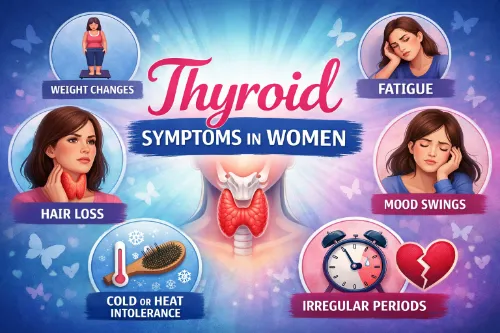
Thyroid Symptoms in women and can affect energy, mood, weight, menstrual cycles, fertility, pregnancy, and long‑term health. Many symptoms overlap with other hormone or life‑stage changes, so they are easy to miss or misattribute.
You can explore how this fits into the bigger picture in Thyroid Problems Explained: Symptoms, Causes, Diagnosis, Treatment & Living Well and Common Symptoms of Thyroid Problems, and in patient information from Cleveland Clinic, Mayo Clinic, and the American Thyroid Association (ATA).
Why Thyroid Problems Are Common in Women
Women are more likely than men to develop autoimmune conditions, including Hashimoto’s thyroiditis (often causing hypothyroidism) and Graves’ disease (often causing hyperthyroidism). Female hormones, pregnancy, and the postpartum period can all unmask or worsen thyroid problems, as highlighted in women’s health resources from Office on Women’s Health and NIDDK.
For more background on disease types, see:
General Thyroid Symptoms in Women May Notice
Women can experience all the “classic” thyroid symptoms seen in any adult, plus features related to reproductive health. Symptom lists similar to those below appear in the AACE Thyroid Signs & Symptoms page and Mayo Clinic thyroid disease overviews.
Common general symptoms include:
- Fatigue or low energy, even after rest
- Unexplained weight gain (more often in hypothyroidism) or weight loss (more often in hyperthyroidism)
- Feeling unusually cold (underactive) or unusually hot (overactive) compared with others
- Hair changes (thinning, shedding, coarse or brittle hair) and dry or very oily skin
- Mood changes such as anxiety, irritability, or low mood
- Sleep problems – trouble falling asleep, staying asleep, or feeling unrefreshed
You can compare these patterns with:
Menstrual Changes
Thyroid hormones interact closely with female reproductive hormones, so changes in thyroid function often show up in the menstrual cycle. This interaction is discussed in thyroid–women’s health fact sheets from NIDDK and Office on Women’s Health.
With Hypothyroidism (Underactive Thyroid)
Women may notice:
- Heavier or longer periods than usual
- More frequent periods or shorter cycles
- Worse cramping or PMS‑type symptoms
With Hyperthyroidism (Overactive Thyroid)
Women may notice:
- Lighter than usual periods
- Less frequent periods or skipped cycles
- Short, scanty bleeding
Persistent changes in your cycle that are not explained by contraception, pregnancy, or menopause should prompt a discussion with your healthcare provider and often thyroid blood tests, as recommended in NHS hypothyroidism and NHS hyperthyroidism pages.
Fertility and Trying to Get Pregnant
Both underactive and overactive thyroid conditions can interfere with regular ovulation and healthy implantation. This link between thyroid disease and fertility is highlighted in patient materials from American Society for Reproductive Medicine and ATA pregnancy guidelines summaries.
Clues that thyroid issues may be affecting fertility include:
- Difficulty getting pregnant despite regular unprotected intercourse
- Recurrent early miscarriages
- Very irregular cycles or cycles that have changed significantly
- Other autoimmune conditions (for example, type 1 diabetes, celiac disease)
Our article What Causes Thyroid Disorders? explains why autoimmune thyroid disease is so common in women of reproductive age.
Symptoms During Pregnancy
Pregnancy increases the body’s demand for thyroid hormone and can temporarily change thyroid function. Existing thyroid disease may worsen, and new problems can appear during pregnancy. This is emphasized in pregnancy‑focused thyroid information from ATA and Endocrine Society.
Possible clues during pregnancy:
- Fatigue that seems more severe than expected
- Unusual sensitivity to cold (underactive) or heat (overactive)
- Unexpected or excessive weight change beyond normal pregnancy gain
- Palpitations, tremors, or marked anxiety (suggest hyperthyroidism)
- Very dry skin, constipation, or slowed thinking (suggest hypothyroidism)
For how these are assessed, see:
Postpartum Thyroid Changes
The months after childbirth are a high‑risk time for thyroid shifts, especially in women with a personal or family history of thyroid or other autoimmune disease. This pattern, known as postpartum thyroiditis, is described in NIDDK postpartum thyroid disease and ATA patient brochures.
Typical pattern (not always present in every woman):
- Hyperthyroid phase (overactive) – usually within the first few months postpartum
- Anxiety, palpitations, heat intolerance
- Weight loss despite good appetite
- Tremors, sweating, feeling “over‑revved”
- Hypothyroid phase (underactive) – often a few months later
- Severe fatigue, low mood, or “postpartum depression”–like symptoms
- Weight gain, cold intolerance, dry skin
- Brain fog, trouble concentrating
If postpartum fatigue or mood changes feel extreme or out of proportion, ask whether thyroid testing is appropriate.
Relevant overviews:
Symptoms Around Perimenopause and Menopause
Perimenopause and menopause share many symptoms with thyroid disorders (hot flushes, night sweats, sleep problems, mood swings, weight changes). This overlap is discussed in menopause‑oriented guidance from North American Menopause Society and general thyroid overviews from Mayo Clinic.
Clues that thyroid disease might be contributing:
- Heat intolerance and sweating between hot flushes (suggest hyperthyroidism)
- Marked cold intolerance, stubborn weight gain, and very dry skin (suggest hypothyroidism)
- Strong family or personal history of thyroid disease
- Neck swelling or a new lump at the front of the neck
In these situations, it is reasonable to ask for thyroid blood tests along with other hormone evaluations.
Structural Symptoms: Neck and Eyes
Structural changes in the neck and eyes can be important clues that the thyroid gland itself is involved, rather than hormones alone. These signs are less common than fatigue or weight changes, but they should never be ignored.
Neck changes: goiter and nodules
Some women notice a visible or palpable change at the front of the neck, where the thyroid sits just below the Adam’s apple. This might feel like:
- A general fullness or “thickening” in the lower neck (goiter).
- A distinct lump or bump on one side (thyroid nodule).
- A feeling that shirt collars, scarves, or necklaces are tighter than they used to be.
Larger goiters or nodules can sometimes cause:
- A sense of pressure or tightness when swallowing.
- Needing to clear your throat more often.
- Hoarseness or a change in voice tone or quality.
Any persistent lump, swelling, or visible asymmetry in the neck should be checked by a healthcare provider. They may examine your neck, order blood tests for thyroid function, and arrange a thyroid ultrasound to see the size, shape, and structure of the gland.
Voice and breathing symptoms
Because the thyroid lies close to the windpipe and voice box, structural problems can affect breathing and speech, especially as they grow. You might notice:
- Hoarseness, a raspy or lower‑pitched voice, or voice fatigue.
- A feeling of “something stuck” in the throat when swallowing.
- Rarely, noisy breathing or shortness of breath when lying flat, if a very large goiter is pressing on the airway.
These symptoms can be caused by many conditions, but when they occur with visible neck changes or known thyroid disease, they warrant prompt evaluation.
Eye symptoms in Graves’ disease
In Graves’ disease, an overactive thyroid can be accompanied by inflammation behind the eyes (thyroid eye disease). Eye symptoms may include:
- Gritty, dry, or “sandy” feeling in the eyes.
- Redness, burning, or watering.
- Sensitivity to light (photophobia).
- A “staring” appearance or bulging eyes.
- Difficulty fully closing the eyelids, especially during sleep.
- Double vision or pain with eye movements in more advanced cases.
These changes can progress independently of thyroid hormone levels, so even if your labs are treated and “normal,” eye symptoms still need their own evaluation—often by an eye specialist familiar with thyroid eye disease.
When to seek urgent vs routine care
Contact a clinician promptly (or seek urgent care) if you notice:
- A rapidly enlarging neck lump, especially with pain, redness, or fever.
- Sudden hoarseness or trouble breathing.
- New or worsening eye pain, sudden double vision, or vision loss.
For slower, more gradual changes—like a slowly growing neck lump, mild hoarseness, or chronic gritty eyes—make a non‑urgent appointment with your primary care doctor, endocrinologist, or eye specialist. Bring notes about when you first noticed the change, whether it’s growing, and any associated thyroid history or family history.
For more on these topics, see:
When Should Women See a Doctor?
Consider seeing a healthcare professional if you have:
- Persistent fatigue, weight change, and temperature intolerance
- Menstrual cycles that have become heavier, lighter, or irregular for several months
- Difficulty getting pregnant or repeated miscarriages
- Mood changes or “brain fog” that do not improve as expected
- A new neck lump or ongoing neck fullness
You can use the checklist in When Should You See a Doctor for Thyroid Problems? to prepare for your visit. Symptom‑based “when to call” advice similar to this is also outlined by AACE and Healthdirect Australia.
Pro Tip for Daily Living (Women)
Thyroid changes often overlap with normal hormonal shifts, so small habits that add structure and tracking can make a big difference in getting the right diagnosis and care.
1. Track your cycles and symptoms for 2–3 months
Keep a simple diary (or use a period or notes app) and record each day:
- Period details: start and end dates, flow (light/medium/heavy), spotting, clots, cramps.
- Mood: note anxiety, irritability, low mood, or feeling unusually “flat.”
- Energy and sleep: how rested you feel, naps, insomnia, or frequent night wakings.
- Body changes: daily weight (or weekly if that’s easier), bowel habits (constipation/diarrhea), palpitations, shortness of breath, tremor, heat/cold intolerance.
- Physical observations: any neck fullness, tight collars, visible swelling at the base of the neck, or new voice hoarseness.
This doesn’t need to be perfect—short, consistent notes like “very tired,” “worse cramps,” or “felt really hot at night” are often enough to show patterns over time.
2. Prepare extra carefully if you’re pregnant, postpartum, or trying to conceive
In these stages, thyroid function matters for both your health and the baby’s development, and risk of thyroid issues is higher. Before your visit, write down:
- Any past thyroid blood tests you’ve had (if you remember: “normal,” “borderline,” or “on medication”).
- Previous thyroid diagnoses (e.g., “hypothyroidism,” “Hashimoto’s,” “Graves’,” “goiter,” or “thyroid nodules”).
- All thyroid medications you’ve ever taken (name, dose, and when you took them).
- Family history of thyroid problems, miscarriages, infertility, or autoimmune conditions (e.g., type 1 diabetes, celiac disease, lupus).
Bring this written note (or a photo of old lab reports) to your appointment. It helps your clinician quickly decide what to test, how often to monitor you during pregnancy or after delivery, and whether your target thyroid levels should be tighter.
3. Advocate for yourself when symptoms feel “more than just hormones”
Hormonal life phases—puberty, PMS, starting or stopping birth control, pregnancy, postpartum, perimenopause, and menopause—can all cause shifts in mood, energy, and bleeding. But if your symptoms feel stronger, more persistent, or simply “not like your normal,” it’s reasonable to speak up clearly. You might say:
- “These symptoms feel different from my usual PMS/menopause.”
- “I’m more tired and cold than I’ve ever been, and it’s affecting my daily life.”
- “Can we consider checking my thyroid as part of the work‑up?”
Framing it this way doesn’t self-diagnose; it simply signals that you’re noticing patterns and want a thorough evaluation. Many clinicians appreciate having a concise symptom diary and a direct question—it saves time, reduces guesswork, and can help you get appropriate thyroid testing (typically TSH and free T4) sooner rather than later.
Frequently Asked Questions (FAQ)
1. How can I tell if heavy periods are related to my thyroid?
Heavy or prolonged bleeding has many causes (fibroids, perimenopause, bleeding disorders, thyroid disease). If heavy periods occur together with fatigue, weight change, cold intolerance, or other thyroid‑type symptoms, guidelines and patient resources (for example, NHS) suggest thyroid testing as part of gynecologic evaluation.
2. Do I need a thyroid check before pregnancy?
Many clinicians suggest low‑threshold testing in women with risk factors such as a personal or family history of thyroid disease, other autoimmune conditions, infertility, or previous pregnancy loss, as noted in ATA pregnancy information. It is reasonable to ask for a TSH and free T4 before or early in pregnancy.
3. Can thyroid disease mimic PMS or PMDD?
Yes. Mood swings, irritability, low mood, bloating, and fatigue can overlap with thyroid symptoms. If your “PMS” is more severe than before, lasts most of the month, or occurs with other thyroid‑type symptoms, endocrine and gynecologic resources recommend considering thyroid tests.
4. Is postpartum depression always just depression?
Not always. Postpartum thyroiditis can cause low mood, exhaustion, and cognitive slowing that look like depression, as noted in NIDDK postpartum thyroid disease. When postpartum mood changes are accompanied by temperature intolerance, palpitations, or marked weight change, thyroid tests are important.
5. I’m perimenopausal. Should I still think about my thyroid?
Yes. Perimenopause and thyroid disorders share many symptoms. If symptoms are severe, atypical for hot flushes, or accompanied by a neck lump or strong family history, menopausal and endocrine guidelines support testing for thyroid disease.
6. What if my thyroid tests are normal but I still feel unwell?
Normal thyroid tests mean your symptoms are likely due to something other than thyroid disease, but they are still real and deserve evaluation. Other causes can include anemia, vitamin deficiencies, perimenopause, sleep disorders, or mental health conditions, as outlined in general women’s health resources.
7. Will I always have thyroid issues once diagnosed?
Some thyroid conditions (like postpartum thyroiditis or some forms of thyroiditis) may improve over time. Others (such as Hashimoto’s hypothyroidism or long‑standing Graves’ disease) are usually long‑term and need ongoing management, but many women feel well once treatment is optimized, as emphasized by long‑term follow‑up studies and patient guidance from ATA and NIDDK.
Disclaimer: This information is for educational purposes only and does not replace medical advice, diagnosis, or treatment from your own healthcare provider.
Written by: Eden Grace Ramos-Arsenio, RN
Sources: National Institute of Diabetes and Digestive and Kidney Diseases (NIDDK/NIH); Mayo Clinic; NHS; American Thyroid Association (ATA); Cleveland Clinic; Endocrine Society; Thyroid UK; MedlinePlus; peer‑reviewed medical and nursing journals.