
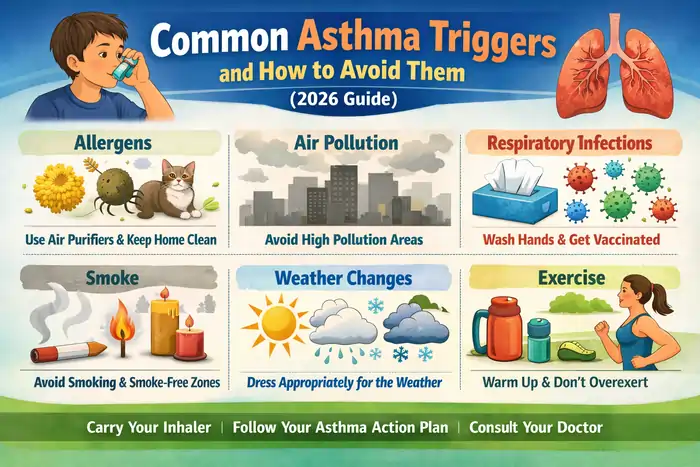
Asthma is a chronic inflammatory airway disease characterized by airway hyperresponsiveness, reversible airflow obstruction, and recurring respiratory symptoms, as outlined in clinical overviews of asthma pathophysiology. While medication plays a central role in asthma control, global frameworks such as the Global Initiative for Asthma (GINA) 2025 strategy report and the World Health Organization asthma fact sheet emphasize that identifying and avoiding triggers is equally critical for preventing exacerbations.
According to these guidelines, most asthma exacerbations are preventable when environmental and behavioral triggers are properly managed alongside guideline-based therapy, a point reinforced in the GINA Summary Guide for Asthma Management and Prevention. Understanding common asthma triggers—and how to reduce exposure—significantly lowers the risk of flare-ups, emergency visits, and long-term airway damage.
If you’d like a comprehensive overview of asthma management, including medications and monitoring strategies, you can explore our main pillar guide on asthma management: triggers, treatment, and prevention.
What Are Asthma Triggers?
Asthma triggers are environmental, biological, or lifestyle factors that irritate sensitive airways and cause:
- Airway inflammation
- Bronchoconstriction (tightening of airway muscles)
- Increased mucus production
- Coughing, wheezing, and shortness of breath
These factors do not cause asthma itself, but they provoke symptoms in people who already have the condition, as explained in patient resources on what triggers or causes asthma. Triggers vary from person to person, so identifying your personal trigger profile is essential for long-term asthma control.
1. Allergens (Allergic Asthma Triggers)
Allergens are among the most common asthma triggers worldwide, and GINA lists dust mites, pets, pollens, and cockroaches among key aggravating exposures.
Common allergens
- Dust mites
- Pollen (grass, trees, weeds)
- Pet dander
- Mold spores
- Cockroach particles
Allergic asthma is driven by immune hypersensitivity reactions; when exposed to allergens, the immune system releases inflammatory mediators that narrow the airways, a mechanism described in reviews on allergic and atopic asthma.
How to reduce allergen exposure
- Dust mites: Use allergen-proof mattress and pillow covers, wash bedding weekly in hot water, reduce indoor humidity below 50%, and limit heavy carpets and upholstered furniture, as suggested in guidance on avoiding asthma triggers at home.
- Pollen: Check pollen forecasts, keep windows closed on high-pollen days, shower and change clothes after outdoor exposure, and use air conditioning with proper filters instead of opening windows, as recommended by the American Lung Association trigger guide.
- Pet dander: Keep pets out of the bedroom, bathe or groom them regularly, and consider HEPA air purifiers if pets cannot be removed from the home.
- Mold: Fix water leaks promptly, use exhaust fans in bathrooms and kitchens, and clean visible mold safely with appropriate protective measures.
WHO and the American Lung Association both emphasize allergen reduction as a core part of asthma prevention and control strategies.
2. Respiratory Infections
Viral respiratory infections are major asthma triggers, particularly in children, and are highlighted in both GINA documents and educational materials on identifying asthma triggers.
Common infectious triggers
- Common cold (rhinovirus)
- Influenza
- COVID‑19
- RSV
Viruses increase airway inflammation and mucus production, leading to exacerbations in susceptible individuals.
Prevention strategies
- Annual influenza vaccination and age‑appropriate COVID‑19 vaccination when recommended
- Frequent handwashing and avoidance of close contact with sick individuals
- Early use of prescribed rescue medication during illness, as outlined in written asthma plans
Monitoring symptoms during respiratory infections is critical. Your asthma action plan should clearly outline steps to take when symptoms worsen, and readers can follow your template in the article on building an asthma action plan.
3. Tobacco Smoke
Tobacco smoke is one of the most dangerous and preventable asthma triggers. WHO identifies exposure to tobacco smoke as a leading modifiable risk factor for asthma morbidity and poor control in its asthma fact sheet.
Exposure sources
- Active smoking
- Secondhand smoke
- Thirdhand smoke (residue on surfaces and clothing)
Smoke increases airway inflammation, reduces medication effectiveness, and raises hospitalization risk, a pattern documented in population data summarized by the American Lung Association.
Prevention
- Avoid smoking in homes and vehicles
- Stay away from indoor environments where others smoke
- Seek smoking cessation support if needed
GINA explicitly advises that people with asthma—and parents of children with asthma—should avoid smoking and secondhand smoke exposure.
4. Air Pollution
Air pollutants contribute significantly to asthma exacerbations, with WHO highlighting outdoor and household air pollution as key drivers of asthma-related morbidity in its overview of chronic respiratory diseases.
Common pollutants
- Vehicle exhaust
- Industrial emissions
- Wildfire or biomass smoke
- Indoor cooking smoke
- Fine particulate matter (PM2.5)
How to reduce exposure
- Monitor your local air quality index (AQI) and limit outdoor activity during high‑pollution days
- Keep windows closed and use air conditioners or air purifiers when air quality is poor
- Improve indoor ventilation when cooking and avoid burning waste or incense
WHO notes that reducing exposure to air pollution is an important part of asthma prevention, especially in urban and low‑resource settings.
5. Exercise (Exercise‑Induced Bronchoconstriction)
Physical activity can trigger bronchoconstriction in some individuals with asthma, a pattern described as exercise‑induced bronchoconstriction in GINA’s management guidance.
Symptoms may include
- Shortness of breath during exercise
- Chest tightness
- Cough after exertion
However, exercise should not be avoided; guidelines emphasize that with proper management, most individuals with asthma can exercise safely and are encouraged to remain active.
Prevention strategies
- Warm up gradually before intense activity
- Use your prescribed rescue inhaler before exercise if your provider recommends it
- Avoid exercising in very cold, dry air or on days with high pollution
- Maintain consistent controller medication use for persistent asthma
Because pre‑exercise dosing depends on good technique, it is helpful to direct readers to your step‑by‑step guide on how to use an inhaler correctly.
6. Cold Air and Weather Changes
Cold, dry air may irritate sensitive airways, and GINA lists “changes in weather” and cold air as common asthma triggers in its patient FAQs.
Weather-related triggers
- Cold winter air
- Sudden temperature changes
- High humidity
- Thunderstorms (linked to pollen bursts)
Prevention
- Wear a scarf or mask over your nose and mouth in cold weather
- Avoid strenuous outdoor activity in extreme cold
- Monitor your own seasonal patterns and adjust activities according to your asthma plan
7. Strong Odors and Chemical Irritants
Strong odors and chemical fumes can act as non‑allergic irritant triggers even in people without specific allergies.
Common irritants
- Perfume and fragrances
- Cleaning products and disinfectant sprays
- Paint fumes and solvents
- Aerosol sprays
- Industrial chemicals
Prevention
- Choose fragrance‑free or low‑odor products when possible
- Improve ventilation when cleaning, painting, or using chemicals
- Avoid aerosolized cleaning agents in small, unventilated spaces
- Use protective equipment if you work with industrial chemicals, following workplace safety recommendations
The American Lung Association and Asthma and Allergy Foundation of America both list strong odors and chemical fumes among common triggers in their guides on asthma triggers and causes.
8. Occupational Triggers
Occupational asthma is triggered by workplace exposures and is recognized as a distinct asthma phenotype in research on identifying asthma triggers.
Common occupational irritants
- Flour dust in baking and food manufacturing
- Wood dust in carpentry and sawmills
- Chemical vapors in spray painting or plastics work
- Industrial fumes and welding smoke
Early identification is important because prolonged exposure may cause permanent airway changes. If symptoms worsen at work but improve on days off, this pattern should be discussed with your healthcare provider and, if needed, an occupational health specialist.
9. Emotional Stress
Strong emotions and chronic stress can worsen asthma symptoms by amplifying inflammatory responses and altering breathing patterns.
Stress may:
- Increase inflammatory activity
- Trigger hyperventilation
- Disrupt sleep and medication adherence
Stress management strategies
- Breathing and relaxation exercises
- Mindfulness or meditation
- Regular sleep routines
- Structured asthma monitoring and routine follow‑ups
Resources on managing asthma triggers for different age groups also highlight emotional health as a key component of asthma control.
10. Medications
Certain medications may trigger asthma symptoms in some individuals.aafa+1
Examples
- Nonsteroidal anti‑inflammatory drugs (NSAIDs) in aspirin‑sensitive individuals
- Beta‑blockers used for heart conditions or migraine prevention
Asthma organizations, including GINA and AAFA, specifically caution about these medications in their lists of asthma triggers and causes. Always inform your healthcare provider of your asthma diagnosis before starting new medications so they can choose safer alternatives if needed.
Identifying Your Personal Asthma Triggers
Not all triggers affect everyone. Reviews on identifying asthma triggers recommend a structured approach to uncovering the patterns that are specific to you.
Helpful steps include:
- Keeping a symptom diary that notes time, place, activity, and exposures
- Recording potential triggers such as pets, dust, smoke, weather, or stress
- Tracking peak flow readings to see when your airflow drops
- Reviewing these trends regularly with your healthcare provider
GINA’s management framework emphasizes that understanding each patient’s trigger profile is essential for long‑term asthma control.
How Trigger Avoidance Fits Into Asthma Management
Trigger control works alongside:
- Daily controller medications
- Correct inhaler technique
- A written asthma action plan
- Regular follow‑up visits and lung function monitoring
The GINA Summary Guide describes effective care as a combination of evidence‑based pharmacologic therapy, trigger management, and patient education. For a full framework that ties these elements together, readers can revisit your main pillar article on asthma management, and pair it with your guides on how to use an inhaler correctly and asthma action plan.
When to Seek Medical Care
Seek evaluation if you experience:
- Increasing rescue inhaler use
- Nighttime symptoms or waking from sleep due to asthma
- Reduced activity tolerance
- Frequent flare‑ups or urgent visits
Emergency care is needed if:
- You cannot speak full sentences
- Your rescue inhaler does not relieve symptoms
- Your lips or face turn blue
- Severe breathing difficulty develops
These warning signs match those described in emergency advice from major asthma organizations and should prompt immediate action.
Frequently Asked Questions
What is the most common asthma trigger?
Allergens such as dust mites and pollen are among the most common triggers globally, as consistently reported in WHO and patient‑education materials on asthma causes and triggers.
Can stress trigger asthma?
Yes. Emotional stress and strong emotions are recognized triggers that can worsen asthma in both adults and children.
Can asthma triggers change over time?
Yes. Children and adults may develop new sensitivities, and life changes (such as a new job or home) can introduce new triggers.
Does avoiding triggers mean I don’t need medication?
No. Trigger avoidance supports but does not replace prescribed asthma therapy, and GINA clearly states that controller medications remain necessary in persistent asthma even with good trigger control.
Long‑Term Outlook
With proper trigger control:
- Exacerbations decrease
- Hospitalizations and urgent visits reduce
- Lung function can stabilize
- Quality of life improves
WHO and GINA both stress that asthma is manageable when proactive strategies—trigger avoidance, medication adherence, and education—are applied consistently.
⚠️ Medical Disclaimer
The information provided on MedEduHub is for educational purposes only and does not replace professional medical advice, diagnosis, or treatment.
If you experience severe breathing difficulty, inability to speak, chest retractions, or signs of respiratory distress, seek emergency medical care immediately.
Always consult a licensed healthcare provider before starting, stopping, or changing any asthma treatment plan.
Written by: Eden Grace Ramos-Arsenio, RN
📚 Medical Sources & References
This article is based on current clinical guidelines and peer-reviewed research from:
- Global Initiative for Asthma (GINA) 2025 Strategy Report
- World Health Organization (WHO) Asthma Fact Sheet
- Centers for Disease Control and Prevention (CDC) Asthma Control Resources
- American Lung Association Asthma Trigger Guidance
- Peer-reviewed respiratory medicine journals