
Asthma is a chronic inflammatory airway disease that affects millions of children and adults worldwide and is characterized by airway inflammation, bronchial hyperresponsiveness, and usually reversible airflow obstruction. With proper trigger control, guideline-based medications, and regular monitoring, global strategy reports such as the GINA 2025 asthma strategy note that most asthma complications are preventable.
What Is Asthma?
Asthma is a chronic respiratory condition in which the airways become inflamed, narrowed, and produce excess mucus, leading to breathing difficulty and variable airflow limitation over time. WHO fact sheets on asthma and chronic respiratory diseases describe key features including airway inflammation, bronchoconstriction, increased mucus production, and reversible airflow limitation.
Common asthma symptoms include:
- Wheezing (a whistling sound when breathing)
- Shortness of breath
- Chest tightness
- Persistent cough (especially at night or early morning)
- Difficulty breathing during exercise
These symptoms often worsen during asthma exacerbations, also known as asthma attacks, which are explained step-by-step in patient guides on controlling asthma.
What Causes Asthma?
Asthma is a multifactorial disease influenced by:
- Genetic predisposition
- Environmental exposures
- Immune system hypersensitivity
- Airway inflammation
WHO resources on chronic respiratory diseases note that asthma commonly occurs alongside allergic conditions such as allergic rhinitis and eczema.
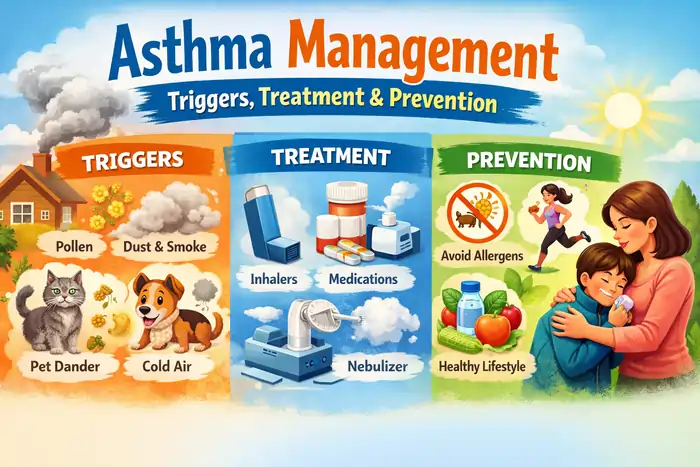
Common Asthma Triggers
Identifying and avoiding triggers is a core component of asthma prevention and is strongly emphasized in American Lung Association guidance on reducing asthma triggers at home and outdoors. For a deeper dive into common environmental and lifestyle triggers, you can explore our dedicated article on common asthma triggers and how to avoid them.
1. Allergens
Common allergen triggers include:
- Dust mites
- Pollen
- Pet dander
- Mold
Allergic asthma is one of the most common forms of asthma, and allergen exposure reduction is a key strategy in both GINA-based trigger control recommendations.
2. Respiratory Infections
Viral infections such as colds and influenza can trigger asthma flare-ups; GINA highlights respiratory viruses as major drivers of exacerbations, particularly in children and during seasonal peaks.
3. Air Pollution
Triggers include:
- Smoke
- Vehicle emissions
- Industrial pollutants
- Indoor cooking smoke
WHO notes that outdoor and household air pollution significantly impact asthma control, especially in urban and low-resource settings, in its overview of chronic respiratory diseases and air quality.
4. Exercise
Exercise-induced bronchoconstriction can cause symptoms during or after physical activity; however, current guidance stresses that with proper management, most people with asthma can and should remain physically active.
5. Cold Air
Cold, dry air may trigger airway constriction, and many patient education materials recommend using scarves or masks to warm inhaled air in cold climates.
6. Tobacco Smoke
Secondhand smoke exposure increases asthma severity and frequency of attacks, and WHO specifically lists tobacco smoke as a key modifiable risk factor for asthma control.
7. Stress and Strong Emotions
Psychological stress can worsen asthma symptoms, and emerging evidence links chronic stress with poorer asthma control and more frequent exacerbations.
Types of Asthma
Understanding asthma phenotype helps guide treatment, a concept discussed in modern GINA phenotype-based strategies. Common phenotypes include:
- Allergic asthma
- Non-allergic asthma
- Occupational asthma
- Exercise-induced asthma
- Severe asthma
- Childhood asthma
How Asthma Is Diagnosed
Asthma diagnosis combines symptoms, lung function testing, and response to bronchodilators, as detailed in CDC and GINA guidance on asthma control and diagnosis.
1. Medical History
Providers assess:
- Symptom frequency
- Trigger exposure
- Nighttime symptoms
- Family history of asthma or allergies
2. Physical Examination
On examination, wheezing may be heard on auscultation, particularly with forced expiration.
3. Spirometry
Spirometry measures lung function and confirms reversible airflow obstruction. Common measurements:
- FEV1 (Forced Expiratory Volume in 1 second)
- FVC (Forced Vital Capacity)
Improvement after bronchodilator use supports asthma diagnosis and is a key diagnostic criterion in GINA spirometry-based algorithms.
4. Peak Flow Monitoring
Peak flow monitoring is used for home tracking of airflow variability and can help patients recognize early drops in control as part of a structured asthma self-management plan.
Asthma Treatment Goals
The goals of asthma treatment are:
- Prevent symptoms
- Prevent exacerbations
- Maintain normal activity levels
- Preserve lung function
- Minimize medication side effects
GINA summarizes these goals by emphasizing both symptom control and future risk reduction in its global asthma strategy.
Asthma Medications
Asthma treatment typically involves two main categories: quick-relief (rescue) medications and long-term control medications, a framework shared by CDC and GINA in their overviews of controlling asthma.[cdc]
1. Quick-Relief (Rescue) Medications
Quick-relief medicines are used during acute symptoms.
Short-Acting Beta-Agonists (SABA)
Example: Albuterol
These inhalers relax airway muscles quickly and are recommended for relief of acute bronchoconstriction, though GINA 2025 increasingly emphasizes using low-dose ICS–formoterol as reliever therapy in many adolescents and adults.
For a practical, step-by-step guide, you can review our article on how to use an inhaler correctly, which complements standard inhaler technique instructions taught in clinics.
2. Long-Term Control Medications
Long-term control medications are used daily to reduce inflammation and prevent symptoms.
Inhaled Corticosteroids (ICS)
ICS are first-line maintenance therapy for persistent asthma.
Examples:
- Fluticasone
- Budesonide
ICS reduce airway inflammation and prevent attacks, and WHO and GINA note that this class is the cornerstone of effective asthma control.
Long-Acting Beta-Agonists (LABA)
LABAs are used in combination with inhaled corticosteroids for moderate to severe asthma and should not be used alone, consistent with GINA 2025 combination therapy guidance.
Leukotriene Modifiers
Example: Montelukast
Leukotriene modifiers are particularly helpful in allergic asthma and exercise-induced symptoms and appear in treatment algorithms as an add-on option.
Biologic Therapies
For severe asthma not controlled with standard therapy, GINA describes biologics as key add-on treatments targeting specific inflammatory pathways. Examples
- Omalizumab (anti-IgE)
- Mepolizumab and related drugs (anti–IL-5/IL-5R)
These treatments are usually prescribed by specialists for patients with severe or difficult-to-treat asthma.
Asthma Action Plan
An asthma action plan outlines:
- Daily medication schedule
- Peak flow monitoring instructions
- Early warning signs of flare
- Emergency steps
Patients are often categorized into zones:
- Green zone (controlled)
- Yellow zone (worsening)
- Red zone (medical emergency)
The CDC recommends written asthma action plans as part of routine care in its materials on how to control asthma. For a patient-friendly template and examples, you can review our guide to creating a personalized asthma action plan.
Preventing Asthma Attacks
Prevention strategies include:
- Avoiding known triggers
- Regular medication adherence
- Vaccination (influenza, COVID-19 when recommended)
- Smoking cessation
- Monitoring symptoms
GINA underscores that sustained controller use and trigger control are central to preventing exacerbations in its 2025 strategy update. The American Lung Association offers practical tips on reducing asthma triggers in home, school, and workplace environments.
Asthma in Children
Children may present with:
- Chronic cough
- Frequent respiratory infections
- Reduced exercise tolerance
WHO and GINA highlight that early management in childhood reduces the risk of long-term airway remodeling and poor lung growth. Pediatric-focused versions of the GINA strategy stress inhaler technique, adherence, and caregiver education.
Severe Asthma
Severe asthma may involve:
- Frequent hospitalizations
- Dependence on oral steroids
- Persistent symptoms despite high-dose ICS and add-on therapies
GINA recommends referral to a specialist severe asthma service in such cases and evaluation for phenotyping and biologic therapies as discussed in updates on severe asthma and T2 biomarkers.
Asthma and Pregnancy
Well-controlled asthma is essential during pregnancy to ensure adequate oxygen supply to the fetus. GINA notes that most inhaled medications are considered safe when prescribed appropriately, and uncontrolled asthma itself poses a greater risk than most standard inhalers.
When to Seek Emergency Care
Call emergency services if you experience:
- Severe breathlessness
- Inability to speak full sentences
- Lips or fingernails turning blue
- No improvement after rescue inhaler
GINA and WHO both stress that acute severe asthma is a medical emergency and requires immediate treatment according to acute asthma management protocols.
Long-Term Outlook
With proper management:
- Most individuals live normal, active lives
- Lung function can be preserved
- Severe complications can be prevented
WHO emphasizes that asthma is manageable and that mortality is largely preventable when evidence-based treatments and inhaler access are available.
Frequently Asked Questions
Can asthma be cured?
There is no permanent cure, but asthma can be effectively controlled long term with controller medications and trigger management according to GINA global strategies.
Is asthma hereditary?
Genetics play a role, especially in allergic asthma; family history is a recognized risk factor in asthma epidemiology summaries.
Can exercise worsen asthma?
Exercise may trigger symptoms, but with proper prevention strategies and medication adjustment, most people with asthma can exercise safely and are encouraged to stay active.
Are inhaled steroids safe?
Yes, when used as prescribed, inhaled corticosteroids are considered safe and are the cornerstone of asthma control in both WHO and GINA guidance.
For practical help with inhaler technique, you can follow our step-by-step tutorial on how to use an inhaler correctly, which reinforces technique taught during clinical visits.
Final Thoughts
Asthma management requires a proactive approach that combines trigger avoidance, medication adherence, regular monitoring, and preventive strategies. With proper education and guideline-based treatment, most asthma complications can be avoided and people can maintain full, active lives, as highlighted in global asthma strategy documents.
⚠️ Medical Disclaimer
The information provided on MedEduHub is for educational purposes only and does not replace professional medical advice, diagnosis, or treatment. If you experience severe breathing difficulty, chest retractions, inability to speak, or signs of respiratory distress, seek immediate emergency medical care or contact emergency services. Always consult a licensed healthcare provider before starting, stopping, or changing any asthma treatment plan.
Written by: Eden Grace Ramos-Arsenio, RN
📚 Medical Sources & References
This article is based on current clinical guidelines and peer-reviewed research from the World Health Organization asthma fact sheet, the Global Initiative for Asthma (GINA) 2025 strategy report, CDC asthma control resources, and American Lung Association guides on reducing asthma triggers.