
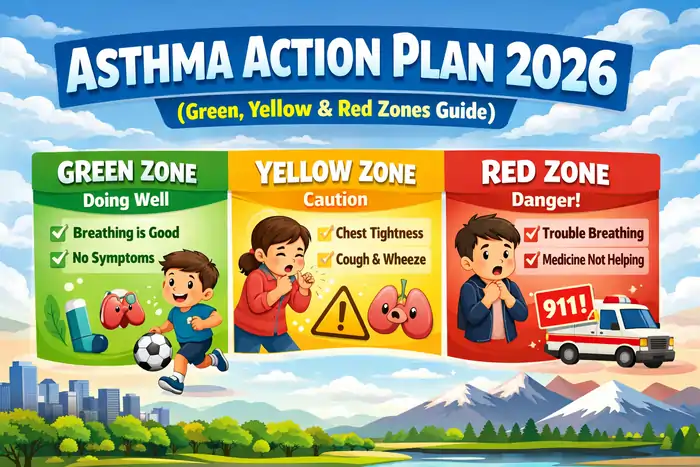
Asthma is a chronic inflammatory airway disease that requires ongoing monitoring and structured self-management, a point highlighted in global respiratory overviews on asthma and chronic respiratory diseases. Global frameworks such as the Global Initiative for Asthma (GINA) 2025 strategy report and guidance from the Centers for Disease Control and Prevention on controlling asthma emphasize that every person with asthma should have a written asthma action plan.
An asthma action plan is a personalized, step-by-step guide that outlines daily medication use, early warning signs of worsening asthma, what to do during flare-ups, and when to seek emergency care, as reflected in CDC’s sample asthma action plan materials. Studies consistently show that written plans reduce hospitalizations, improve symptom control, and increase confidence in self-management, mirroring findings summarized in patient education content from the American Lung Association.
If you would like a broader overview of asthma medications, triggers, and prevention strategies, you can review our main pillar article on asthma management: triggers, treatment, and prevention.
What Is an Asthma Action Plan?
An asthma action plan is a written document created with your healthcare provider that helps you manage asthma daily and respond quickly when symptoms change. It typically uses a color‑coded system that matches formats used in many GINA summary guides for asthma management:
- 🟢 Green Zone – Well Controlled
- 🟡 Yellow Zone – Getting Worse
- 🔴 Red Zone – Medical Alert
This structured format is also reflected in the CDC’s printable asthma action plan templates, which are commonly used in clinics and schools.
Why Every Person With Asthma Needs One
Asthma symptoms can change quickly, and without a clear plan, people may delay medication adjustments, overuse rescue inhalers, fail to recognize early warning signs, or seek care too late. A written plan improves symptom recognition, medication adherence, early intervention, and emergency preparedness—benefits that are highlighted across adult and pediatric guidance from organizations like GINA and the American Lung Association’s asthma education pages.
The Green Zone: Daily Control
The green zone represents good asthma control.
Signs you are in the green zone
- No cough, wheeze, or chest tightness
- Sleeping through the night without symptoms
- Able to exercise normally
- Peak flow ≥ 80% of your personal best
What to do in the green zone
- Take daily controller medication exactly as prescribed
- Avoid known triggers where possible
- Monitor symptoms and, if advised, peak flow
- Use proper inhaler technique every time
Correct inhaler use is critical to staying in the green zone. If you need a refresher, you can review our step‑by‑step guide on how to use an inhaler correctly, which complements inhaler technique instructions from respiratory organizations.
Controller medications such as inhaled corticosteroids are considered first‑line long‑term therapy in global asthma strategies and help reduce airway inflammation and prevent flare‑ups when used consistently.
The Yellow Zone: Worsening Symptoms
The yellow zone indicates early signs of a flare-up—the “warning stage.”
Symptoms may include
- Cough
- Mild wheezing
- Chest tightness
- Shortness of breath
- Waking at night due to asthma
- Peak flow 50–79% of personal best
What to do in the yellow zone
Your action plan may instruct you to:
- Use your quick‑relief inhaler (e.g., albuterol) at specified doses
- Temporarily increase controller medication as directed by your provider
- Monitor peak flow more frequently
- Avoid or minimize known triggers
Trigger avoidance is especially important during this stage. For a complete review of environmental and lifestyle triggers, you can refer to our article on common asthma triggers and how to avoid them.
Early treatment in the yellow zone often prevents progression to a severe exacerbation, which is why GINA and CDC both emphasize having clear “yellow zone” instructions in written plans.
The Red Zone: Medical Emergency
The red zone indicates severe asthma symptoms requiring urgent action.
Symptoms may include
- Severe shortness of breath
- Difficulty speaking in full sentences
- Rapid, shallow breathing
- Chest retractions (skin pulling in between ribs or at the neck)
- Lips or fingernails turning blue or gray
- Peak flow < 50% of personal best
What to do in the red zone
- Use your rescue inhaler immediately as your plan directs
- Follow any written emergency dosing instructions (for example, repeated reliever doses)
- Call emergency services if symptoms do not improve or worsen
- Seek urgent medical care without delay
Asthma emergencies can escalate quickly, and both GINA and CDC emergency guidance stress the importance of not waiting if red‑zone signs appear.
Key Components of an Effective Asthma Action Plan
A comprehensive plan should include:
- Personal best peak flow value
- Daily medications (names, doses, and how often to take them)
- Rescue medication instructions for yellow and red zones
- A list of known triggers
- Emergency contacts and local emergency numbers
- Your doctor’s contact information
- Instructions for school, daycare, or workplace if relevant
GINA and CDC materials emphasize that the plan should be clear, written, easy to follow, and shared with everyone involved in your care, including family members and school or workplace staff.
How to Create Your Asthma Action Plan
Creating a plan is a collaborative process with your healthcare provider.
Step 1: Assess baseline control
Your provider will look at:
- Symptom frequency and intensity
- Nighttime awakenings
- Rescue inhaler use
- Lung function (spirometry or peak flow trends)
Step 2: Identify triggers
Discussion usually includes:
- Allergens (dust, pollen, pets, mold)
- Smoke or pollution exposure
- Respiratory infections
- Exercise or weather-related triggers
- Occupational exposures
Identifying triggers improves long‑term control and ties directly into the strategies discussed in our article on common asthma triggers.
Step 3: Define zone thresholds
Your provider sets:
- Peak flow ranges for green, yellow, and red zones
- Symptom criteria for each zone
- Specific medication adjustments for each zone
Step 4: Write it down
The final plan should be:
- Printed and kept in visible places at home
- Stored digitally on your phone or patient portal if possible
- Shared with caregivers, school staff, or workplace health contacts
CDC provides examples of how to structure this information in their printable asthma action plan templates.
Asthma Action Plans for Children
Children benefit greatly from structured plans because they may have difficulty recognizing and describing symptoms.
Parents and caregivers should:
- Keep copies of the plan at school, daycare, and home
- Share the plan with teachers, school nurses, and coaches
- Ensure quick‑relief inhalers and any spacers are available where the child spends time
Pediatric asthma guidelines strongly support written plans to reduce emergency visits and support safe participation in school and sports.
Asthma Action Plans for Adults
Adults should:
- Keep a copy of the plan at home and at work
- Know the names, doses, and timing of all medications
- Recognize their own early yellow‑zone symptoms
- Review the plan at least annually with their provider
Adults with severe or difficult‑to‑control asthma may need specialist input to refine their plan, especially regarding biologic therapies or frequent exacerbations.
The Role of Peak Flow Monitoring
Peak flow meters measure how quickly you can blow air out of your lungs and can be useful for some patients in tracking day‑to‑day control.
Benefits
- Detect early worsening before symptoms become obvious
- Guide green, yellow, and red zone classification
- Monitor response to medication changes during flares
Not everyone needs daily peak flow monitoring, but it is especially helpful in moderate to severe asthma or for those who struggle to recognize early symptoms, as many educational resources on self‑monitoring note.
How Often Should the Plan Be Updated?
Update your action plan:
- At least once a year
- After any medication or device change
- After a hospitalization or serious flare‑up
- Whenever asthma control worsens or your triggers change
Regular review and updating align with best practices in asthma management frameworks recommended by GINA and CDC.
Common Mistakes in Asthma Action Plans
Common issues include:
- Not updating medication names or doses after changes
- Not knowing or recording personal best peak flow
- Ignoring early yellow‑zone symptoms
- Continuing poor inhaler technique
- Forgetting to refill rescue inhalers or controllers
Education, demonstration of inhaler use, and routine follow‑up visits help reduce these risks. Where appropriate, you can link “how to use your inhaler properly” back to your inhaler technique article at how to use an inhaler correctly.
Integrating the Action Plan Into Daily Life
An asthma action plan works best when combined with:
- Daily medication adherence
- Trigger avoidance strategies
- Correct inhaler technique
- Routine medical checkups and lung function monitoring
For a complete overview of how these pieces fit together, readers can revisit your main guide on asthma management, which ties medications, triggers, technique, and action planning into one framework.
Frequently Asked Questions
What is the purpose of an asthma action plan?
It helps you recognize worsening symptoms early and respond with clear, pre‑agreed steps instead of guessing in the moment.
Do adults need an asthma action plan?
Yes. Action plans benefit both children and adults and are recommended for anyone with persistent asthma.
How often should I review my plan?
At least once a year, and any time your treatment changes or you experience a significant flare.
Can I create my own plan?
You should always create or finalize it with your healthcare provider so that medication doses and instructions are safe and accurate.
Long-Term Outlook
Patients who use written asthma action plans experience fewer emergency visits, improved symptom control, better adherence to medications, and greater confidence in self‑management—benefits repeatedly documented in asthma education literature. Asthma is highly manageable when proactive strategies like action planning are consistently applied.
⚠️ Medical Disclaimer
The information provided on MedEduHub is for educational purposes only and does not replace professional medical advice, diagnosis, or treatment.
If you experience severe breathing difficulty, inability to speak, chest retractions, or signs of respiratory distress, seek emergency medical care immediately.
Always consult a licensed healthcare provider before starting, stopping, or changing any asthma treatment plan.
Written by: Eden Grace Ramos-Arsenio, RN
📚 Medical Sources & References
This article is based on current clinical guidelines and peer-reviewed research from:
- Global Initiative for Asthma (GINA) 2025 Strategy Report
- Centers for Disease Control and Prevention (CDC) Asthma Resources
- World Health Organization (WHO) Asthma Fact Sheet
- American Lung Association Asthma Education Materials
- Peer-reviewed respiratory medicine journals