
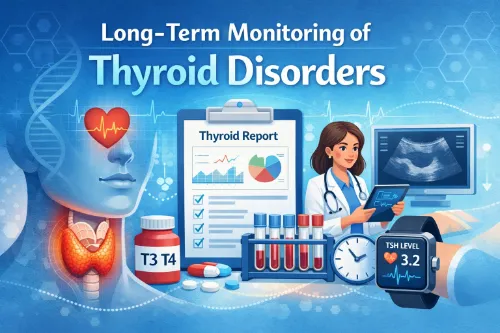
Long Term Monitoring of Thyroid Disorders, even when well controlled, so ongoing monitoring is essential. Long‑term follow‑up helps keep thyroid hormone levels in a healthy range, adjust treatment as life circumstances change, and detect complications or relapses early.
This article supports your page Long-Term Monitoring and links to your other thyroid guides.
Why Long Term Monitoring of Thyroid Matters
Regular monitoring aims to:
- Ensure your TSH, free T4 (and sometimes free T3) stay in the target range.
- Check that your symptoms match your blood test results.
- Adjust medication doses after changes in weight, other illnesses, or new drugs.
- Detect relapse of hyperthyroidism or progression/recurrence of other thyroid disease.
Professional guidelines (for example, NICE, ATA, and other endocrine societies) generally suggest closer checks after a change in treatment and less frequent, but regular, checks once stable.
For how tests are done, see:
Monitoring Hypothyroidism (On or Off Treatment)
If You Are Taking Levothyroxine
Typical follow‑up pattern:
- After starting levothyroxine or changing the dose:
- Check TSH (± free T4) after about 6–8 weeks (time needed to reach a new steady state).
- Once stable (two similar in‑range results and symptoms reasonably controlled):
- Test TSH every 6–12 months, or sooner if symptoms change, you start new medicines, or major life events occur (for example, pregnancy).
Your doctor may adjust the target TSH based on age, other illnesses, and whether you have had thyroid cancer (where a lower TSH may be advised).
Related pages:
If You Have Subclinical Hypothyroidism and Are Not Treated
- Many guidelines suggest periodic TSH and free T4 (for example, yearly or sooner if symptoms change), especially if you have positive TPO antibodies or a strong family history.
- If TSH rises further or symptoms increase, your doctor may recommend starting treatment and then moving to the “on levothyroxine” monitoring pattern.
Monitoring Hyperthyroidism and Its Treatments
On Antithyroid Drugs (e.g., Carbimazole/Methimazole, PTU)
Early in treatment:
- TSH, free T4, and sometimes free T3 are checked every 4–6 weeks until levels normalise.
Once closer to normal:
- Tests may be spaced to every 8–12 weeks, then longer intervals as stability improves.
For people choosing long‑term antithyroid therapy (for example, long‑term low‑dose methimazole for Graves’ disease):
- Monitoring thyroid function every 4–6 months and clinical review at least annually is considered reasonable.
See:
After Stopping Antithyroid Drugs
Because Graves’ disease can relapse:
- Thyroid function tests (TSH, free T4) are often checked at about 3 months, and then at 6–12 month intervals for several years.
- You should also have earlier tests if symptoms of hyperthyroidism return (for example, palpitations, weight loss, heat intolerance).
Monitoring After Radioactive Iodine (RAI)
After RAI for hyperthyroidism:
- Thyroid function tests are often checked every 4–6 weeks for the first 6 months or until you become hypothyroid and stable on replacement.
- Many people develop hypothyroidism within the first few months and then transition to levothyroxine with standard hypothyroidism follow‑up.
See:
Monitoring After Thyroid Surgery
After partial or total thyroidectomy:
- Early checks focus on calcium levels (for parathyroid function) and thyroid hormone levels.
- If you are on levothyroxine after surgery:
- TSH (± free T4) is typically checked about 6–8 weeks after starting or adjusting the dose, then periodically as in standard hypothyroidism follow‑up.
In benign disease:
- Once stable, monitoring may be similar to that for primary hypothyroidism (for example, yearly TSH).
After thyroid cancer surgery:
- Follow‑up tends to be more intensive, including:
- Physical exam and neck examination.
- Blood tests (for example, TSH and sometimes thyroglobulin).
- Imaging as indicated (ultrasound, occasionally other scans).
- Visits are commonly every 3–6 months for the first 1–2 years, then at least annuallythereafter, depending on risk and previous results.
See:
Monitoring Thyroiditis and Transient Thyroid Problems
Thyroiditis (for example, viral, postpartum, or drug‑induced) can cause temporary phases of hyperthyroidism and hypothyroidism.
- Surveillance and clinical follow‑up with repeat TSH and free T4 is recommended until thyroid function returns to normal or stabilises at a new level.
- Frequency depends on the phase and severity (often every 4–8 weeks during active changes).
See:
Other Long-Term Considerations
Heart and Bone Health
- In hyperthyroidism or subclinical hyperthyroidism, long‑term monitoring includes attention to heart rhythm (for example, atrial fibrillation) and bone density, particularly in older adults.
- In hypothyroidism, maintaining a TSH that is not too low helps protect bones and heart.
Life Stages (Pregnancy, Ageing)
- During pregnancy, monitoring may be more frequent (for example, TSH every 4 weeksin hypothyroidism until mid‑gestation).
- In older adults, target TSH ranges and dose changes may be more conservative to avoid overtreatment.
Your Role in Long-Term Monitoring
You can make the most of follow‑up by:
- Keeping a simple record of test dates, TSH, free T4 (± T3), doses, and symptoms.
- Booking tests on time, especially after dose changes or new treatments.
- Telling your clinician about new medications, supplements (especially biotin, iron, calcium), major weight changes, or pregnancy plans.
- Asking what target TSH range you are aiming for and how often your doctor wants to see you.
Helpful internal pages:
Questions to Ask at Follow-Up Visits
- “How often should I have my thyroid levels checked now that I’m stable, and will this change as I get older or if my health changes?”
- “What TSH range are we aiming for in my situation, and does that target differ because of my age, heart health, or history of thyroid cancer?”
- “How will major life changes like pregnancy, menopause, significant weight loss or gain, or new medical conditions affect my monitoring schedule and treatment dose?”
- “What impact will new or changed medicines (for example, heart drugs, hormone therapy, or supplements like biotin) have on my thyroid tests and treatment plan?”
- “Are there any specific symptoms or warning signs (such as palpitations, mood changes, or neck swelling) that mean I should get my thyroid levels checked sooner than planned?”
- “Should I have any additional tests alongside TSH and free T4 (for example, antibodies, ultrasound, or bone/heart checks) given my particular type of thyroid disorder?”
- “What can I do between visits—such as tracking symptoms, timing my medication, or avoiding certain supplements—to help keep my thyroid levels stable over the long term?”
Frequently Asked Questions
1. Can I monitor my thyroid levels at home with test kits?
Yes—some approved at‑home kits allow TSH and free T4 testing from finger‑prick samples. However, home results should always be confirmed and interpreted by your doctor before any treatment changes.
2. What lifestyle factors can affect blood test accuracy?
Biotin supplements, fasting state, or taking your thyroid medication right before testing can affect lab results. It’s best to follow your clinician’s instructions about timing and supplement use.
3. Does the time of day matter for thyroid blood tests?
Yes—TSH levels can fluctuate during the day. Morning testing, before taking your daily levothyroxine, gives the most consistent results.
4. How do other medical conditions affect thyroid test results?
Illnesses such as chronic kidney disease, liver problems, or infections can temporarily alter thyroid hormone levels. This is why your doctor interprets results in clinical context, not in isolation.
5. Can diet changes alter my thyroid medication needs?
Sudden shifts in iodine intake, fiber levels, or soy consumption can influence how your body absorbs thyroid hormones. Inform your healthcare provider before making major diet changes.
6. What happens if I miss several doses of my thyroid medication before a test?
Missed doses can make your thyroid levels appear off-balance. Let your doctor know so results are interpreted accurately and medication timing can be corrected.
7. Are thyroid levels affected by menopause or ageing?
Yes. Hormone changes during menopause or advancing age can shift TSH and free T4 levels slightly, sometimes requiring dose adjustments or wider target ranges.
8. How can I tell if my thyroid medication dose is slightly off?
Subtle symptoms—like fatigue, hair changes, weight shifts, or mood fluctuations—may indicate over‑ or under‑replacement. Regular follow‑up helps detect these before they become severe.
9. Should I use the same laboratory each time for tests?
Ideally yes. Different labs may use different reference ranges and methods, so using the same one ensures more consistent comparisons over time.
10. What if I feel unwell even though my lab tests are “normal”?
Thyroid function tests guide treatment, but your symptoms still matter. Discuss persistent fatigue, mood issues, or weight changes with your doctor—sometimes medication timing, absorption, or other factors play a role.
Disclaimer: This information is for educational purposes only and does not replace medical advice, diagnosis, or treatment from your own healthcare provider.
Written by: Eden Grace Ramos-Arsenio, RN
Sources: National Institute of Diabetes and Digestive and Kidney Diseases (NIDDK/NIH); Mayo Clinic; NHS; American Thyroid Association (ATA); Cleveland Clinic; Endocrine Society; Thyroid UK; MedlinePlus; peer‑reviewed medical and nursing journals.