
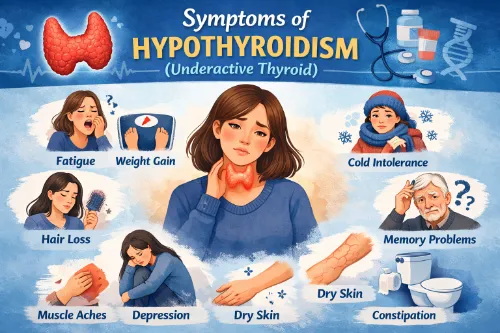
Hypothyroidism (underactive thyroid) happens when the thyroid gland does not make enough thyroid hormone to keep your body running at its normal speed.
Because thyroid hormones affect metabolism, energy, mood, and many organs, low levels can cause a wide range of symptoms that often develop slowly and can be mistaken for aging, stress, or other conditions.
You can explore this topic in more detail in our main guide Hypothyroidism (Underactive Thyroid) and symptom‑focused article Symptoms of Hypothyroidism, alongside trusted resources from NIDDK/NIH, Mayo Clinic, NHS, and the American Thyroid Association.
How Symptoms of Hypothyroidism Typically Present
Hypothyroidism symptoms often creep in slowly, so they are easy to blame on stress, aging, or a busy lifestyle. At the beginning, you might only notice one or two things—like feeling more tired than usual or gaining a bit of weight—without a clear reason.
Over months or years, more symptoms can appear and start to “add up,” making patterns easier to recognize, such as ongoing fatigue plus feeling cold, dry skin, and constipation. Because the onset is so gradual, many people only seek help when symptoms begin to interfere with work, relationships, or daily activities.
Tiredness, low energy, and feeling “slowed down”
A hallmark of hypothyroidism is feeling slowed both physically and mentally. You may feel exhausted even after a full night’s sleep, rely more on naps or caffeine, or struggle to get through your usual tasks. Everyday activities—climbing stairs, doing housework, exercising, or concentrating on detailed work—can feel more draining than before.
Some people describe their thinking as “foggy,” with slower processing, forgetfulness, and difficulty finding words. This combination of physical fatigue and brain fog can significantly affect productivity and mood.
Weight, temperature, and general body changes
Because thyroid hormones help regulate metabolism, many people with hypothyroidism notice changes in weight and temperature tolerance. Weight gain or difficulty losing weight despite eating and exercising as usual is common, and some people also experience fluid retention and a puffy face or swollen hands and feet.
Feeling colder than others in the same room, needing extra layers, or having cold hands and feet is another frequent complaint. Skin may become dry, rough, or itchy, and hair can thin or shed more than usual, including eyebrow thinning at the outer edges. Nails may become brittle and prone to breaking.
Mood, digestion, and muscles
Hypothyroidism can affect emotional health and digestion in ways that seem unrelated at first glance. Low mood, sadness, or depression can develop or worsen, sometimes without an obvious trigger, and you may feel less motivated or less interested in activities you used to enjoy.
Constipation is common due to slower digestion, and some people notice bloating or abdominal discomfort. Muscle aches, stiffness, cramps, or a sense of weakness—especially in the thighs, hips, shoulders, or arms—may also appear, making it harder to climb stairs, get up from a low chair, or carry heavy objects.
When to seek testing and why blood work matters
Because all of these symptoms are nonspecific and can overlap with many other conditions, the only reliable way to confirm hypothyroidism is with blood tests. The key tests are thyroid‑stimulating hormone (TSH) and free thyroxine (free T4). In primary hypothyroidism, TSH is usually high (your brain is “asking” the thyroid to work harder), and free T4 is low or low‑normal.
If you notice persistent fatigue, feeling colder than others, weight or skin changes, constipation, or brain fog—especially if several symptoms are present together—it’s important to talk with a healthcare provider. They can order the appropriate thyroid tests, interpret the results in context, and discuss whether treatment (usually with levothyroxine) is needed to restore hormone levels and relieve symptoms.
Common Day‑to‑Day Symptoms
Energy, Weight, and Temperature
Some of the most typical symptoms involve energy, weight, and temperature control.
- Fatigue and low energy: Persistent tiredness, feeling “worn out,” or needing more sleep than usual.
- Weight gain or difficulty losing weight: Often modest, but persistent, even without major changes in diet or exercise.
- Increased sensitivity to cold: Feeling cold when others are comfortable, wearing extra layers, or preferring warmer rooms.
These symptoms reflect slowed metabolism and reduced heat production when thyroid hormone is low.
Skin, Hair, and Nails
Hypothyroidism frequently affects the skin and hair.
- Dry, rough, or pale skin.
- Dry, brittle hair; hair thinning or hair loss, sometimes including thinning of the outer eyebrows.
- Dry or brittle nails that break easily.
These symptoms can also occur for other reasons, but combined with fatigue and cold intolerance they should raise suspicion of an underactive thyroid.
Digestive Symptoms
Slower metabolism can slow digestion.
- Constipation or harder stools than usual.
- Bloating or a general feeling that digestion is slower.
If constipation is new, persistent, and accompanied by other thyroid symptoms, testing may be appropriate.
Mood, Memory, and Brain Function
Thyroid hormone is important for brain function at all ages.
People with hypothyroidism may notice:
- Low mood or depression.
- Irritability, feeling “flat,” or less interest in normal activities.
- Slow thinking, poor concentration, or “brain fog.”
- Memory problems or feeling forgetful.
These changes can be mild or significant and sometimes lead people to seek help for mood issues before a thyroid problem is recognized.
Muscles, Joints, and Heart
Hypothyroidism can affect muscles, joints, and the cardiovascular system.
Common features include:
- Muscle weakness, especially in the shoulders and hips.
- Aches, cramps, or stiffness in muscles and joints.
- Slowed heart rate (bradycardia) and sometimes low exercise tolerance.
- Fluid retention or puffiness, especially in the face, hands, and feet in more advanced cases.
If untreated long term, hypothyroidism can contribute to high cholesterol and increased cardiovascular risk.
Symptoms in Women
Women are more likely to develop hypothyroidism, particularly due to autoimmune conditions like Hashimoto’s disease. We cover this in detail in Thyroid Symptoms in Women.
Female‑specific symptoms can include:
- Heavy, irregular, or more frequent menstrual periods.
- Fertility problems, difficulty conceiving, or increased risk of miscarriage.
- Worsening symptoms during pregnancy or postpartum, including postpartum thyroiditis.
Because these symptoms overlap with many gynecologic conditions, thyroid testing is often part of the evaluation for menstrual or fertility concerns.
Symptoms in Men
Hypothyroidism also affects men, although it is less common and sometimes missed. We discuss this further in Thyroid Symptoms in Men.
Men may experience:
- Low libido and sexual dysfunction, including erectile problems.
- Reduced energy and exercise tolerance.
- Mood changes, such as low mood, irritability, or poor concentration.
- Weight gain and increased body fat, particularly around the waist.
Persisting symptoms should prompt a discussion with a healthcare provider and consideration of thyroid testing.
Physical Signs Your Doctor May Notice
In addition to symptoms you feel, your doctor may notice signs on examination.
These can include:
- A slow heart rate and lower blood pressure.
- Puffy face, especially around the eyes.
- Hoarse voice or slowed speech.
- Thickened skin or swelling in the hands and feet in more advanced cases (myxoedema).
- Enlarged thyroid (goiter) in some people, especially if iodine imbalance or autoimmune thyroid disease is present.
These signs, combined with your symptom history, guide decisions about testing and management.
When to See a Doctor
Consider seeing a healthcare professional if you notice several of the following for more than a few weeks:
- Persistent fatigue or feeling slowed down.
- Unexplained weight gain or difficulty losing weight.
- Feeling unusually cold compared with others.
- Ongoing constipation, dry skin, or hair changes.
- Low mood, brain fog, or memory problems.
- Changes in periods, fertility, or sexual function.
If symptoms are severe or you develop chest pain, severe shortness of breath, or confusion, seek urgent care, as very advanced hypothyroidism can be life‑threatening.
You can learn what to expect at a visit in our article How Thyroid Problems Are Diagnosed.
Pro Tip for Daily Living with Hypothyroidism‑Type Symptoms
- Before your appointment, list your top 5 symptoms, when they started, how often they occur, and anything that helps or worsens them; this makes it easier for your provider to see patterns.
- Track your weight, temperature preference (e.g., always cold), bowel habits, and moodfor a couple of weeks – this can support your history and help decide whether thyroid tests are appropriate.
- If you already have a thyroid diagnosis, bring a list of current medications, supplements, and recent blood test results to any new appointment, so your team can link symptoms to your latest levels.
Frequently Asked Questions (FAQ)
1. Are fatigue and weight gain always due to hypothyroidism?
No. Fatigue and weight gain are common and can have many causes, including lifestyle, sleep problems, mood disorders, and other illnesses. They become more suggestive of hypothyroidism when they occur together with other symptoms such as cold intolerance, dry skin, constipation, and menstrual changes.
2. Can you have hypothyroidism with only a few mild symptoms?
Yes. Some people have only mild symptoms such as tiredness or dry skin, especially early in the condition or in subclinical hypothyroidism. That’s why blood tests are important if your symptoms persist or you are at higher risk (for example, autoimmune disease, family history, or prior neck radiation).
3. Do hypothyroidism symptoms go away once treatment starts?
Many symptoms improve significantly with the right dose of levothyroxine, but it can take weeks to months for energy, skin, hair, and mood to fully recover. Some issues, such as weight or cholesterol, may also need lifestyle changes and cardiovascular risk management.
4. Can hypothyroidism symptoms come back even if I’m on treatment?
Yes. Symptoms can return if your dose is no longer correct (for example, due to weight change, new medications, or pregnancy), or if you miss doses regularly. Regular follow‑up and blood tests help keep thyroid levels in range and reduce the chance of recurrent symptoms.
5. Are symptoms different in older adults?
Older adults may have fewer classic signs and instead present mainly with fatigue, memory issues, or heart problems such as a slow heart rate or high cholesterol. Because symptoms can be subtle, guidelines recommend a low threshold for thyroid testing in older adults with unexplained fatigue or cognitive changes.
6. Can children and teens have hypothyroidism symptoms?
Yes. Children may show slowed growth, delayed puberty, fatigue, weight gain, or school difficulties, while infants can have feeding problems, jaundice, constipation, and poor growth. Prompt diagnosis and treatment are crucial because untreated hypothyroidism in early life can affect growth and brain development.
7. What if my tests are “borderline” but I have many symptoms?
This situation may represent subclinical hypothyroidism, where TSH is slightly high but T4 is still normal. Decisions about treatment are individualized and may depend on your symptoms, antibody levels, age, pregnancy plans, and heart risk; your doctor may suggest close monitoring or a trial of treatment.
Disclaimer: This information is for educational purposes only and does not replace medical advice, diagnosis, or treatment from your own healthcare provider.
Written by: Eden Grace Ramos-Arsenio, RN
Sources: National Institute of Diabetes and Digestive and Kidney Diseases (NIDDK/NIH); NHS; Mayo Clinic; MedlinePlus; MedlinePlus Medical Encyclopedia; American Thyroid Association (ATA); Patient.info; Penn Medicine; Mayo Clinic Health System; peer‑reviewed medical and nursing journals.