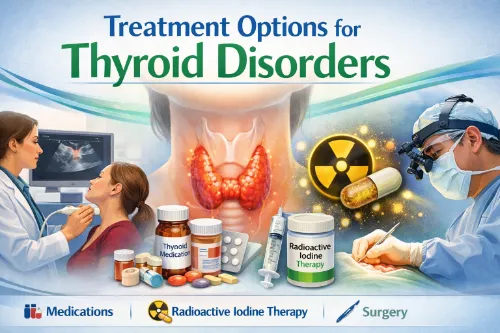
Treatment for Thyroid disorders are usually very manageable, and most people do well once the right treatment and dose are found. Treatment depends on whether your thyroid is underactive, overactive, structurally abnormal (nodules/goiter), or affected by cancer.
This article supports your main page Treatment Options for Thyroid Disorders.
Goals of Treatment
Across all thyroid conditions, treatment aims to:
- Restore and maintain normal thyroid hormone levels in the blood.
- Relieve day‑to‑day symptoms (energy, mood, weight, heart rate, temperature tolerance).
- Protect long‑term health (heart, bones, fertility, pregnancy, and cancer risk).
- Minimise side effects and fit with your preferences and lifestyle.
Treatment decisions are based on test results, the underlying cause, your age, other medical problems, and whether you are pregnant or planning pregnancy.
Treating Hypothyroidism (Underactive Thyroid)
The standard treatment for an underactive thyroid is levothyroxine, a synthetic form of T4.
Levothyroxine Replacement
- Taken as a once‑daily tablet, usually in the morning on an empty stomach.
- Your body converts T4 to T3 as needed, mimicking normal physiology.
- The dose is adjusted using TSH and free T4 levels plus your symptoms.
Key points:
- It may take several weeks to feel better, as hormone levels and tissues readjust.
- Dose needs can change with weight changes, pregnancy, ageing, and new medications.
- In most long‑term primary hypothyroidism (for example, Hashimoto’s), treatment is usually lifelong.
More detail: Hypothyroidism (Underactive Thyroid) and Blood Tests.
Other Thyroid Hormone Preparations
- Some people ask about T4/T3 combination treatment or natural desiccated thyroid.
- Evidence supports levothyroxine alone as first‑line; combination or other preparations are generally reserved for selected cases and specialist care.
- Any change in preparation should be supervised with careful monitoring.
Treating Hyperthyroidism (Overactive Thyroid)
For an overactive thyroid, main options are antithyroid drugs, radioactive iodine, and surgery. The choice depends on cause (for example, Graves’ disease vs toxic nodule), severity, age, and preferences.
Antithyroid Medications
Common medicines: carbimazole (or methimazole) and propylthiouracil (PTU).
They:
- Block the thyroid from making new hormone.
- Are usually taken for 12–18 months in Graves’ disease to aim for remission, or longer in some cases.
- Require regular blood tests (TSH, free T4, sometimes free T3) and monitoring for side effects.
Possible side effects:
- Mild: rash, itching, joint aches.
- Rare but serious: low white blood cell count (agranulocytosis), liver problems—urgent medical review is needed for fever, sore throat, mouth ulcers, or jaundice.
See: Hyperthyroidism (Overactive Thyroid).
Radioactive Iodine Therapy
Radioactive iodine (RAI) is a targeted treatment that gradually shrinks overactive thyroid tissue.
- Taken as a capsule or liquid, usually once.
- The thyroid absorbs the iodine; radiation damages overactive cells over weeks to months.
- Commonly used for Graves’ disease, toxic nodules, and toxic multinodular goiter.
Important points:
- Many people become hypothyroid afterwards and then take levothyroxine long term.
- There are temporary restrictions around close contact, particularly with children and pregnant people, depending on dose and local protocols.
- Generally avoided in pregnancy and breastfeeding, and used with caution in people with significant eye disease (Graves’ orbitopathy).
More detail: Radioactive Iodine.
Thyroid Surgery (Thyroidectomy)
Surgery may be recommended when:
- There is a large goiter causing swallowing or breathing symptoms.
- Nodules are suspicious or confirmed cancer.
- Hyperthyroidism is difficult to control or other options are unsuitable.
Types:
- Total thyroidectomy – removal of the whole thyroid (most often for cancer or severe disease).
- Lobectomy/hemithyroidectomy – removal of part of the gland (for selected nodules or less extensive disease).
After surgery:
- Most people need lifelong levothyroxine.
- Calcium levels may be monitored if parathyroid glands are affected.
More in: Surgery and Thyroid Cancer (Brief Overview).
Treating Structural Problems: Nodules and Goiter
Not all nodules or enlarged thyroids need active treatment; many only need monitoring.
Watchful Waiting (Monitoring)
Appropriate when:
- Nodules are small and appear benign on ultrasound and/or biopsy.
- There are no compressive symptoms (breathing, swallowing) or high cancer risk features.
- Thyroid hormone levels are normal.
Monitoring includes:
- Periodic ultrasound (for size and appearance).
- Periodic TSH/free T4 to check function.
See: Thyroid Nodules & Goiter and Imaging Tests.
When Treatment Is Needed
Treatment may be recommended when:
- Nodules are cancerous or strongly suspicious—usually surgery.
- Goiter causes compressive symptoms or cosmetic concerns.
- A nodule is toxic (overproducing hormone)—options include RAI, surgery, or sometimes ablation procedures in specialist centres.
Treating Thyroid Cancer
Most thyroid cancers are highly treatable, especially when detected early.
Common components of treatment:
- Surgery – often total thyroidectomy, sometimes with lymph node removal.
- Radioactive iodine – used after surgery for some types (for example, many papillary and follicular cancers) to destroy remaining thyroid tissue or microscopic cancer.
- Thyroid hormone therapy – levothyroxine doses are often adjusted to keep TSH in a lower range to reduce the chance of recurrence.
- Targeted therapies – for advanced or aggressive disease types in specialist centres.
Follow‑up includes regular clinical review, blood tests (for example, thyroglobulin in certain cancers), and imaging.
See: Thyroid Cancer (Brief Overview).
Diet, Lifestyle, and Supportive Care
Medication or procedures are central, but lifestyle and self‑management also matter.
Key points:
- Medication timing:
- Levothyroxine is best taken on an empty stomach, with water, away from calcium, iron, soy, and some other drugs that affect absorption.
- Iodine:
- Aim for a balanced intake; avoid both severe restriction and excess supplementation unless advised.
- General health:
- Regular physical activity, balanced diet, good sleep, and stress management support overall wellbeing and may ease symptoms like fatigue and mood changes.
- Mental health and support:
- Living with a long‑term condition can affect mood and relationships; support groups, counselling, and reliable information can help.
More tips: Diet & Lifestyle and Thyroid Health and Living with a Thyroid Condition.
Choosing the Right Treatment for You
Your treatment plan should be individualised, considering:
- Type and cause of thyroid disorder
- Severity of symptoms and test abnormalities
- Age, pregnancy status, other health conditions
- Personal preferences and how you feel about medications, radioactive treatments, or surgery
Good questions to ask at your appointment:
- “What type of thyroid condition do I have, and what is causing it?”
- “What are my treatment options, and what are the pros and cons of each?”
- “What are we aiming for with treatment (target TSH, symptom improvements)?”
- “How often will I need monitoring and follow‑up?”
Frequently Asked Questions
Can my thyroid treatment ever be stopped, or is it always lifelong?
It depends on the cause: hypothyroidism from Hashimoto’s is usually lifelong, whereas some hyperthyroidism treatments (like a course of antithyroid drugs) may lead to remission so medication can sometimes be stopped.
How long does it usually take to feel better after starting thyroid medication?
Many people notice some improvement within a few weeks, but full symptom relief can take several months as hormone levels stabilise and tissues gradually respond.
Can I switch between different brands or generic versions of levothyroxine?
Switching is possible but should be monitored, because small differences in absorption between brands can affect TSH levels and may require a dose adjustment.
Are there non‑surgical options to shrink benign thyroid nodules or goiter?
In selected centres, techniques like radiofrequency ablation or ethanol injection can shrink certain benign nodules, especially when surgery or radioactive iodine are less suitable.
Will I gain or lose weight once my thyroid is treated?
The goal is to normalise metabolism; some people lose weight if they were hypothyroid, while others find weight stabilises once levels are corrected, but treatment is not a weight‑loss medication.
Can thyroid medications interact with common drugs like antidepressants or heart medicines?
Yes, several medicines (for example, some antidepressants, blood thinners, and heart rhythm drugs) can interact with thyroid hormones or require dose adjustments, so all prescriptions should be reviewed together.
Is it safe to become pregnant while on thyroid medication?
Levothyroxine is safe and essential in pregnancy, but doses often need to be increased and monitored closely; some hyperthyroidism treatments are changed or avoided depending on the stage of pregnancy.
What side effects should make me contact my doctor urgently while on antithyroid drugs?
Fever, sore throat, mouth ulcers, or yellowing of the skin/eyes can signal rare but serious problems like low white cells or liver injury and need urgent assessment.
Can diet or supplements replace medical treatment for thyroid disease?
Diet and supplements cannot substitute for thyroid hormone or antithyroid medications when they are needed; they may play a supportive role but should not delay evidence‑based treatment.
How often will my treatment plan be reviewed over the long term?
Once stable, many people have at least yearly reviews of symptoms, thyroid blood tests, and medications, with more frequent checks after any dose changes, new illnesses, or life events like pregnancy.
Disclaimer: This information is for educational purposes only and does not replace medical advice, diagnosis, or treatment from your own healthcare provider.
Written by: Eden Grace Ramos-Arsenio, RN
Sources: National Institute of Diabetes and Digestive and Kidney Diseases (NIDDK/NIH); Mayo Clinic; NHS; American Thyroid Association (ATA); Cleveland Clinic; Endocrine Society; Thyroid UK; MedlinePlus; peer‑reviewed medical and nursing journals.