
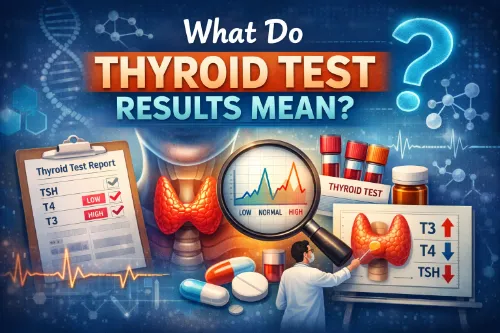
Thyroid test results are interpreted by looking at TSH, free T4, often free T3, and sometimes antibodies together, not in isolation. This article explains the most common patterns and what they usually mean, to support your page What Do Thyroid Test Results Mean? and your other thyroid guides.
Key Tests You’ll See on Your Report
The main thyroid‑related tests are:
- TSH (Thyroid‑Stimulating Hormone) – from the pituitary; signals the thyroid to make hormone.
- Free T4 (free thyroxine) – active circulating T4 hormone from the thyroid.
- Free T3 (free triiodothyronine) – active T3 hormone, mostly converted from T4.
- Antibodies – such as TPOAb, TgAb, and TRAb, which tell you if the immune system is involved.
Reference ranges can vary slightly between laboratories, so it’s important to use the ranges printed on your own report. For how these tests are done, see your article Blood Tests.
Helpful overviews:
- NIDDK thyroid tests and diseases: https://www.niddk.nih.gov/health-information/endocrine-diseases
- ATA thyroid function tests: https://www.thyroid.org/thyroid-function-tests/
Normal or “Euthyroid” Results
A typical normal pattern looks like:
- TSH: within the lab’s reference range
- Free T4: within the reference range
- Free T3: within the reference range (if checked)
This usually means your thyroid is working properly (euthyroid), even if you have nonspecific symptoms like fatigue or weight changes. In this case, your doctor may look for other causes of your symptoms (for example, anemia, sleep problems, mood disorders, perimenopause, heart or lung issues).
General summaries:
- NHS thyroid disorders: https://www.nhs.uk/conditions/thyroid-disorders/
Patterns That Suggest Hypothyroidism
1. Overt Hypothyroidism
Pattern:
- TSH: high
- Free T4: low
What it usually means:
- The thyroid is not making enough hormone; the pituitary is “shouting” (high TSH) to try to push it.
- This is called overt hypothyroidism and usually needs treatment with levothyroxine.
Common symptoms (see Symptoms of Hypothyroidism) include fatigue, weight gain, cold intolerance, dry skin, constipation, and low mood.
External resources:
- Mayo Clinic – Hypothyroidism: https://www.mayoclinic.org/diseases-conditions/hypothyroidism/symptoms-causes/syc-20350284
- ATA – Hypothyroidism: https://www.thyroid.org/hypothyroidism/
2. Subclinical Hypothyroidism
Pattern:
- TSH: mildly raised (just above the reference range)
- Free T4: normal
What it usually means:
- The thyroid is starting to struggle, but hormone levels are still in range.
- This is called subclinical hypothyroidism.
What happens next:
- Your doctor may repeat tests after a few months and consider treatment based on symptoms, TSH level, age, pregnancy plans, and antibodies.
- Positive TPO antibodies make long‑term hypothyroidism more likely.
Background:
- NIDDK – Hypothyroidism: https://www.niddk.nih.gov/health-information/endocrine-diseases/hypothyroidism
Patterns That Suggest Hyperthyroidism
3. Overt Hyperthyroidism
Pattern:
- TSH: low or undetectable
- Free T4: high and/or
- Free T3: high
What it usually means:
- The thyroid is making too much hormone; the pituitary has “shut down” TSH to almost zero.
- This is called overt hyperthyroidism and usually needs treatment (antithyroid drugs, radioactive iodine, or occasionally surgery).
Typical symptoms (see Symptoms of Hyperthyroidism) include weight loss, palpitations, tremor, anxiety, heat intolerance, sweating, and loose stools.
External resources:
- NIDDK – Hyperthyroidism: https://www.niddk.nih.gov/health-information/endocrine-diseases/hyperthyroidism
- Endocrine Society – Hyperthyroidism: https://www.endocrine.org/patient-engagement/endocrine-library/hyperthyroidism
4. Subclinical Hyperthyroidism
Pattern:
- TSH: low or suppressed
- Free T4: normal
- Free T3: normal
What it usually means:
- Thyroid hormones are still in range, but the pituitary has already lowered TSH.
- This is called subclinical hyperthyroidism.
Why it matters:
- Long‑term, even mild over‑activity can affect the heart and bones, especially in older adults.
- Doctors weigh risks, symptoms, and age when deciding whether to treat or monitor.
Background:
- Cleveland Clinic – Thyroid Disease: https://my.clevelandclinic.org/health/diseases/8541-thyroid-disease
Patterns Influenced by Treatment
If you are already on thyroid medication, your results reflect both your thyroid and your dose.
On Levothyroxine (for Hypothyroidism)
Typical goals:
- TSH: in the target range agreed with your provider (often mid‑normal, sometimes different in pregnancy or specific conditions)
- Free T4: within the reference range
Common situations:
- TSH high, free T4 low/low‑normal: dose may be too low or not taken consistently.
- TSH low, free T4 high/upper range: dose may be too high for your current needs.
Your doctor will usually adjust the dose and recheck after about 6–8 weeks, then less often once stable. See Long‑Term Monitoring.
Guidance examples:
- Mayo Clinic – Hypothyroidism: diagnosis & treatment: https://www.mayoclinic.org/diseases-conditions/hypothyroidism/diagnosis-treatment/drc-20350289
On Antithyroid Drugs (for Hyperthyroidism)
Goals:
- TSH: back within range (often lags behind early on).
- Free T4/T3: normal.
Early in treatment, free T4/T3 may normalize before TSH, so clinicians look at all results plus symptoms before changing doses.
More background:
- Hyperthyroidism overview: https://mededuhub.com/chronic/thyroid/hyperthyroidism
Thyroid Antibodies and What They Mean
Antibody tests add clues about cause, not just function.
- TPO antibodies (TPOAb) positive:
- Suggest Hashimoto’s thyroiditis if TSH is raised or rising.
- Mean a higher risk of developing hypothyroidism over time.
- TSH‑receptor antibodies (TRAb/TSI) positive:
- Support a diagnosis of Graves’ disease if thyroid hormones are high and TSH is low.
- Tg antibodies (TgAb):
- Often seen in autoimmune thyroid disease.
- In people with thyroid cancer, they can complicate thyroglobulin monitoring.
Your overview:
External:
- NIDDK – Hashimoto’s disease: https://www.niddk.nih.gov/health-information/endocrine-diseases/hashimotos-disease
- NIDDK – Graves’ disease: https://www.niddk.nih.gov/health-information/endocrine-diseases/graves-disease
Special and Mixed Situations
Central (Pituitary) Thyroid Problems
Sometimes the pituitary, not the thyroid, is the main issue.
Pattern:
- TSH: low‑normal or slightly low
- Free T4: low
What it may mean:
- The pituitary is not producing enough TSH (central hypothyroidism).
- This pattern needs specialist assessment with other pituitary hormone tests and imaging.
Illness, Biotin, and Other Interferences
Results can be distorted by:
- Severe non‑thyroid illness (“sick euthyroid syndrome”)
- High‑dose biotin supplements, which can falsely lower TSH and raise T4/T3 in some lab assays
- Certain medications (for example, steroids, amiodarone, heparin, high‑dose aspirin)
If results don’t match your symptoms, your doctor may repeat tests after illness, review medicines, or ask you to pause biotin (if safe) before retesting.
General info:
- MedlinePlus – Thyroid tests: https://medlineplus.gov/lab-tests/thyroid-function-tests/
How to Read Your Own Report (With Your Doctor)
A simple way to look at your report:
- Check TSH – in range, high, or low?
- Check free T4 (and free T3 if available) – in range, high, or low?
- Match the pattern to common combinations above.
- Consider context – pregnancy, illness, medications, and whether you’re on thyroid treatment.
- Discuss with your clinician – ask what the pattern means and what the plan is (monitor, treat, or adjust dose).
Pro Tip for Daily Living
- Keep a running list of dates and values for TSH, free T4, free T3, and any antibodies; patterns over time are more useful than one result.
- Always note the lab’s reference ranges alongside the numbers.
- Bring both your symptom notes and your results to appointments so decisions can be made based on how you feel and what the tests show together.
Frequently Asked Questions
Do I need to fast before having thyroid blood tests?
Most thyroid function tests (TSH, free T4, free T3) do not require fasting, but some clinicians prefer morning, pre‑breakfast samples for consistency.
Should I take my thyroid tablet before or after the blood test?
Many clinicians recommend doing the blood test in the morning before taking your daily levothyroxine so levels reflect the “trough” and are easier to compare over time.
Why are my thyroid results different between two laboratories?
Different labs use different assay methods and reference ranges, so small differences are common; this is why repeat testing is ideally done at the same lab when possible.
What is ‘reverse T3’ and do I need it tested?
Reverse T3 is an inactive form of thyroid hormone, and routine measurement is not recommended for diagnosing hypothyroidism or hyperthyroidism in standard practice.
Can I have normal TSH but still have a thyroid problem?
In some situations—such as early disease, central (pituitary) disorders, or illness—TSH may fall within range while free T4 or T3 is abnormal, so doctors sometimes check multiple tests together.
Do thyroid antibody levels need to be monitored regularly once they’re positive?
Antibodies help diagnose autoimmune thyroid disease, but tracking their levels over time usually doesn’t guide day‑to‑day treatment; TSH and free T4 are more useful for follow‑up.
Can being sick with another illness temporarily change my thyroid tests?
Yes, serious infections or other acute illnesses can cause a “non‑thyroidal illness” pattern, making results look abnormal even when the thyroid itself is healthy.
How long after changing my dose will blood tests show the full effect?
Thyroid levels typically take several weeks to stabilize, so tests are often repeated about 6–8 weeks after any dose change.
Are there age‑specific ‘normal’ ranges for TSH?
TSH tends to run slightly higher in older adults, and some guidelines accept a higher “normal” range with age to avoid overtreatment.
What should I do if my results are borderline but I feel unwell?
Borderline values often need repeat testing and interpretation in context; doctors may watch trends over time, review other causes of symptoms, or consider a cautious treatment trial.
Disclaimer: This information is for educational purposes only and does not replace medical advice, diagnosis, or treatment from your own healthcare provider.
Written by: Eden Grace Ramos-Arsenio, RN
Sources: National Institute of Diabetes and Digestive and Kidney Diseases (NIDDK/NIH); Mayo Clinic; NHS; American Thyroid Association (ATA); Cleveland Clinic; Endocrine Society; Thyroid UK; MedlinePlus; peer‑reviewed medical and nursing journals.