
sleep divorce Key Takeaways
More couples are choosing a sleep divorce — sleeping in separate beds or rooms — to improve their rest, mood, and relationship.
- A sleep divorce can reduce nightly conflicts over snoring, tossing, and temperature.
- Separate sleep spaces often lead to deeper REM cycles and better daytime energy.
- Many couples report feeling closer after a good night’s rest, not farther apart.
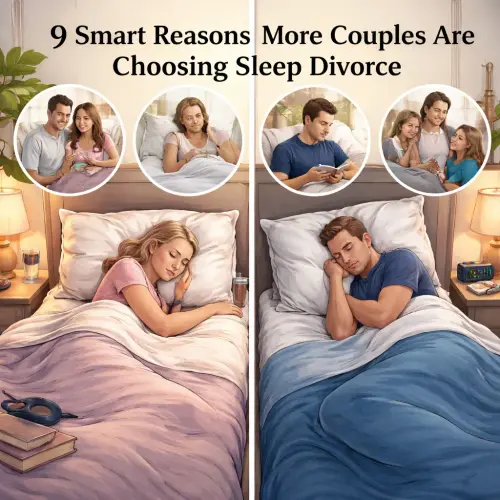
What’s Driving the Sleep Divorce Trend?
Snoring, restless legs, different bedtimes, and blanket wars — these aren’t just minor annoyances. They’re real disruptors that erode sleep quality and, over time, relationship satisfaction. The sleep divorce trend has emerged as a practical solution for couples who value both their health and their partnership. Instead of suffering through fragmented sleep, more partners are opting for separate sleeping arrangements without separating their lives. For a related guide, see 15 Warning Signs of Undiagnosed Sleep Apnea You Should Know.
Let’s dive into the nine most compelling reasons for sleep divorce that are convincing modern couples to make the switch.
1. Stop the Snore Wars
Snoring is one of the top reasons for sleep divorce. According to the American Academy of Sleep Medicine, nearly 40% of adults snore, and it can wake a bed partner dozens of times a night. The American Academy of Sleep Medicine reports that sleep disruption from a partner’s snoring can mimic the effects of sleep apnea.
Sleeping apart eliminates this nightly friction. When both partners can breathe and rest without interruption, they wake up less resentful and more refreshed.
2. Different Sleep Schedules Don’t Mix
One partner is an early bird; the other is a night owl. One works late shifts; the other wakes at 5 a.m. for a run. These mismatches are classic reasons for sleep divorce. When you share a bed, one person’s routine constantly disrupts the other’s sleep.
Separate bedrooms allow each person to follow their natural rhythm without guilt. The result: both partners fall asleep faster and stay asleep longer.
3. Temperature and Blanket Battles
He says it’s freezing; she says it’s boiling. He cocoons in a duvet; she sleeps under a thin sheet. Temperature preferences are deeply personal, and compromise often means one person is uncomfortable. This is a quiet but powerful driver behind the sleep divorce choice.
By sleeping separately, each partner controls their own thermostat and bedding. That means fewer middle-of-the-night wake-ups from being too hot or too cold.
4. Restless Legs and Nightly Tossing
Restless leg syndrome (RLS) affects 7-10% of the population, and periodic limb movement disorder can cause involuntary kicks every 20-30 seconds. These movements not only disturb the person with RLS but also the bed partner. Shared benefits of separate beds include uninterrupted sleep for both people. For a related guide, see 8 Types of Depression Disorders: Essential Expert Guide.
When one partner can kick, turn, or shift freely without disturbing the other, both experience higher quality sleep.
5. Better REM Sleep and Overall Health
Deep REM sleep is when your brain processes emotions, consolidates memories, and repairs cells. Every time you’re jolted awake by a partner’s movement or snore, you lose precious REM time. Couples sleeping apart often report waking up more alert and less moody. For a related guide, see 12 Surprising Links Between ADHD and Sleep Problems: Essential Insights.
The benefits of separate beds extend beyond rest — better sleep reduces inflammation, strengthens the immune system, and lowers stress hormones.
6. Preserving the Romance
It sounds counterintuitive, but many couples find that separate beds actually improve their sex life. When you’re not exhausted and resentful from bad sleep, you’re more likely to feel affectionate and intimate. The physical distance at night doesn’t mean emotional distance — it means intentional connection.
Some couples schedule time together before heading to their separate rooms, which can reignite spontaneity and desire.
7. Reducing Stress and Morning Irritability
Sleep deprivation is a known trigger for irritability, conflict, and even depression. When both partners are well-rested, they communicate more patiently and argue less. This is one of the most overlooked benefits of separate beds.
Many couples who try a sleep divorce report that their daytime interactions improve dramatically. They feel more like teammates and less like roommates who resent each other’s habits.
8. Addressing Different Sleep Disorders
Sleep apnea, chronic insomnia, and bruxism (teeth grinding) are medical conditions that affect sleep quality. When one partner has a diagnosed sleep disorder, the other often suffers too. The Sleep Foundation notes that separate sleeping arrangements can help manage these issues without medical complications.
A sleep divorce allows each person to use CPAP machines, white noise, or specific mattress firmness without negotiation.
9. The Rise of Customized Sleep Spaces
Interior design isn’t just about aesthetics anymore — it’s about sleep optimization. More homes are being built or renovated with dual master bedrooms or flexible guest rooms that double as personal sleep sanctuaries. This shift in home design reflects the growing acceptance of the sleep divorce trend.
Retailers now offer adjustable beds, cooling mattress pads, and blackout curtains designed for individual use. The stigma is fading, and practical comfort is taking priority.
How to Approach a Sleep Divorce
If you’re thinking about sleep divorce, talk openly with your partner. Emphasize that it’s about health, not rejection. Start with a trial period — maybe a week or two — to see how you both feel. Use the time apart to prioritize connection during the day.
Remember: a sleep divorce doesn’t mean an unhappy relationship. Many couples who choose it say they feel more connected, not less. The key is communication and mutual respect.
Useful Resources
- American Academy of Sleep Medicine — Authoritative guidelines on sleep health and disorders.
- The Sleep Foundation — Research-backed articles on improving sleep quality and managing sleep issues.
Frequently Asked Questions About sleep divorce
Does sleep divorce mean the relationship is in trouble?
Not at all. Many couples use sleep divorce to improve their sleep quality and reduce irritability, which can actually strengthen the relationship.
Is sleep divorce just a euphemism for breaking up?
No. Sleep divorce specifically refers to sleeping in separate beds or rooms while remaining in a committed romantic relationship.
Can sleep divorce help with snoring?
Yes. Sleeping in a separate room eliminates the immediate noise disturbance, allowing both partners to sleep without interruption from snoring.
Will sleeping apart affect intimacy?
Many couples report that sleep divorce improves intimacy because they are less tired and resentful. Intentional time together becomes more meaningful.
How do I bring up sleep divorce to my partner?
Frame the conversation around health and better rest, not rejection. Suggest a trial period and emphasize that it’s about improving both partners’ well-being.
Is sleep divorce common?
Yes. Surveys show that about 1 in 5 couples sleep in separate beds, and the number is rising.
What if we only have one bed?
Consider using a pullout couch, air mattress, or separate twin beds in the same room. Even a small separation can improve sleep.
Does sleep divorce help with insomnia?
It can. Without a partner’s movements or sounds, many people fall asleep faster and wake less often in the night.
Can couples still cuddle before sleep?
Absolutely. Many partners spend time together in one bed or room before moving to separate spaces for the night.
Is sleep divorce bad for children?
Not necessarily. Children are often unaware of their parents’ sleeping arrangements. A well-rested parent is more patient and engaged.
What is the difference between sleep divorce and separate beds?
Often the terms are used interchangeably. Sleep divorce can mean separate rooms or separate beds in the same room.
Does sleep divorce affect marriage longevity?
Studies show no negative effect on marriage longevity. In fact, better sleep can reduce conflict and support long-term satisfaction.
Are there health benefits to sleeping apart?
Yes. Better sleep quality supports cardiovascular health, immune function, mood regulation, and cognitive performance.
Can we still share a bed sometimes?
Many couples who choose sleep divorce still share a bed on weekends or when they want extra closeness. It’s flexible.
What if my partner wants to sleep together but I don’t?
Have an honest conversation. Explain your sleep struggles and suggest a trial period. A compromise may include starting the night together.
Does sleep divorce reduce arguments?
Many couples report fewer arguments about sleep habits, blanket hogging, and morning crankiness after trying separate sleeping arrangements.
Are there cultural differences in sleep divorce ?
Yes. In some cultures, separate beds are traditional. In others, it’s still stigmatized, but acceptance is growing worldwide.
How do I make separate rooms feel connected?
Use matching decor, keep communication open, and maintain rituals like morning coffee together or evening check-ins.
Can sleep divorce help with restless leg syndrome?
Yes. When the partner with RLS sleeps separately, their involuntary movements don’t disturb the other person, improving both partners’ rest.
Is sleep divorce a permanent arrangement?
It can be temporary or long-term. Many couples reassess over time and adjust their arrangement based on what’s working.