
minimalist home ideas Key Takeaways
Below are ten actionable minimalist home ideas , each with a quick explanation and a practical tip you can use right now.
- Small, consistent changes like a designated donation bin make minimalist home ideas stick.
- Focus on function over guest-pleasing — your home should serve you first.
- One-in, one-out rules prevent future clutter from creeping back in.
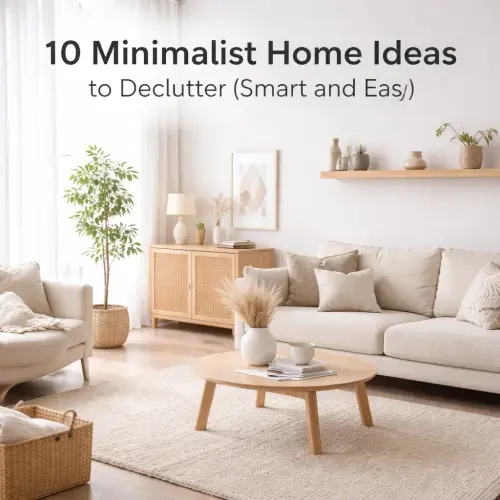
Why Bother With Minimalist Home Ideas in 2025?
Life feels loud enough already. Between work notifications, constant ads, and endless to-do lists, your home should be the one place where you can actually exhale. That’s exactly what minimalist home ideas offer: a way to strip back the visual noise so you can focus on what really matters — rest, connection, and creativity. For a related guide, see 12 Digital Detox Tips to Reclaim Your Time: A Proven Guide.
It’s not about living like a monk with a single chair. It’s about being intentional. Every item in your space should earn its keep, either by being useful or by bringing you genuine joy. When you declutter home spaces, you free up physical room — and mental energy too. For a related guide, see 10 Slow Living Habits for a Peaceful Life That Actually Work.
Let’s be real: no one has time for a full weekend purge every month. That’s why these ten ideas are designed to be simple, repeatable, and totally doable even if you’re juggling a packed schedule.
10 Simple Minimalist Home Ideas to Start Today
Below are ten actionable minimalist home ideas, each with a quick explanation and a practical tip you can use right now. Pick one, try it for a week, then add another.
1. Adopt a “No-Drop Zone” for High-Traffic Areas
Kitchen counters, entry tables, and bathroom vanities tend to become dumping grounds. Keys, mail, random pens — they pile up fast. Designate one small tray or bowl in each high-traffic spot as a temporary holding zone. Everything else belongs elsewhere.
Practical tip: Spend 60 seconds each evening clearing your no-drop zone back to zero. It sounds tiny, but it keeps visual clutter from spreading.
2. The “One-In, One-Out” Rule for Every Purchase
This is the golden rule of minimalist living tips. Before you bring a new item into your home — a sweater, a cookbook, a throw pillow — commit to removing one similar item. It trains your brain to think twice before buying and keeps your belongings manageable.
Practical tip: Keep a small cardboard box in your closet labeled “Out.” When you buy something new, put something old in the box. When the box fills up, donate it.
3. Create a “Clutter Quarantine” Drawer
Let’s be realistic: some clutter is inevitable. Chargers you don’t use daily, old birthday cards, random coupons. Instead of fighting every single piece, assign one kitchen or desk drawer as a temporary holding space. Once a month, go through it and decide what actually needs to stay.
Practical tip: Label the drawer “Review Monthly” so you don’t forget. That small reminder turns a guilt trip into a gentle nudge.
4. Rethink Your Wall Decor
Empty walls feel cold, but too many frames and shelves create a chaotic vibe. Choose three to five meaningful pieces — maybe a family photo, a small print, and a plant — and let them breathe. The negative space actually makes each item stand out more.
Practical tip: Take everything off your walls. Then only put back the pieces you missed after three days. You’ll be surprised how few that is.
5. Build a Capsule Wardrobe for Everyday Life
A capsule wardrobe isn’t just a fashion trend — it’s one of the most effective minimalist home ideas. Pick 30–40 pieces of clothing that mix and match easily, and store the rest out of sight. Getting dressed becomes a two-minute decision instead of a 10-minute struggle.
Practical tip: Rotate with the seasons. Store off-season clothes under your bed or in a plastic bin, and swap them out every six months.
6. Make Your Bed Every Morning
It sounds almost too simple, but making your bed instantly makes your bedroom feel tidier. It’s a small win that sets a calm tone for the rest of the day. Plus, it eliminates the visual weight of rumpled sheets and scattered pillows.
Practical tip: Keep your bedding simple — a fitted sheet, a flat sheet, a duvet, and two pillows. Fewer layers means less time making the bed.
7. Use Vertical Space for Storage
When countertops and tabletops get crowded, our first instinct is to buy bigger furniture. Instead, look up. Wall-mounted shelves, hooks behind doors, and hanging racks free up precious horizontal surface area and keep things visible (so you actually use them).
Practical tip: Install a slim pegboard in your home office for office supplies. It keeps your desk clear and items organized without taking up floor space.
8. Digitize Paper Clutter
Paper is one of the sneakiest clutter creators. Bills, manuals, kids’ artwork — they multiply like rabbits. Scan important documents and store them in cloud folders. Recycle the originals. For sentimental paper items (like letters), take a photo and then let the physical copy go.
Practical tip: Use a free app like Google Drive or Dropbox to create folders by category (taxes, medical, school). Set a reminder to scan documents once a month.
9. Design Multi-Use Spaces
A guest room that doubles as a home office. A dining table that becomes a craft table when the kids are in bed. Furniture that serves two purposes reduces the need for extra pieces — and fewer pieces mean less clutter.
Practical tip: Avoid buying single-use furniture (like a racing sim chair) unless you use it daily. Instead, invest in a good-quality sofa bed or a desk that folds into a wall.
10. Adopt a Weekly “15-Minute Tidy” Habit
Set a timer for 15 minutes every Saturday morning. Walk through your main living areas and put away anything that’s out of place. That’s it. No deep cleaning, no reorganizing — just a quick reset. You’ll be shocked how much difference a weekly scan makes.
Practical tip: Put your phone in another room during those 15 minutes. The goal is not to save time — it’s to be 100% present with your space.
Common Mistakes People Make When Trying Minimalist Living Tips
Even the best minimalist home ideas can backfire if you fall into these common traps. Avoid them to keep your decluttering momentum going.
Buying Storage Containers Before Decluttering
It feels productive to buy cute baskets and bins. But if you haven’t actually reduced your stuff, you’re just organizing clutter. Always purge first, then buy storage to contain what remains.
Trying to Do Everything at Once
A weekend mega-purge is exhausting and rarely sustainable. You end up tossing things you later regret and burning out so fast you never do it again. Take the slow-and-steady approach: one drawer, one shelf, one room per week.
Ignoring Your Own Habits
Decluttering without changing your purchasing or storage habits is like mopping the floor with a leaky faucet still running. Pay attention to where clutter tends to accumulate in your daily routine, and address the root cause — not just the symptom.
How to Maintain a Clutter-Free Home Long Term
Once you’ve implemented these minimalist home ideas, maintenance is key to keeping the calm. Here’s a simple rhythm that works for most people:
- Daily (2 minutes): Clear the no-drop zones and make the bed.
- Weekly (15 minutes): The Saturday tidy scan.
- Monthly: Review your quarantine drawer and your wardrobe rotation.
- Seasonal: Do a deeper sweep — donate clothes, check pantry, replace what’s broken.
Remember: the goal isn’t perfection. It’s a home that feels lighter and supports your actual life. If you slip up, just restart tomorrow. That’s the whole point of minimalist living tips — they’re flexible and forgiving.
Useful Resources
If you’re ready to go deeper, here are two trusted sources for more minimalist home ideas and decluttering strategies:
- The Minimalists — Joshua Fields Millburn and Ryan Nicodemus offer practical guides and essays on living with less.
- Becoming Minimalist — A blog focused on simple living tips and real-life stories from people who decluttered their homes and lives.
Frequently Asked Questions About minimalist home ideas
What is the first step to decluttering my home?
Start small — pick one drawer, shelf, or corner. Removing everything from that small space, cleaning it, then putting back only what you use and love is the most effective first-step minimalist home idea.
How do I declutter when I’m emotionally attached to things?
Take a photo of sentimental items before letting them go. The memory lives on in the image, not the physical object. This trick helps many people release emotional clutter while preserving the story.
How long does it take to see results with minimalist home ideas ?
Most people notice a difference in how their main living areas feel within the first week. A full home transformation can take 3–6 months if you work at a sustainable pace. For a related guide, see 8 Proven Morning Routines That Boost Productivity (Smart Start).
Can minimalist home ideas work in a small apartment?
Absolutely — minimalism is especially powerful in small spaces. Fewer belongings make a tiny apartment feel open and airy rather than cramped. Many of these tips are designed with limited square footage in mind.
What’s the best way to handle gifts I don’t want?
Receive the gift with genuine gratitude. If it doesn’t serve you, pass it on to someone who might love it — donate, regift thoughtfully, or return it to the store. The giver’s intention matters more than the object itself.
How do I declutter when other family members are not on board?
Focus only on your own belongings and shared spaces where you have authority (like the kitchen counters). Lead by example — when others see the calm you’re creating, they often become more open to change.
Are there minimalist home ideas for people who love collecting?
Yes — curate instead of collect. Choose a small showcase shelf for your favorite pieces and rotate items periodically. This honors the collection without overwhelming your space.
What do I do with all the stuff I declutter?
Donate gently used items to local charities, sell higher-value pieces online (Facebook Marketplace, eBay), and recycle or trash what’s worn out. Some cities have electronic waste recycling centers for old gadgets.
How do I stop buying things I don’t need?
Implement a 24-hour waiting rule for non-essential purchases. Write the item down on a list and wait a full day before buying. Most impulse urges pass within that time.
What are the best minimalist home ideas for kitchens?
Clear off countertops except for daily-use tools (coffee maker, toaster). Use drawer organizers for utensils and pots. Keep pantry items in matching containers so things look uniform and tidy.
Do minimalist home ideas cost money to implement?
Not really — the core ideas are about reducing, not buying. If you need storage solutions, start with what you have (bread baskets, shoeboxes) before purchasing anything new.
How do I maintain motivation after the initial purge?
Focus on the feeling your space gives you, not the stuff you removed. Take before-and-after photos to remind yourself why you started. Join online minimalist communities for encouragement.
Can minimalism work with kids and pets?
Yes — choose durable, washable fabrics and fewer toys that your kids actually play with. Rotate toys in and out of a closet to keep things fresh without piling up.
What’s the difference between minimalism and decluttering?
Decluttering is the act of removing excess. Minimalism is the mindset that helps you keep things manageable in the first place. Decluttering is the tool; minimalism is the lifestyle.
How do I organize digital clutter?
Unsubscribe from marketing emails, delete unused apps, and use a folder system for files. Set a monthly reminder to clean out your downloads folder and photo album screenshots.
What if I regret getting rid of something?
It happens — and it’s okay. If the item was truly useful, you can replace it. Most regrets fade quickly, and the lesson teaches you to be more thoughtful next time.
Are minimalist home ideas the same for every room?
No — each room has different needs. The kitchen benefits from clear counters, the bedroom from a calm bed, and the living room from flexible seating. Adapt the principles to each space.
What is the most common mistake in minimalist living?
Going too fast and purging everything at once, then burning out. Slow and steady wins the race with minimalism.
How do I stay minimalist when friends or family give me clutter?
Have a polite conversation about your lifestyle, but don’t make a big deal. Accept graciously and quietly pass along items that don’t fit your space.
What’s the one minimalist home idea that makes the biggest difference?
Making your bed every morning. It’s a small action that sets a tone of order and intention for the whole day — and it instantly makes your peaceful bedroom a reality.