
Science Backed Methods to Quiet a Worried Mind Key Takeaways
Worry and stress are natural responses, but when they become chronic, they disrupt sleep, focus, and emotional balance.
- Science Backed Methods to Quiet a Worried Mind include mindfulness meditation, controlled breathing, and physical exercise — all proven to lower cortisol and shift brain activity toward relaxation.
- Addressing sleep quality, cognitive reframing, and journaling creates a daily structure that reduces anxious thinking at its source.
- Combining these approaches builds long-term emotional resilience without relying on medication or quick fixes.
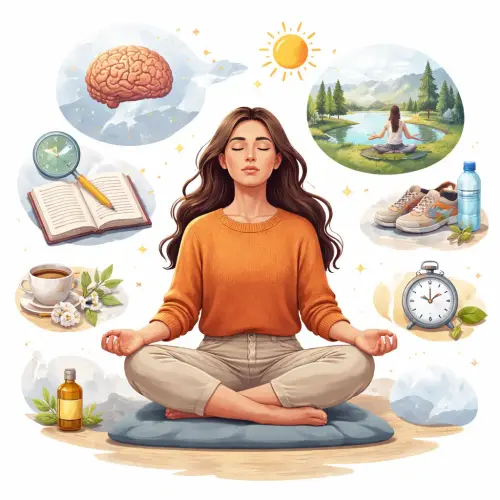
What You Need to Know About Science Backed Methods to Quiet a Worried Mind
If your mind races at night, you feel tense during the day, or you find it hard to stop imagining worst-case scenarios, you are not alone. Millions of adults experience persistent worry. The good news is that research has identified specific, repeatable practices that can reduce anxious thoughts naturally and restore a sense of control. This article walks you through seven methods, from easiest to implement to most transformative, with clear steps and the science behind each one.
1. Mindfulness Meditation: Training Your Brain to Stay Present
Mindfulness meditation is one of the most widely studied tools for managing worry. Brain scans show that regular practice decreases activity in the amygdala — the brain’s fear center — while strengthening the prefrontal cortex, which governs rational thought and emotional regulation.
How Does Mindfulness Help Mental Wellness?
When you practice mindfulness, you learn to observe thoughts without judging or reacting. Over time, this breaks the cycle of rumination that keeps worry alive. Even ten minutes a day can shift your baseline anxiety level.
- Start with a simple body scan: sit comfortably, close your eyes, and mentally scan from your toes to your scalp, noticing tension without trying to change it.
- Use a guided app like Headspace or Calm for structure, especially in the first few weeks.
- Set a daily reminder: the habit matters more than the duration.
For a deeper look at the neuroscience, the National Center for Complementary and Integrative Health offers a reliable overview of mindfulness research.
2. Controlled Breathing Techniques to Calm the Nervous System
Your breath is a direct line to your autonomic nervous system. Slow, deliberate breathing activates the vagus nerve, which signals the body to shift from fight-or-flight to rest-and-digest. These breathing exercises calm nervous system activity in seconds. For a related guide, see 8 Breathing Exercises to Reduce Anxiety and Stress.
What Are Proven Ways to Lower Stress Levels Through Breath?
- Box breathing: Inhale for 4 counts, hold for 4, exhale for 4, hold for 4. Repeat for 3–5 minutes.
- 4-7-8 breathing: Inhale through the nose for 4 counts, hold for 7, exhale through the mouth for 8. This pattern is especially effective before bed.
- Diaphragmatic breathing: Place one hand on your chest and one on your belly. Breathe so your belly rises more than your chest.
These are simple, healthy ways to manage worry anywhere — at your desk, in traffic, or before a meeting.
3. Physical Exercise for Emotional Balance
Exercise is a powerful antidepressant and anxiolytic, meaning it directly reduces anxiety. When you move your body, you release endorphins, increase brain-derived neurotrophic factor (BDNF), and lower cortisol. But how does exercise improve emotional balance beyond the immediate mood boost? It builds resilience over time by training your brain to handle stress more effectively.
Best Types of Exercise for Worry Reduction
| Type | Frequency | Duration | Key Benefit |
|---|---|---|---|
| Brisk walking or jogging | 5 times/week | 30 minutes | Lowers baseline cortisol |
| Yoga (especially Hatha or Yin) | 3–4 times/week | 45–60 minutes | Combines movement with breath awareness |
| High-intensity interval training (HIIT) | 3 times/week | 20 minutes | Rapid endorphin release |
| Strength training | 2–3 times/week | 30–40 minutes | Improves self-efficacy and focus |
Choose something you enjoy so you stick with it. Even a 15-minute walk can interrupt a worry spiral.
4. Prioritizing Sleep for Anxiety Reduction
The link between sleep and anxiety is bidirectional: worry disrupts sleep, and poor sleep fuels more worry. Understanding sleep role in anxiety reduction helps you break this loop. During deep sleep, the brain processes emotional memories and clears metabolic waste, making it easier to regulate mood the next day. For a related guide, see 10 Proven Tips to Calm Your Mind and Stop Overthinking.
Practical Tips to Improve Sleep Quality
- Keep a consistent sleep-wake schedule, even on weekends.
- Limit blue light exposure 60 minutes before bed. Use warm, dim lighting instead.
- Avoid caffeine after 2 p.m. and alcohol within three hours of sleep.
- Create a wind-down routine: journal, read fiction, or do light stretching.
A randomized controlled trial published in Sleep Medicine Reviews found that cognitive-behavioral therapy for insomnia (CBT-I) also reduces anxiety symptoms — proof that daily habits improve mental health at the foundational level.
5. Cognitive Reframing to Stop Negative Thinking
Cognitive reframing is a core technique in cognitive-behavioral therapy (CBT). It involves identifying automatic negative thoughts and replacing them with more balanced, evidence-based alternatives. This is one of the most effect techniques improve mental clarity and emotional control.
How Can Cognitive Reframing Stop Negative Thinking?
- Step 1: Notice the thought — e.g., “I’m going to mess up this presentation and everyone will think I’m incompetent.”
- Step 2: Challenge it — “What evidence do I have that I will mess up? Have I prepared? What is a more realistic outcome?”
- Step 3: Replace it — “I have prepared thoroughly. Even if I feel nervous, I can handle questions rationally.”
With practice, reframing becomes automatic. It is one of the most durable natural methods for emotional calmness because it addresses thinking patterns at their root.
6. Journaling for Stress Reduction and Mental Clarity
Writing about your worries can feel counterintuitive — won’t it make them worse? Actually, structured journaling reduce stress by helping you externalize anxious thoughts and see them more objectively. Studies show that expressive writing for 15–20 minutes a day lowers anxiety and improves immune function.
What Are the Best Journaling Formats for Worry?
- Gratitude journaling: Write three things you are grateful for each day. This trains the brain to scan for positive events.
- Worry log: Write down a worry, rate its intensity (1–10), and then write a rational response. Re-rate the intensity after.
- Brain dump: At the end of the day, dump every unfinished thought onto the page without editing. This clears mental clutter before sleep.
These practices also serve as relaxation techniques support mental wellness by providing a structured outlet for emotional processing.
7. Progressive Muscle Relaxation and Other Body-Based Methods
Anxiety lives in the body as well as the mind. Progressive muscle relaxation (PMR), guided imagery, and body-scan meditations physically release stored tension. These relaxation techniques support mental wellness by teaching you to recognize and release subtle muscle guarding. For a related guide, see Workplace Anxiety: Causes and Management Strategies.
Step-by-Step Progressive Muscle Relaxation
- Sit or lie down in a comfortable position.
- Take three slow breaths.
- Tense the muscles in your feet as tightly as possible for 5 seconds, then release completely. Notice the contrast between tension and relaxation.
- Move upward: calves, thighs, buttocks, abdomen, chest, hands, arms, shoulders, neck, face. Hold and release each group.
- Afterward, sit quietly for one minute, noticing residual relaxation.
PMR is especially useful for people who carry tension in their jaw, shoulders, or lower back — common causes constant worrying and stress manifest physically.
Putting It All Together: Building a Daily Practice
None of these methods require hours of time. Start by picking one technique that resonates most with you. For example, commit to three minutes of box breathing each morning. After a week, add a 10-minute evening mindfulness session. Over time, layer in journaling, cognitive reframing, and exercise.
The effectiveness of Science Backed Methods to Quiet a Worried Mind grows with consistency. You do not need perfection — just a willingness to return to the practice when your mind wanders.
Useful Resources
- American Psychological Association (APA): Explore their resource on anxiety and stress management for evidence-based therapist recommendations and self-help strategies.
- Mayo Clinic: Their guide on relaxation techniques includes demonstrations of deep breathing, meditation, and progressive muscle relaxation.
Frequently Asked Questions About Science Backed Methods to Quiet a Worried Mind
What science backed methods calm a worried mind?
Mindfulness meditation, controlled breathing, exercise, quality sleep, cognitive reframing, journaling, and progressive muscle relaxation are all backed by clinical research to reduce worry and anxiety.
How can people reduce anxious thoughts naturally ?
Natural methods include regular physical activity, balanced nutrition, consistent sleep, breathwork, nature exposure, limiting caffeine and alcohol, and practicing mindfulness or gratitude journaling.
Why does mindfulness help mental wellness ?
Mindfulness trains the brain to observe thoughts without reacting emotionally, reducing amygdala activity and strengthening prefrontal cortex control, which lowers baseline anxiety and improves emotional regulation.
What are proven ways to lower stress levels ?
Proven approaches include aerobic exercise (30 min, 5x/week), diaphragmatic breathing, 7–9 hours of quality sleep, journaling, and CBT-based cognitive reframing. These directly lower cortisol and heart rate.
How does exercise improve emotional balance ?
Exercise releases endorphins and BDNF, reduces cortisol, and improves neuroplasticity. Regular movement also increases self-efficacy and provides a healthy outlet for pent-up stress.
What role does sleep play in anxiety reduction?
Deep sleep processes emotional memories and clears brain metabolites that contribute to anxiety. Chronic sleep deprivation raises baseline cortisol and makes worry harder to control.
How can breathing exercises calm the nervous system?
Slow, controlled breathing activates the vagus nerve and parasympathetic nervous system, lowering heart rate and blood pressure within minutes. This is called the respiratory sinus arrhythmia response.
What are healthy ways to manage worry ?
Healthy worry management includes scheduled “worry time,” journaling, physical activity, breathing exercises, talking with a trusted friend, and cognitive reframing to challenge irrational fears.
How does journaling help reduce stress?
Journaling externalizes anxious thoughts, reduces rumination, and provides a structured way to process emotions. Gratitude journaling specifically shifts focus toward positive experiences.
What techniques improve mental clarity and focus?
Meditation, a single-tasking work method (like Pomodoro), adequate sleep, exercise, and eliminating digital distractions improve clarity. Cognitive reframing also reduces “mental noise” from worry.
How can cognitive reframing stop negative thinking ?
By identifying automatic negative thoughts, challenging their validity, and replacing them with evidence-based alternatives, you break the loop of catastrophic thinking and reduce anxiety over time.
What are natural methods for emotional calmness ?
Natural methods include spending time in green spaces, listening to calming music, practicing yoga or tai chi, using aromatherapy (lavender, chamomile), and maintaining a consistent sleep-wake cycle.
How can daily habits improve mental health ?
Daily habits like morning sunlight exposure, hydration, short physical activity, a gratitude list, and a set bedtime create a stable biological and psychological environment that reduces vulnerability to stress.
What causes constant worrying and stress ?
Chronic worry often stems from genetic predisposition, high-stress environments, perfectionism, unresolved trauma, lack of sleep, poor nutrition, and maladaptive thought patterns learned over time.
How can relaxation techniques support mental wellness ?
Techniques like progressive muscle relaxation, guided imagery, and autogenic training activate the parasympathetic nervous system and reduce muscle tension, heart rate, and mental arousal.
Is there a recommended breathing pattern for panic attacks?
Yes — slow exhale-focused breathing, such as 4-7-8 (inhale 4 counts, hold 7 counts, exhale 8 counts), helps lower heart rate quickly during a panic attack by increasing vagal tone.
Can mindfulness replace medication for anxiety?
Mindfulness is a powerful complementary tool but should not replace prescribed medication without consulting your doctor. For some, combining both yields the best outcomes.
How long does it take for exercise to reduce anxiety?
Acute anxiety relief occurs within 30 minutes of moderate exercise. For chronic anxiety reduction, consistent exercise for 3–4 weeks yields measurable changes in stress resilience.
What should I do if journaling makes me feel worse?
Try a structured format like “gratitude journaling” or “worry log with rational response.” If painful emotions surface, consider working with a therapist who can guide the process safely.
Can cognitive reframing be learned without a therapist?
Yes. Self-help workbooks, apps, and online courses based on CBT principles can teach the basics. However, for deep or persistent negative thought patterns, professional guidance is beneficial.