
self-care trends Key Takeaways
Understanding the latest self-care trends can help you build a sustainable mental health routine that fits your lifestyle.
- Modern self-care trends emphasize consistency over intensity, with micro-practices that take under five minutes.
- Digital wellness and nature-based therapies are among the fastest-growing mental health trends in 2025.
- Personalization is key — the best self-care for mental health is what you can actually stick with.
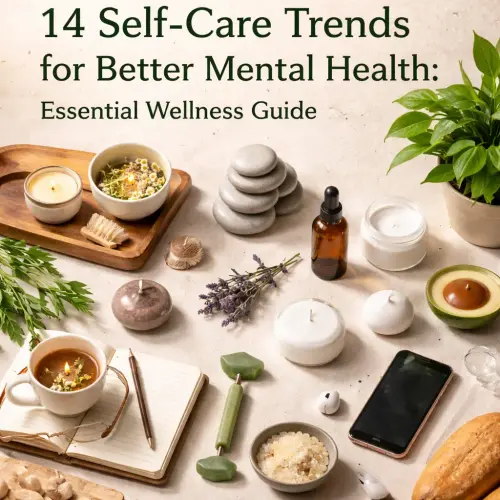
Why Modern Self-Care Trends Matter for Mental Health
Self-care has evolved from a luxury to a necessity in our hyper-connected world. Research from the American Psychological Association shows that intentional rest and recovery activities reduce cortisol levels and improve emotional regulation. The newest self-care trends reflect a shift toward proactive, science-backed practices that target root causes of stress rather than just symptoms. For a related guide, see 10 Mindfulness Habits for Daily Peace: Simple, Powerful Practices.
Many people confuse self-care with indulgence, but real self-care for mental health involves setting boundaries, prioritizing sleep, and engaging in activities that restore your energy. These 14 trends represent the most effective strategies emerging from psychology, neuroscience, and holistic wellness communities.
1. Micro-Mindfulness: Small Moments, Big Impact
Micro-mindfulness involves taking 30- to 60-second pauses throughout the day to focus on your breath, senses, or surroundings. Unlike traditional meditation, which requires 20 minutes, this trend fits seamlessly into busy schedules. Studies indicate that even brief mindfulness breaks lower anxiety and improve focus. For a related guide, see 10 Mindfulness Habits for Daily Peace: Simple Proven Practices.
Try setting a random alarm on your phone. When it rings, take three deep breaths and notice three things you can see, two you can hear, and one you can feel. This simple practice is one of the most accessible self-care trends for anyone with a packed calendar. For a related guide, see 10 Easy Meal Prep Ideas for Busy People: Smart, Save Time.
2. Digital Detox Days
A digital detox means intentionally disconnecting from screens — phones, laptops, tablets, and televisions — for a set period. Many mental health experts recommend one full day per week without non-essential technology. Research from the Journal of Social and Clinical Psychology links reduced social media use to significant decreases in depression and loneliness.
To start, choose one day, perhaps Sunday, and declare it screen-free. Replace scrolling with walking, cooking, or reading a physical book. This is one of the most powerful mental health trends because it directly targets information overload and social comparison.
3. Grounding (Earthing) Practices
Grounding, also called earthing, involves direct physical contact with the earth’s surface — walking barefoot on grass, soil, or sand. Proponents claim it reduces inflammation, improves sleep, and calms the nervous system. While more research is needed, preliminary studies show measurable reductions in stress markers after just 30 minutes of grounding.
Incorporate grounding by removing your shoes during lunch breaks in a park or while gardening. For apartment dwellers, grounding mats that plug into electrical outlets offer an alternative. This trend connects physical health with self-care for mental health in a simple, cost-free way.
4. Somatic Movement Therapy
Somatic movement focuses on internal physical sensations rather than external appearance or performance. Practices include gentle yoga, tai chi, qigong, and specific therapeutic exercises like rolfing or Feldenkrais. The goal is to release tension stored in the body from past trauma or chronic stress.
A typical session might involve lying on a mat and slowly rolling your spine, noticing where you feel resistance. This trend is gaining traction among therapists as a complement to talk therapy. It exemplifies how modern self-care trends bridge the mind-body gap.
5. Personalized Sleep Hygiene Routines
Sleep hygiene has moved beyond “don’t use phones before bed.” Personalized sleep hygiene considers your chronotype — whether you are a morning lark or night owl — and designs a routine around it. Tools like wearable sleep trackers help identify your optimal bedtime, light exposure needs, and wind-down rituals.
For example, if you are a night owl, forcing an early bedtime may backfire. Instead, you might shift your schedule by 15 minutes earlier each week while using red-light therapy lamps in the evening. Good sleep is foundational for all self-care for mental health practices.
6. Cold Exposure Therapy
Cold plunges, ice baths, and cold showers have surged in popularity thanks to advocates like Wim Hof. Regular cold exposure is linked to reduced inflammation, increased dopamine levels, and improved mental resilience. Many users report a lasting sense of calm and focus after a brief cold immersion.
Begin by ending your morning shower with 30 seconds of cold water. Gradually increase to two to three minutes as your tolerance builds. Always consult a doctor if you have cardiovascular concerns. This is one of the more intense mental health trends, but proponents swear by its mood-lifting effects.
7. Journaling with Prompts
Expressive writing has long been recommended for mental health, but the trend now focuses on structured prompts. Examples include gratitude lists, “one-sentence” daily summaries, and cognitive reframing exercises. These guided approaches help users process emotions without feeling overwhelmed by a blank page.
A popular prompt is: “What is one thing I did today that I am proud of, and why?” This simple question shifts focus toward self-compassion. Journaling is a low-cost, high-impact addition to any list of self-care trends.
8. Tech-Assisted Therapy
Teletherapy platforms like BetterHelp, Talkspace, and regional equivalents have made therapy accessible to millions. The trend now includes AI-assisted mood tracking apps, virtual reality exposure therapy for phobias, and chatbot check-ins that provide immediate coping strategies.
These tools are not replacements for human therapists but serve as bridges between sessions. They represent a major shift in self-care for mental health, removing geographic and financial barriers to professional support.
9. Nature Prescriptions (Green Therapy)
Doctors in several countries, including Canada and New Zealand, now prescribe time in nature as part of treatment plans for anxiety and depression. Green therapy involves structured activities like forest bathing (shinrin-yoku), community gardening, or guided nature walks. Research from the University of Essex shows that 30 minutes in a natural setting can reduce cortisol by 20 percent.
If you live in a city, visit a botanical garden or a rooftop green space. Even looking at images of nature can lower stress biomarkers. This trend is a powerful reminder that effective self-care trends do not require expensive products.
10. Time-Restricted Eating (TRE) for Mental Clarity
Time-restricted eating involves consuming all calories within a 6- to 10-hour window each day, aligning eating patterns with circadian rhythms. While often discussed for weight management, emerging research suggests TRE can stabilize blood sugar and reduce brain fog, indirectly supporting emotional stability.
Most people start with a 12-hour fast overnight, then gradually reduce the eating window. It is important to prioritize nutrient-dense foods during the eating period. Always consult a dietitian or doctor before starting any fasting regimen. This is one of the more nutritional-focused mental health trends.
11. Creative Self-Care: Art, Music, and Writing
Engaging in creative activities without pressure to produce something “good” is a growing trend. Adult coloring books, beginner music apps like Yousician, and freeform poetry are examples. The act of creating releases dopamine and promotes a flow state that quietens the inner critic.
Set a 15-minute timer and doodle, strum a ukulele, or write without editing. The goal is expression, not perfection. Creative outlets are a joyful and effective form of self-care for mental health.
12. Social Media Sabbaticals
Unlike a full digital detox, a social media sabbatical means pausing only social platforms while still using email, search, or work tools. Many people report reduced anxiety and improved sleep within three days of deleting apps like Instagram or TikTok. The constant comparison and validation-seeking cycles are directly linked to lower self-esteem.
Try a 7-day sabbatical. Before reactivating, ask yourself what you missed and what you did not miss. This can help you curate a healthier relationship with technology moving forward.
13. Breathwork Protocols
Structured breathing exercises, such as box breathing (4-4-4-4 pattern), the Wim Hof method, or cyclic hyperventilation, are used to regulate the autonomic nervous system. Studies show that slow, deep breathing activates the vagus nerve, signaling the body to relax.
Practice box breathing: inhale for four counts, hold for four, exhale for four, hold for four. Repeat for five minutes. This is one of the most portable self-care trends, effective in any situation from traffic jams to stressful meetings.
14. Ethical Consumption and Mindful Purchasing
Many people now view their spending as an extension of self-care. Buying from ethical brands, choosing sustainable materials, and reducing impulse purchases can lower guilt and increase satisfaction. This trend aligns personal values with daily habits, fostering a sense of integrity.
Before buying, ask: “Do I need this? Will it truly improve my well-being?” This pause helps break the dopamine loop of retail therapy and encourages more intentional living.
How to Choose the Right Self-Care Trends for You
Not every trend works for everyone. The best approach is to pick two or three that resonate most and commit to them for 30 days. Track your mood, energy, and sleep to see what shifts. Use a simple table to compare options:
| Trend | Time Required | Cost | Best For |
|---|---|---|---|
| Micro-mindfulness | 1-2 min/day | Free | Busy professionals |
| Digital detox days | 1 day/week | Free | Screen fatigue |
| Grounding | 10-30 min/day | Free | Stress relief |
| Somatic movement | 20-60 min/session | Free to $20 | Trauma recovery |
| Cold exposure | 2-5 min/day | Free | Resilience building |
| Tech-assisted therapy | Varies | $30-$90/week | Ongoing support |
Useful Resources
For deeper exploration of evidence-based self-care for mental health practices, visit the American Psychological Association’s resource on building resilience: APA Resilience Guide.
To learn more about the science behind nature therapy, check out this comprehensive review by the University of East Anglia on green space and mental health: Green Space and Mental Health Research.
Frequently Asked Questions About Self-Care Trends
Incorporating even a few of these self-care trends into your weekly routine can significantly improve your mental resilience, emotional balance, and overall quality of life. Start small, be patient with yourself, and remember that consistent small actions create lasting change.
Frequently Asked Questions About self-care trends
What are the most popular self-care trends right now?
Micro-mindfulness, digital detoxes, cold exposure, and tech-assisted therapy are among the most discussed self-care trends in 2025.
How do I start a self-care routine for mental health?
Begin with one small practice, such as a five-minute morning breathing exercise, and build from there. Consistency matters more than intensity.
Is self-care the same as being selfish?
No. Self-care is about maintaining your well-being so you can show up fully for others. It is a necessary aspect of mental health.
Are self-care trends backed by science?
Many are supported by research, including mindfulness, sleep hygiene, and nature exposure. Others, like grounding, have less robust evidence but promising preliminary studies.
Can self-care replace therapy?
Self-care complements therapy but should not replace professional treatment, especially for clinical depression, anxiety disorders, or trauma.
How much time should I spend on self-care daily?
Even five to fifteen minutes of intentional self-care, such as journaling or breathing exercises, can have measurable benefits for mood and focus.
What is the best self-care trend for anxiety?
Breathwork protocols and micro-mindfulness are highly effective for immediate anxiety relief. Long-term, regular exercise and good sleep hygiene are foundational.
Is digital detox considered a self-care trend?
Yes. Taking intentional breaks from screens is one of the most impactful mental health trends because it reduces information overload and social comparison.
What is the difference between self-care and wellness?
Wellness is a broader concept encompassing physical, mental, and social health. Self-care refers specifically to the actions you take to maintain or improve your own well-being.
Do self-care trends work for everyone?
Not every trend suits every person. It is important to experiment and find what resonates with your lifestyle, personality, and current mental health needs.
How do I know if a self-care trend is effective?
Track your mood, energy levels, and sleep quality before and after trying a new practice. If you notice positive changes, it is likely working for you.
Can I combine several self-care trends at once?
Yes. For example, you can combine a morning grounding session with a micro-mindfulness practice. Just avoid overwhelming yourself with too many changes simultaneously.
Are there self-care trends for busy parents?
Absolutely. Micro-mindfulness, journaling with prompts, and creative self-care (like doodling for five minutes) work well in short bursts during children’s nap times.
What is the most affordable self-care trend?
Grounding, breathwork, and nature prescriptions are completely free and require no equipment, making them highly accessible self-care trends.
How often should I do a digital detox?
Many experts recommend one full digital detox day per week. If that sounds too extreme, start with a four-hour block on a weekend.
Can self-care help with burnout?
Yes. Restorative practices like somatic movement, sleep optimization, and boundaries around work hours are key components of burnout recovery.
What is the role of technology in modern self-care?
Technology can be a double-edged sword. Used wisely, therapy apps, meditation guides, and mood trackers support self-care for mental health. Overuse can be counterproductive.
Is there a self-care trend that improves sleep?
Personalized sleep hygiene routines and time-restricted eating both directly support better sleep quality. Avoiding screens before bed is also crucial.
How do I stay consistent with self-care?
Start small, link the new habit to an existing routine (e.g., after brushing your teeth), and use habit-tracking apps or journals to reinforce consistency.
Where can I learn more about self-care trends ?
Follow reputable mental health organizations like the National Institute of Mental Health (NIMH) or the American Psychological Association for evidence-based updates on self-care trends.