
blue light exposure sleep Key Takeaways
Blue light from phones, tablets, and computers interferes with your body’s natural sleep cycle by blocking melatonin production.
- Blue light tricks your brain into thinking it’s daytime, which delays sleep onset and reduces sleep quality.
- Even small amounts of screen time before bed can lower melatonin levels and make it harder to fall asleep.
- Simple changes like using blue-light-blocking glasses or enabling night mode can significantly improve your sleep.
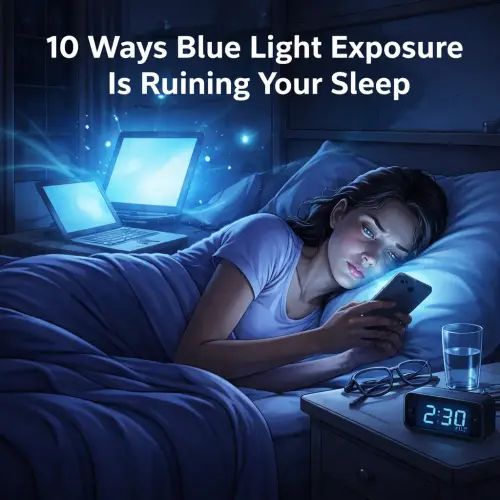
What You Need to Know About Blue Light Exposure Sleep Disruption
Every evening, millions of people reach for their phones or laptops without realizing the cost. The artificial blue light emitted by these screens hits the retina and signals the brain to stay alert, suppressing the sleep hormone melatonin. This isn’t just a minor annoyance—it’s one of the most common sleep disruption causes in modern life. Over time, consistent blue light exposure can shift your circadian rhythm, leaving you groggy, irritable, and at higher risk for chronic health issues.
Below, we break down ten specific ways blue light and sleep conflict, backed by science and paired with actionable advice to help you reclaim your nights. For a related guide, see 15 Natural Ways to Sleep Better and Wake Up Refreshed.
Why Blue Light Is Worse Than Other Light at Night
Not all light is created equal when it comes to blue light effects. Blue light has a short wavelength (around 450–495 nanometers) that closely mimics daylight. Your brain’s internal clock—the suprachiasmatic nucleus—interprets blue light as a signal to be awake and alert. By contrast, warm, amber light has little effect on melatonin production. This biological wiring makes blue light exposure sleep interference especially powerful after sunset.
Practical Advice
Replace overhead cool-white LEDs with warm, dimmable bulbs in bedrooms and living spaces. You can also use software like f.lux or built-in night mode on your devices to reduce blue light emission after dark.
10 Ways Blue Light Is Ruining Sleep
1. Delays Melatonin Release by Up to 90 Minutes
Even a short session on your phone before bed can push melatonin production back significantly. A Harvard study found that reading on a tablet before sleep delayed melatonin release by about 1.5 hours compared to reading a printed book. This is a direct blue light effect that makes “just five more minutes” cost you precious sleep time.
What to do: Stop using screens at least 60–90 minutes before you plan to sleep. If you must use a device, enable night mode and lower the brightness to the minimum comfortable level.
2. Suppresses Melatonin Production by Over 50%
Not only does blue light delay melatonin, but it also reduces the amount your body produces. Research shows that two hours of tablet use at full brightness can suppress melatonin by roughly 55%. Lower blue light exposure sleep hormone means lighter sleep and more frequent awakenings during the night.
What to do: Use blue-light-blocking glasses (with amber/orange lenses) in the evening. Wear them for 2–3 hours before bed to protect your natural melatonin cycle.
3. Reduces Deep Sleep (Slow-Wave Sleep)
Deep sleep is the restorative phase that helps you feel refreshed. Blue light exposure before bed reduces the amount of time you spend in slow-wave sleep, leading to grogginess the next day. Studies consistently show that screen time close to bedtime shortens this critical stage of rest, directly ruining sleep quality. For a related guide, see 10 Bedtime Habits That Improve Sleep Quality Naturally.
What to do: Create a wind-down routine that includes reading a paper book, light stretching, or listening to an audiobook—all free of blue light.
4. Increases Sleep Latency (Time to Fall Asleep)
If you lie in bed tossing and turning, blue light may be the culprit. When your brain delays melatonin and stays alert, it takes longer to transition into sleep. This is a classic sign of sleep disruption causes rooted in evening screen use.
What to do: Avoid any screen exposure for the hour before bed. If anxiety about falling asleep persists, try progressive muscle relaxation or a guided meditation podcast (audio only).
5. Disrupts Your Circadian Rhythm Long-Term
Repeated blue light exposure sleep misalignment can shift your entire internal clock, making it harder to wake up in the morning and causing a cycle of social jetlag. Over weeks and months, this contributes to chronic sleep debt and lowers daytime alertness.
What to do: Get at least 15–30 minutes of morning sunlight (with no sunglasses) to reset your circadian rhythm. This natural light signal strengthens your sleep-wake cycle and counteracts evening blue light.
6. Worsens Sleep Quality in Teens and Children
Younger eyes are more transparent to blue light, meaning children and teenagers are especially vulnerable to blue light and sleep issues. Screens in the bedroom—especially phones kept under pillows—are linked to later bedtimes and shorter sleep duration in adolescents.
What to do: Establish a family-wide “no screens in the bedroom after 9 PM” rule. Charge phones in a common area overnight. Encourage kids (and adults) to read physical books before bed.
7. Triggers Alertness and Hormonal Disruption
Blue light stimulates the production of cortisol and adrenaline—stress hormones that keep you awake. This biological response made sense when humans needed to stay alert during the day, but at night it actively works ruining sleep by keeping your nervous system in a fight-or-flight state. For a related guide, see 10 Stress and Burnout Symptoms That Trigger Sleep Disorders – Avoid These.
What to do: After sunset, switch to activities that lower stress, such as journaling, gentle yoga, or sipping a warm, caffeine-free tea. Keep lights dim and use salt lamps or candles for ambient lighting.
8. Reduces REM Sleep (Dream Sleep)
REM sleep is vital for memory consolidation, emotional regulation, and creativity. Blue light exposure in the evening can shorten REM periods, leaving you less able to process emotions and learn effectively. This is one of the more subtle but significant blue light effects.
What to do: Ensure your bedroom is completely dark. Use blackout curtains and cover any LED lights from electronics. A sleep mask also helps maintain dark conditions for uninterrupted REM cycles.
9. Increases the Risk of Sleep-Related Eye Strain
Staring at screens before bed doesn’t just harm sleep; it causes digital eye strain, which makes it harder to relax into sleep. Dry, tired eyes and headaches can keep you awake longer, creating a feedback loop of sleep disruption causes.
What to do: Follow the 20-20-20 rule: every 20 minutes, look at something 20 feet away for 20 seconds. Also, use artificial tears if your eyes feel dry. And of course, cut screen time before bed.
10. Linked to Higher Rates of Insomnia and Depression
Population studies have found strong associations between evening screen use and insomnia symptoms, as well as higher rates of depression. While correlation isn’t causation, the evidence is clear that blue light exposure sleep disruption contributes to poor mental health outcomes.
What to do: If you struggle with insomnia, consider a “digital sunset” where you turn off all screens two hours before bed. If depression or anxiety persist, speak with a healthcare provider—blue-light management can help, but it’s not a replacement for professional support.
How to Protect Your Sleep From Blue Light Exposure
You don’t need to give up technology entirely. The key is to use it wisely. Here’s a quick checklist to reduce blue light exposure sleep interference:
- Enable night mode on all devices (set it to turn on automatically at sunset).
- Invest in blue-light-blocking glasses for evening wear.
- Use dim, warm lighting in your home after dark.
- Keep phones, tablets, and laptops out of the bedroom.
- Prioritize morning sunlight to anchor your internal clock.
By making a few intentional changes, you can significantly reduce the ways blue light is ruining sleep and start waking up feeling refreshed.
Useful Resources
For more information on blue light and sleep, visit these credible sources:
- Sleep Foundation: Blue Light and Sleep — Comprehensive guide on how blue light disrupts sleep and practical solutions.
- Harvard Health: Blue Light Has a Dark Side — A look at the science behind blue light’s negative effects and how to mitigate them.
Frequently Asked Questions About blue light exposure sleep
Does blue light exposure really affect sleep?
Yes. Blue light suppresses melatonin production, delays sleep onset, and reduces sleep quality, especially when exposure happens in the evening.
How long before bed should I stop using screens?
Experts recommend stopping screen use 60–90 minutes before you plan to sleep to allow your melatonin levels to rise naturally.
Are blue-light-blocking glasses effective?
Yes, when they have amber or orange lenses and are worn consistently for 2–3 hours before bed. Clear lenses that claim to filter blue light are much less effective.
Can blue light cause insomnia?
Frequent evening blue light exposure is strongly linked to insomnia symptoms because it disrupts the natural sleep-wake cycle.
What color light is best for sleep?
Warm, dim amber or red light is best. These wavelengths have minimal impact on melatonin production.
Does night mode on my phone work?
It reduces blue light emission, but for maximum benefit, you should also lower brightness and limit use before bed.
Is blue light from the sun bad for sleep?
No. Morning sunlight blue light is beneficial and helps set your circadian rhythm. Problems arise from artificial blue light after dark.
Are children more affected by blue light?
Yes. Children’s eyes transmit more blue light to the retina, making them more sensitive to its sleep-disrupting effects.
Do all screens emit the same amount of blue light?
No. LED screens (phones, tablets, laptops) emit high levels of blue light. Older CRT monitors emit less, but they are now rare.
Can blue light cause headaches?
Yes, especially in people prone to eye strain or migraines. Reducing blue light exposure can help alleviate these symptoms.
Does wearing blue-light glasses during the day help sleep?
Not necessarily. They are most beneficial when worn in the evening. Using them during the day may actually interfere with your natural alertness.
How does blue light affect melatonin exactly?
Blue light activates melanopsin in the eye’s retinal ganglion cells, which signals the brain’s pineal gland to stop producing melatonin.
What is the best blue-light-blocking app?
Apps like f.lux (desktop) and built-in night modes in iOS and Android are effective. Twilight for Android is also a good option.
Can exercise help counteract blue light effects ?
Exercise improves sleep quality, but it cannot fully offset the melatonin suppression from evening blue light exposure.
Is it safe to use a Kindle before bed?
Only if it uses e-ink technology (like a basic Kindle) with no backlight. Backlit tablets emit significant blue light.
How soon after turning off screens does melatonin rise?
Melatonin levels typically begin to rise within 30–60 minutes after the last blue light exposure, depending on individual sensitivity.
Do dim lights still affect melatonin?
Dim lights have a much smaller effect, especially if they are warm-toned. Bright, cool-white light even at low levels can still be stimulating.
Can blue light affect your mood?
Yes. Poor sleep from blue light exposure is linked to increased irritability, anxiety, and depression risk.
What time of day is blue light most harmful?
Blue light is most harmful to sleep when you are exposed in the 2–3 hours before your normal bedtime.
Does blue light have any benefits?
Yes, daytime blue light helps improve alertness, mood, and cognitive function. The problem is unnatural exposure during nighttime hours.