
ways energy drinks disrupt teen sleep patterns Key Takeaways
The surge in energy drink consumption among teenagers has created a hidden health crisis, with research showing that these beverages directly interfere with the body’s natural sleep-wake cycle.
- Ways energy drinks disrupt teen sleep patterns include blocking adenosine receptors, delaying melatonin release, and elevating nighttime cortisol levels.
- Teen brains are especially vulnerable to the sleep-disrupting effects of energy drinks due to ongoing neurological development and higher sensitivity to stimulants.
- Understanding the 12 specific mechanisms can help parents and teens make informed choices that protect sleep health and academic performance.
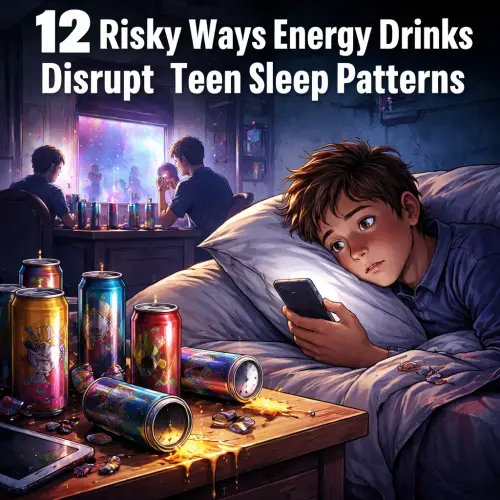
Understanding the Scope of Teen Sleep Disruption
Adolescents already face natural shifts in their circadian rhythms that push bedtime later, a phenomenon called sleep phase delay. When energy drinks enter the picture, the consequences multiply. The energy drink effects on teens extend far beyond occasional jitters—they alter the fundamental chemistry that governs sleep onset, quality, and duration.
12 Key Ways Energy Drinks Disrupt Teen Sleep Patterns
Each mechanism below represents a distinct pathway through which energy drinks compromise sleep. Some relate directly to caffeine, while others involve lesser-known ingredients like taurine, B vitamins, and sugar.
1. Blocking Adenosine Receptors
Adenosine is a chemical that builds up in the brain throughout the day, signaling that it’s time to sleep. Caffeine in energy drinks mimics adenosine and binds to its receptors, tricking the brain into staying alert. This is one of the most direct ways energy drinks disrupt teen sleep patterns, as it prevents the natural “sleep pressure” from building, even after consuming the drink early in the afternoon. For a related guide, see 12 Surprising Links Between ADHD and Sleep Problems: Essential Insights.
2. Delaying Melatonin Onset
Melatonin is the hormone that tells the body it’s night. Energy drink ingredients, particularly caffeine and high sugar levels, can delay the evening rise in melatonin by several hours. For a teen who drinks an energy drink after school, their body may not produce sufficient melatonin until after midnight, making it impossible to fall asleep at a reasonable hour.
3. Elevating Nighttime Cortisol Levels
Cortisol, the stress hormone, normally drops in the evening to allow relaxation. Energy drinks spike cortisol even when consumed early in the day, and this elevation can persist into the night. The result is a state of low-grade physiological stress that makes deep, restorative sleep elusive.
4. Disrupting the Sleep Architecture
Even if a teen falls asleep after consuming energy drinks, the quality of that sleep suffers. Studies show that caffeine reduces time spent in slow-wave sleep (deep sleep) and REM sleep—the stages most critical for memory consolidation, emotional regulation, and physical restoration.
5. Increasing Urinary Frequency at Night
Caffeine is a mild diuretic, and the large liquid volume of most energy drinks compounds this effect. Teens who drink these beverages in the afternoon or evening may wake multiple times during the night to use the bathroom, fragmenting their sleep and reducing total sleep time. For a related guide, see 15 Sleepmaxxing Trends Everyone Is Following for Better Sleep.
6. Raising Heart Rate and Blood Pressure
Energy drinks can elevate resting heart rate by 5–15 beats per minute and raise systolic blood pressure. This cardiovascular stimulation makes it harder for the body to transition into the parasympathetic “rest and digest” state necessary for sleep initiation.
7. Causing Blood Sugar Roller Coasters
Many energy drinks contain 25–35 grams of sugar per serving. The resulting blood sugar spike triggers an insulin surge, followed by a rapid drop that can wake a teen from sleep or cause night sweating, anxiety, and restlessness.
8. Interfering with GABA Neurotransmission
GABA is the brain’s primary inhibitory neurotransmitter, promoting calm and sleep. Certain amino acids and stimulants in energy drinks can reduce GABA activity, making it harder for the brain to shut down at night.
9. Promoting a Cycle of Sleep Debt and Caffeine Dependency
Poor sleep leads to daytime fatigue, which drives teens to reach for another energy drink. This creates a destructive feedback loop where caffeine and sleep become locked in a tug-of-war, with sleep almost always losing. Over time, the circadian rhythm becomes permanently shifted.
10. Reducing Slow-Wave Sleep Amplitude
Beyond reducing the amount of deep sleep, energy drinks also lower the amplitude (depth) of slow-wave sleep. This means even the deep sleep a teen does achieve is less restorative, leaving them groggy the next day no matter how many hours they spend in bed.
11. Increasing Anxiety and Rumination at Bedtime
The stimulant effects of energy drinks can heighten anxiety and racing thoughts, especially in teens who are already prone to worry. This psychological activation makes it difficult to quiet the mind and fall asleep naturally.
12. Altering the Timing of the Circadian Clock
Research indicates that caffeine can shift the body’s internal clock later, similar to traveling east to a later time zone. Regular consumption of energy drinks can lock a teen’s circadian rhythm into a delayed phase, making early school start times feel like jet lag every day.
The Unique Vulnerability of the Teen Brain
Adolescent brains are still developing, particularly in areas responsible for impulse control, risk assessment, and sleep regulation. The energy drink effects on teens are amplified compared to adults because their neural circuits are more sensitive to stimulants and less able to compensate for sleep loss. This makes each of the above mechanisms more pronounced in teenagers.
Summary: Breaking the Cycle for Better Sleep
The 12 ways energy drinks disrupt teen sleep patterns show that these beverages attack sleep from multiple angles—biochemical, hormonal, psychological, and behavioral. The good news is that cutting back or eliminating energy drinks can begin to reverse these effects within days. Teens who stop consuming energy drinks often report falling asleep faster, sleeping more deeply, and waking feeling more refreshed after just one week.
Practical Tips for Parents and Teens
Parental guidance is crucial because many teens underestimate how long energy drink effects last. Here are actionable steps:
- Set a caffeine cutoff: no energy drinks after 12 PM.
- Replace energy drinks with sparkling water, herbal tea, or fruit-infused water for afternoon hydration.
- Create a calming pre-sleep routine that includes dim lighting and no screens 30 minutes before bed.
- Monitor sleep quality for two weeks after stopping energy drinks; improvements in mood and focus often motivate continued avoidance.
- Talk openly about the science behind the disruption—teenagers respond well to understanding the “why” behind the rules.
Useful Resources
- Sleep Foundation: How Caffeine Affects Sleep – In-depth analysis of caffeine’s impact on sleep stages and circadian rhythms.
- CDC: Energy Drinks and Adolescent Health – Government data on consumption trends and health risks for teens.
Frequently Asked Questions About ways energy drinks disrupt teen sleep patterns
How long do energy drinks keep a teen awake?
The stimulating effects of a typical energy drink can last 6–10 hours depending on the caffeine dose, the teen’s metabolism, and tolerance. Even once the buzz fades, sleep quality may remain impaired for up to 12 hours after consumption.
Can one energy drink cause sleep problems for a teen?
Yes, even a single energy drink consumed in the afternoon can delay sleep onset by 1–2 hours and reduce deep sleep by 15–20% that night. The effects are especially pronounced in teens who are not regular caffeine users.
What ingredient in energy drinks is most disruptive to sleep?
Caffeine is the primary culprit because it blocks adenosine and delays melatonin. However, the combination of caffeine with taurine and high sugar can amplify the sleep disruption beyond what caffeine alone would cause.
Do sugar-free energy drinks affect sleep differently?
Sugar-free versions eliminate the blood sugar roller coaster, but the caffeine and other stimulants still interfere with sleep architecture and melatonin production. The sleep disruption is somewhat less severe but still significant.
Can energy drinks cause insomnia in teenagers?
Yes, regular consumption of energy drinks is strongly associated with insomnia symptoms in adolescents, including difficulty falling asleep, frequent night awakenings, and non-restorative sleep. The risk increases with the frequency and quantity consumed.
How much caffeine is safe for a teen each day?
The American Academy of Pediatrics recommends that adolescents consume no more than 100 mg of caffeine per day—roughly the amount in one small cup of coffee. Most energy drinks contain 80–150 mg per can, often exceeding this limit in a single serving.
What are the signs that energy drinks are affecting a teen’s sleep?
Common signs include difficulty waking up in the morning, daytime drowsiness, irritability, poor concentration in school, reliance on caffeine to feel awake, and reporting “tired but wired” feelings at bedtime.
How long does it take for sleep to improve after quitting energy drinks ?
Most teens notice improvements in sleep onset and quality within 3–7 days of eliminating energy drinks. Full restoration of natural sleep architecture may take 2–4 weeks, especially if the teen was a heavy consumer.
Do energy drinks affect REM sleep specifically?
Yes, caffeine reduces both the duration and density of REM sleep. Since REM sleep is crucial for emotional regulation and memory consolidation, this can negatively impact mood, learning, and academic performance.
Can mixing energy drinks with alcohol worsen sleep disruption?
Absolutely. Alcohol suppresses REM sleep, while caffeine keeps the brain alert. The combination produces a paradoxical state where a teen may pass out but not achieve restorative sleep, leading to severe next-day impairment.
Why do teens feel like energy drinks help them focus despite poor sleep?
The short-term stimulant effect temporarily masks the cognitive deficits caused by sleep deprivation. This creates a false sense of productivity while the underlying sleep debt continues to accumulate.
Are there any energy drinks that are safer for sleep?
No major energy drink product has been formulated to avoid sleep disruption. Reduced-sugar or lower-caffeine options may be slightly less harmful, but any product containing 50+ mg of caffeine will still interfere with sleep mechanisms.
Do energy drinks affect sleep more than coffee for teens?
Yes, because energy drinks often contain additional stimulants like guarana, taurine, and ginseng that can compound caffeine’s effects. The serving sizes also tend to be larger, delivering more total caffeine than a typical teen’s coffee.
How does sleep deprivation from energy drinks affect school performance?
Chronic sleep disruption impairs attention, memory consolidation, and executive function. Studies show that teens who regularly consume energy drinks have lower grades and higher rates of absenteeism.
What should a parent do if their teen refuses to stop drinking energy drinks ?
Have a science-based conversation about the specific ways energy drinks disrupt teen sleep patterns rather than issuing a ban. Offer alternative drinks, negotiate a cutoff time (e.g., no energy drinks after 12 PM), and track sleep improvements together.
Can energy drinks cause long-term sleep damage in teens?
While the effects are largely reversible once consumption stops, chronic sleep disruption during adolescence may alter circadian rhythm sensitivity and increase lifelong risk for sleep disorders and metabolic problems.
How do energy drinks affect a teen’s natural melatonin production?
Caffeine directly suppresses the synthesis and release of melatonin. Regular energy drink consumption can delay the nightly melatonin surge by 30–60 minutes or more, shifting the entire sleep-wake cycle later.
What time of day should teens completely avoid energy drinks ?
To protect sleep, teens should avoid energy drinks after noon. Even a morning energy drink can have a subtle impact on the following night’s sleep due to accumulated caffeine and its long half-life in the body.
Do energy drinks affect the sleep of boys and girls differently?
Some research suggests that female teens may experience more severe sleep disruption from energy drinks, possibly due to hormonal fluctuations and differences in caffeine metabolism. However, both genders are significantly affected.
Are caffeine pills or pre-workout supplements better or worse for teen sleep?
These products often contain even higher doses of caffeine (200–300 mg per serving) and may lack the sugar crash associated with energy drinks, but they still disrupt sleep similarly and can be more dangerous due to the concentrated dose.