
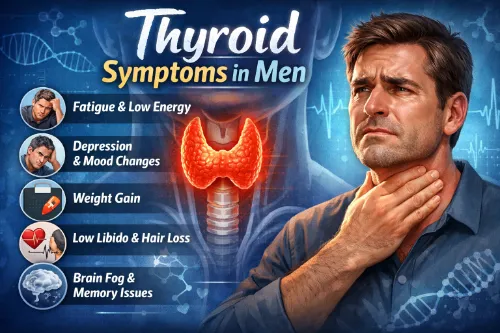
Thyroid Symptoms in men can affect at any age, but symptoms are often missed or attributed to stress, aging, or lifestyle. Men can develop both hypothyroidism (underactive thyroid) and hyperthyroidism (overactive thyroid), and may also notice changes in sexual health, mood, muscle strength, and weight.
For a broader overview of thyroid conditions, you can review Thyroid Problems Explained: Symptoms, Causes, Diagnosis, Treatment & Living Well and Common Symptoms of Thyroid Problems, and patient information from Cleveland Clinicand Mayo Clinic.
Why Thyroid Problems Symptoms in Men Are Often Missed
Men are less likely than women to be diagnosed with thyroid disease, but when they are affected, symptoms can still be significant. Because fatigue, weight changes, and low mood are common in many conditions, thyroid issues are sometimes overlooked until symptoms become more severe or blood tests are done for another reason. General overviews from NIDDK and the Endocrine Society note that thyroid disease is frequently under‑recognized in men.
For more about the underlying conditions, see:
General Symptoms Men May Notice
Men can experience the same “classic” thyroid symptoms as women, though they may describe them differently or attribute them to work stress or aging. Symptom summaries similar to these are listed by Cleveland Clinic and Thyroid UK.
Common general symptoms include:
- Persistent fatigue or low energy
- Unexplained weight gain (more typical of hypothyroidism) or weight loss (more typical of hyperthyroidism)
- Feeling unusually cold (underactive) or unusually hot (overactive)
- Changes in hair (thinning, hair loss) and skin (dry, rough, or excessively sweaty)
- Mood changes such as anxiety, irritability, or low mood
- Sleep problems – difficulty falling asleep, staying asleep, or feeling unrefreshed
You can compare these patterns with:
Sexual Health and Libido
Sexual health changes can be particularly important clues in men, and this link is highlighted in male‑focused discussions of thyroid disease in reviews and patient summaries (for example, on MedlinePlus and Thyroid UK).
With hypothyroidism (underactive thyroid), men may notice:
- Low libido or reduced interest in sex
- Erectile dysfunction or difficulty maintaining an erection
- Reduced morning erections and overall sexual satisfaction
With hyperthyroidism (overactive thyroid), men may experience:
- Changes in libido (sometimes increased initially, then reduced as symptoms progress)
- Erectile dysfunction, sometimes along with palpitations and anxiety
These issues can improve when thyroid hormone levels are brought back to a healthy range, but they should always be discussed openly with a healthcare provider.
Energy, Muscles, and Weight
Thyroid hormones play a key role in metabolism and muscle function, as described in patient information from NIDDK and Mayo Clinic.
In Hypothyroidism (Underactive Thyroid)
Men may notice:
- Tiredness and lack of stamina, especially during exercise
- Muscle aches, cramps, or stiffness
- Weight gain or increased body fat, especially around the abdomen
- Feeling heavy or “slowed down” physically
In Hyperthyroidism (Overactive Thyroid)
Men may notice:
- Unintentional weight loss, even with good appetite
- Muscle weakness, especially in the thighs and shoulders (difficulty climbing stairs, lifting, or getting up from a chair)
- Restlessness or feeling “over‑energized” but quickly exhausted
You can read more in:
Mood, Brain, and Sleep
Thyroid problems can significantly affect mental and emotional health, which is emphasized across major resources such as NHS hypothyroidism and NHS hyperthyroidism.
Men with hypothyroidism may experience:
- Low mood, apathy, or depression
- Slowed thinking, “brain fog,” or trouble concentrating
- Increased need for sleep, or feeling unrefreshed even after a full night
Men with hyperthyroidism may experience:
- Anxiety, nervousness, or feeling “on edge”
- Irritability, quick temper, or mood swings
- Difficulty sleeping (insomnia), racing thoughts, and feeling tired but unable to relax
Because these symptoms overlap with many mental health conditions, thyroid testing is often recommended when mood or sleep issues appear alongside physical changes.
Heart and Circulation
Thyroid hormone strongly affects the heart, and this may be more obvious in men who exercise or have underlying heart risk factors. Cardiac effects are described in detail on Cleveland Clinic and Endocrine Society.
- In hypothyroidism, heart rate may slow, cholesterol can rise, and exercise tolerance can fall.
- In hyperthyroidism, the heart may beat fast and irregularly (palpitations), and men may notice shortness of breath or reduced endurance.
If you have new palpitations, chest discomfort, or unexplained breathlessness, you should seek medical advice promptly.
Structural Symptoms: Neck and Eyes
Like women, men can develop structural thyroid changes, such as nodules or goiter, and in Graves’ disease, eye symptoms. These structural issues are discussed in ATA thyroid nodulesand Mayo Clinic goiter.
You may notice:
- A lump or swelling at the front of the neck
- Tightness with shirt collars or ties
- Hoarseness or change in voice
- In Graves’ disease: gritty, dry, or bulging eyes
For more on these topics, see:
When Should Men See a Doctor?
Consider seeing a healthcare professional if you have:
- Ongoing fatigue, low energy, or reduced exercise tolerance
- Unexplained weight gain or loss
- New or worsening anxiety, irritability, or low mood
- Noticeable changes in heart rate (too slow, too fast, or irregular)
- Changes in sexual function (low libido, erectile difficulties)
- A new lump or swelling at the front of your neck
You can use the checklist in When Should You See a Doctor for Thyroid Problems? to prepare for your visit. A simple set of blood tests (TSH, free T4, sometimes free T3 and antibodies) usually confirms or rules out a thyroid problem; see How Thyroid Problems Are Diagnosed. Similar testing pathways are described by NIDDK and MedlinePlus.
Pro Tip for Daily Living (Men)
Thyroid problems in men are often missed because symptoms can overlap with stress, aging, or other health issues. A few simple habits can make your appointments much more productive and help your clinician spot thyroid patterns earlier.
1. Track key basics for 2–3 weeks
For a couple of weeks, keep a short daily log (in your phone, a notes app, or a notebook) of:
- Energy and sleep: note how rested you feel on waking, daytime fatigue, naps, or trouble falling or staying asleep.
- Weight: record your weight once or twice a week, plus any clear changes in appetite.
- Heart rate: if you have a watch, fitness tracker, or blood pressure monitor, jot down your resting heart rate a few times a week, especially if you’ve noticed palpitations or your heart “racing” or “slowing down.”
- Sexual function: make brief notes about libido, erection quality, morning erections, or any new difficulties with performance.
This doesn’t need to be detailed or perfect—short notes like “very tired,” “low libido,” “HR 58,” or “palpitations in the evening” are enough. The goal is to show trends over time, not one-off bad days.
2. Link thyroid testing to other common men’s health concerns
If you are being evaluated for:
- Erectile dysfunction or low libido
- Possible low testosterone
- Unexplained weight change or persistent fatigue
- Heart rhythm issues (palpitations, atrial fibrillation, very slow or very fast heart rate)
it’s reasonable to ask whether thyroid testing should be done at the same time. You might say, “Since I’m having these symptoms, would it make sense to check my thyroid levels as part of the work-up?” This helps ensure that a potentially reversible thyroid problem is not overlooked when investigating sexual health or heart issues.
3. Speak up about neck changes
Men may assume a neck lump is “just muscle” or ignore a feeling of tightness at the collar, but structural thyroid changes matter. If you notice:
- A visible lump or swelling low in the front of the neck
- A sense of fullness or pressure at your collar line
- Shirts or ties feeling tighter around the neck even without weight gain
mention it clearly during your visit and ask for your thyroid to be examined. A simple neck exam, followed by ultrasound if needed, can identify goiters or nodules that might otherwise be missed.
Frequently Asked Questions (FAQ)
1. Can thyroid problems really cause low libido and erectile dysfunction?
Yes. Both underactive and overactive thyroid conditions have been linked with reduced libido and erectile dysfunction, and these problems often improve when thyroid levels are corrected, as discussed in endocrine and urology reviews and summarized on MedlinePlus.
2. Do men get Hashimoto’s and Graves’ disease too?
Yes. Men can develop both Hashimoto’s thyroiditis and Graves’ disease, although less often than women. The symptoms and blood test patterns are similar, but men’s symptoms may be more heavily noticed in energy, mood, and sexual function, as noted in ATA hypothyroidismand ATA hyperthyroidism.
3. How can I tell if my fatigue is from thyroid issues or just stress?
Stress and thyroid problems can both cause fatigue. Thyroid‑related fatigue is more likely if it occurs together with weight change, temperature intolerance, skin or hair changes, or sexual problems. Blood tests are the only way to be sure, as emphasized in NHS thyroid disease.
4. Can exercise hide thyroid symptoms?
Regular exercise can improve energy and mood, but it doesn’t correct abnormal hormone levels. Men who exercise may notice that performance declines (slower times, reduced strength, or new breathlessness) even if they are training as usual — this can be a clue to thyroid or other medical issues, as some sports and endocrine guidance notes.
5. Will I need lifelong treatment if I’m diagnosed with a thyroid condition?
Some causes (like transient thyroiditis) may improve over time, while others (such as Hashimoto’s hypothyroidism or longstanding Graves’ disease after definitive treatment) typically require long‑term management. Many men feel well once medication and follow‑up are optimized, as highlighted in long‑term outcome summaries from NIDDK and ATA.
6. Can thyroid problems affect my cholesterol or heart risk?
Yes. Hypothyroidism can raise cholesterol and increase cardiovascular risk, while hyperthyroidism can trigger rhythm problems such as atrial fibrillation. Treating the thyroid condition is an important part of heart risk management, which is stressed in joint endocrine–cardiology recommendations and patient pages on Mayo Clinic.
7. If my thyroid tests are normal, what’s next?
Normal thyroid results mean your symptoms are likely due to other causes such as low testosterone, sleep apnea, depression, cardiovascular disease, or lifestyle factors. Your symptoms are still important and should be fully evaluated by your healthcare provider, as general men’s health and endocrine resources emphasize.
Disclaimer: This information is for educational purposes only and does not replace medical advice, diagnosis, or treatment from your own healthcare provider.
Written by: Eden Grace Ramos-Arsenio, RN
Sources: National Institute of Diabetes and Digestive and Kidney Diseases (NIDDK/NIH); Mayo Clinic; NHS; American Thyroid Association (ATA); Cleveland Clinic; Endocrine Society; Thyroid UK; MedlinePlus; peer‑reviewed medical and nursing journals.