
sleep paralysis facts Key Takeaways
Understanding sleep paralysis facts reveals a terrifying intersection where ancient folklore meets modern neuroscience.
- Key sleep paralysis facts show your brain is fully conscious while your body is chemically paralyzed to prevent dream enactment.
- The hallucinations during episodes—shadow figures, pressure on the chest—are scientifically explained byREM sleep intrusion into waking brain states.
- Knowing the neuroscience behind these creepy experiences can help reduce fear and even prevent future episodes through sleep hygiene.
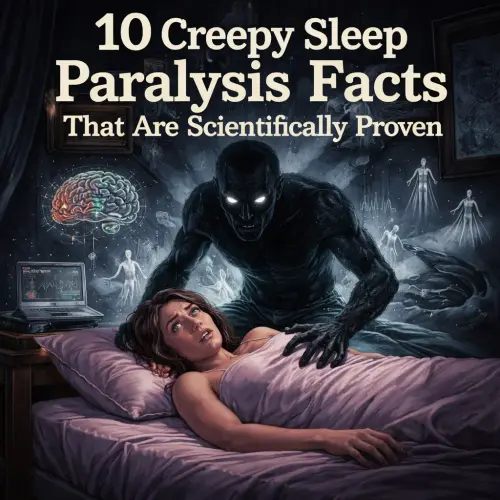
The Unsettling Reality Behind Sleep Paralysis Facts
You’re lying in bed, completely awake. You can see your room clearly, perhaps the moonlight casting shadows on the wall. But you can’t move. Not a finger. Not a toe. You try to scream, but no sound escapes your lips. Then you see it—a dark figure standing in the corner, slowly moving toward you. Your chest feels heavy, like something is sitting on it.
This isn’t a horror movie. This is sleep paralysis, and it happens to millions of people worldwide. The creepy science sleep paralysis reveals that while the experience feels supernatural, the reality is far more fascinating—and perhaps even more unsettling—than any ghost story.
Sleep Paralysis Facts That Will Haunt Your Nights
The following sleep paralysis facts blend genuine scientific research with the bone-chilling details that make this phenomenon so terrifying. Each fact reveals how your own brain can become your worst nightmare.
1. Your Brain Paralyzes You Every Night (You Just Don’t Remember)
During REM sleep, your brain actively paralyzes nearly every voluntary muscle in your body. This mechanism, called REM atonia, prevents you from acting out your dreams and potentially injuring yourself. The creepiest part? This happens every single night. Sleep paralysis occurs when your mind wakes up before this chemical paralysis wears off, leaving you trapped in your own body.
Creepy science sleep paralysis explains this perfectly: you’re experiencing a glitch in the system that usually keeps you safe during dreaming.
2. The ‘Old Hag’ Phenomenon Has a Neurological Explanation
Across cultures, people report identical hallucinations during sleep paralysis: a malevolent figure pressing down on their chest, making it hard to breathe. In Newfoundland, they call it the “Old Hag.” In Japan, it’s “kanashibari.” In Nigeria, it’s a demon. The scientific explanation? Your brain’s threat detection system goes into overdrive while your body is paralyzed. The amygdala, responsible for fear responses, becomes hyperactive, creating vivid threats that feel terrifyingly real.
3. Up to 40% of People Experience Sleep Paralysis at Least Once
This is one of the most shocking sleep paralysis facts: it’s not rare. Studies show that roughly 8% of the general population experience frequent episodes, while up to 40% have had at least one occurrence in their lifetime. Students, shift workers, and people with irregular sleep schedules are even more susceptible. You’ve probably shared a classroom or office with someone who has experienced this terror.
4. Your Brain Creates ‘Visitors’ During an Episode
Sleep paralysis hallucinations typically fall into three categories. The Intruder: a shadowy presence or figure in the room. The Incubus: pressure on your chest, often accompanied by a sense of choking. And the Vestibular-Motor: sensations of floating, flying, or being dragged out of bed. These aren’t ghosts—they’re your brain’s misinterpretations of sensory input while stuck between sleep and wakefulness.
5. The Fear Is Completely Real, Even When You Know the Science
Knowing that you’re experiencing sleep paralysis doesn’t stop the terror. The prefrontal cortex—your rational brain—is only partially active during an episode. Meanwhile, the amygdala and insula (fear and threat detection centers) are firing at full capacity. This means you can be fully aware that you’re experiencing a neurological event and still feel absolute, paralyzing dread. Your conscious mind knows, but your ancient brain doesn’t care.
6. Sleep Paralysis Is Linked to Lucid Dreaming
Both sleep paralysis and lucid dreaming occur when consciousness intrudes into REM sleep. In fact, experienced lucid dreamers can intentionally induce sleep paralysis as a gateway to entering a dream state while maintaining awareness. The creepy twist? Sleep paralysis is essentially a failed or interrupted transition into lucid dreaming. Your brain tries to give you control, but instead traps you in a waking nightmare.
7. Genetics Can Predispose You to Episodes
Research suggests that sleep paralysis runs in families. A 2015 study published in the journal Chest found that certain genetic markers on chromosomes 13 and 22 are associated with increased susceptibility. If a parent or sibling experiences these episodes, your risk is significantly higher. This sleep paralysis fact suggests that some people are simply wired differently, making them more prone to that terrifying glitch between sleep and wakefulness.
8. Your Sleeping Position Can Trigger an Attack
Sleeping on your back is a major risk factor for sleep paralysis. Studies report that 60% to 80% of episodes occur when people are lying supine. Scientists believe this position may alter breathing patterns and increase the likelihood of REM sleep intruding into wakefulness. If you’re prone to episodes, a simple change—training yourself to sleep on your side—can significantly reduce their frequency.
9. Hallucinations Can Be Auditory and Tactile, Not Just Visual
The creepiest sleep paralysis facts often involve sensory hallucinations that go beyond sight. Many people report hearing footsteps, door knocks, whispering voices, or heavy breathing. Others feel something crawling on their skin, being grabbed, or having their blankets pulled. These hallucinations occur because your brain is still processing sensory information from your environment but mixing it with dream-like content. Your actual bedroom sounds become the raw material for a horror show.
10. You Can Learn to Break Free During an Episode
Despite the terror, you are not completely helpless. The most effective technique to end sleep paralysis is to try moving a small body part—your pinky finger, your toes, or your eyes. Since these small muscles are sometimes less affected by REM atonia, concentrating all your effort on wiggling a single finger can break the paralysis. Once you regain control, sit up immediately and wash your face with cold water. This resets your brain state and prevents re-entering the episode.
Understanding the Broader Science of Sleep Paralysis Facts
The creepy science sleep paralysis phenomenon sits at the intersection of neurology, psychiatry, and evolutionary biology. While the experience feels supernatural, it’s fundamentally a brain chemistry issue. During healthy sleep, your brain transitions smoothly through stages. Sleep paralysis represents a failure of this transition, creating a hybrid state where waking consciousness and REM sleep coexist.
This explains why hallucinations feel so real: your dreaming brain is actively creating narrative content while your waking brain interprets it as reality. The shadow figures, the pressure on your chest, the voices—they’re all generated by your own neural circuitry gone momentarily haywire.
Common Misconceptions About Sleep Paralysis Facts
Many people fear that sleep paralysis indicates a serious psychiatric disorder or brain damage. Neither is true. Isolated sleep paralysis is a benign quirk of sleep biology. However, when episodes become frequent and significantly disrupt sleep, they may be linked to underlying conditions like narcolepsy or severe anxiety. If you experience episodes several times weekly, consulting a sleep specialist is wise, not because you’re in danger, but because treatment exists. For a related guide, see 12 Surprising Links Between ADHD and Sleep Problems: Essential Insights.
How to Use These Sleep Paralysis Facts to Reduce Fear
Knowledge is the best weapon against fear. Understanding the sleep paralysis facts can transform a terrifying experience into a fascinating neurological event. When you know that the shadow figure is just your amygdala running wild, that the pressure on your chest is residual REM atonia, and that you can break free by wiggling a finger, the experience loses much of its power. For a related guide, see 12 Surprising Revenge Bedtime Procrastination Facts You Should Know.
If you experience episodes, try:
- Maintaining a consistent sleep schedule to regulate your REM cycles.
- Avoiding back sleeping by placing a pillow behind your back.
- Reducing stress and anxiety before bed through meditation or journaling.
- Never sleeping in a completely dark room if you’re prone to visual hallucinations—a small nightlight provides grounding.
Useful Resources
For more verified sleep paralysis facts and research, explore these trusted sources:
- NLM Study: Genetics of Sleep Paralysis – A comprehensive scientific paper examining genetic factors in sleep paralysis susceptibility.
- Sleep Foundation: Sleep Paralysis Overview – A clear, evidence-based guide to symptoms, causes, and treatments for sleep paralysis.
Frequently Asked Questions About sleep paralysis facts
What is sleep paralysis exactly?
Sleep paralysis is a temporary inability to move or speak that occurs when you’re waking up or falling asleep. It happens when your mind wakes up before the natural muscle paralysis of REM sleep wears off, leaving you conscious but unable to move your body.
Is sleep paralysis dangerous?
No, sleep paralysis itself is not dangerous. The episodes are temporary and resolve on their own. However, the intense fear and hallucinations can be distressing. In rare cases, people may hurt themselves trying to escape if they thrash around when the paralysis breaks.
Can you die from sleep paralysis?
No, you cannot die from sleep paralysis. The condition is a temporary state between sleep and wakefulness. Your breathing continues automatically, and your heart keeps beating normally. The sensation of choking or pressure on your chest is an hallucination, not a physical threat.
What causes sleep paralysis hallucinations?
Sleep paralysis hallucinations occur because your brain is partially in REM sleep, which generates dream imagery, while partially awake, which interprets that imagery as reality. The amygdala becomes hyperactive, creating threatening figures and scenarios based on environmental cues like shadows or sounds.
How long does sleep paralysis last?
Most episodes last between a few seconds and two minutes. They can feel much longer due to the intense fear involved. In rare cases, episodes may persist for several minutes, but they always end on their own or when someone touches you or the paralysis naturally breaks.
Can sleep paralysis happen during naps?
Yes, sleep paralysis can occur during daytime naps, especially if you sleep on your back or have irregular sleep schedules. Napping disrupts normal sleep cycles and increases the chance of entering REM sleep more quickly, raising your risk of experiencing an episode.
Is sleep paralysis linked to mental illness?
Sleep paralysis is not directly caused by mental illness, but it is more common in people with anxiety disorders, PTSD, and depression. Stress and trauma can disrupt sleep architecture, making episodes more likely. However, isolated sleep paralysis occurs in perfectly healthy individuals.
What triggers sleep paralysis episodes?
Common triggers include sleep deprivation, irregular sleep schedules (like shift work), sleeping on your back, stress, substance use, and jet lag. For some people, genetics also play a role. Addressing these triggers can significantly reduce episode frequency.
Can children experience sleep paralysis?
Yes, children can experience sleep paralysis, though it is less common than in teenagers and young adults. It often goes unreported because children may not have the words to describe what happened. If your child wakes up frightened and describes not being able to move, it could be sleep paralysis.
How common is sleep paralysis globally?
Studies suggest that approximately 8% of the general population experience frequent episodes, while up to 40% have had at least one episode in their lifetime. Rates are higher among students, healthcare workers, and people with irregular sleep patterns.
Does sleep paralysis affect everyone the same way?
No, experiences vary widely. Some people only feel immobile with no hallucinations. Others have vivid visual or auditory hallucinations. Cultural background influences the specific content of hallucinations—for example, people in different cultures see different types of threatening figures during episodes.
Can medication cause sleep paralysis?
Certain medications that affect brain chemistry can trigger or worsen sleep paralysis. These include some antidepressants, ADHD medications, and drugs that alter REM sleep regulation. If you experience episodes after starting a new medication, consult your doctor about alternatives.
Is sleep paralysis related to night terrors?
Sleep paralysis and night terrors are different phenomena. Night terrors occur during deep non-REM sleep, involve screaming and thrashing, and the person has no memory of the event. Sleep paralysis occurs at the boundary of REM sleep, involves conscious awareness, and the person vividly recalls the experience.
Can you open your eyes during sleep paralysis?
Yes, your eyes typically remain open during sleep paralysis, and you can move them. This is why visual hallucinations—seeing shadow figures or strange lights—are so common. Eye muscles are usually spared from REM atonia, allowing you to look around your room while paralyzed.
What is the scientific name for sleep paralysis?
The scientific term for isolated sleep paralysis is “isolated sleep paralysis” (ISP). When it occurs as part of a broader sleep disorder like narcolepsy, it’s called “recurrent isolated sleep paralysis” (RISP) or simply a feature of the underlying condition.
Can sleep paralysis be cured?
There is no cure for sleep paralysis itself, but the condition is manageable. Improving sleep hygiene, maintaining a consistent schedule, reducing stress, and treating underlying conditions like anxiety or narcolepsy can dramatically reduce episode frequency. Most people see improvement with these lifestyle changes alone. For a related guide, see 14 Signs Sleep Anxiety Is Keeping You Awake (Don’t Ignore #7).
Does sleep paralysis run in families?
Yes, research shows a genetic component to sleep paralysis. Studies of twin populations and family trees indicate that certain genetic markers increase susceptibility. If you experience frequent episodes, your close relatives may also be more likely to experience them.
Can sleep paralysis happen during lucid dreaming?
Sleep paralysis is often used as an intentional entry point into lucid dreaming. Experienced lucid dreamers learn to induce sleep paralysis and then transition into a controlled dream. However, for most people, the experience of sleep paralysis is involuntary and frightening rather than controlled.
Is sleep paralysis more common in certain cultures?
Sleep paralysis occurs worldwide, but how it’s interpreted varies by culture. In some cultures, it’s seen as demonic attack or supernatural visitation. In others, it’s understood as a medical condition. The underlying neurological mechanism is universal, but the content of hallucinations is shaped by cultural beliefs and folklore.
What should I do if someone I know is having an episode?
Gently touch or shake the person—this usually breaks the paralysis immediately. Speak calmly to reassure them. Do not shout or make sudden movements that could be misinterpreted by their hallucinating brain. Once they’re fully awake, offer water and a calm environment to help them process the experience.