
revenge bedtime procrastination facts Key Takeaways
You finally finish work, chores, and family obligations only to find yourself awake at 1:00 AM watching one more video or reading "just one more" article.
- revenge bedtime procrastination facts reveal that nearly 1 in 3 adults struggle with intentionally delaying sleep despite knowing the consequences.
- This habit is often driven by a need for autonomy and relaxation after a busy day, not just poor sleep hygiene.
- Understanding the root causes — like lack of free time during the day or overstimulation from screens — can help you stop delaying bedtime effectively.
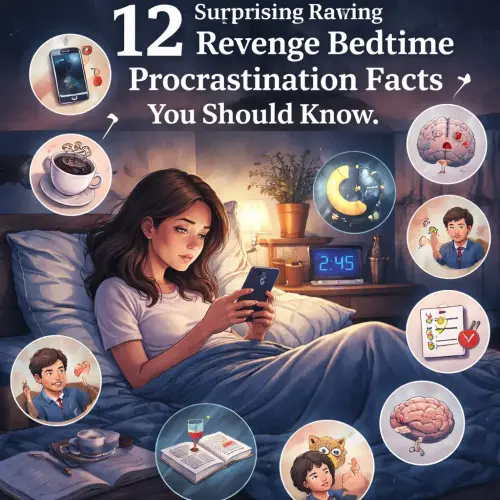
What Is Revenge Bedtime Procrastination and Why Does It Happen?
You finally finish work, chores, and family obligations only to find yourself awake at 1:00 AM watching one more video or reading “just one more” article. This isn’t laziness — it’s a common psychological phenomenon. Bedtime procrastination causes often include feeling a lack of control over your daytime schedule, which makes nighttime feel like the only time you have choices. The term “revenge” captures that defiant, almost rebellious feeling of stealing time back from your own busy life.
Fact 1: It’s a Form of Self-Sabotage With Deeper Roots
When you ask yourself why do I procrastinate sleep, the answer isn’t always simple revenge. Many people use late-night hours to decompress, but it’s a double-edged sword. You get the immediate reward of relaxation, while the long-term cost — fatigue, brain fog, and reduced immunity — piles up. This immediate gratification loop is reinforced every night you choose Netflix over REM sleep. For a related guide, see 11 Viral TikTok Sleep Hacks That Actually Work (Proven).
Fact 2: Screens Aren’t the Only Culprit — But They Amplify It
Blue light disrupts melatonin production, so scrolling through your phone at midnight makes it harder to fall asleep. But even reading a physical book in bed can become part of the pattern if you’re doing it to avoid bedtime. The key is not just reducing screen time but also building awareness of when you’re intentionally postponing sleep. For a related guide, see 10 Ways Blue Light Exposure Is Ruining Your Sleep (Avoid These).
The Science Behind Why You Can’t Stop Delaying Bedtime
Understanding the neurochemistry of revenge bedtime procrastination can help you stop delaying bedtime for good. Your brain’s reward system craves novelty and autonomy, especially after a day of obligations. When you stay up, your prefrontal cortex (the decision-making part) gets overruled by your limbic system, which wants immediate pleasure.
Fact 3: Lack of Free Time During the Day Is the Biggest Trigger
Research on sleep procrastination facts consistently points to one common thread: people who feel their daytime hours are packed with must-dos are far more likely to delay bedtime. They feel a desperate need for guilt-free, unstructured time, so they borrow it from sleep. This is especially common among parents, caregivers, and high-stress professionals.
Fact 4: Revenge Bedtime Procrastination Is Different From Insomnia
Insomnia involves difficulty falling or staying asleep despite wanting to sleep. Revenge bedtime procrastination is a choice — you consciously decide to stay awake even though you’re physically tired. The distinction matters because the solution isn’t sleep aids or relaxation techniques; it’s changing your relationship with free time. For a related guide, see 12 Surprising Links Between ADHD and Sleep Problems: Essential Insights.
Fact 5: It Can Create a Toxic Cycle of Sleep Debt
One late night might feel harmless, but chronic revenge bedtime procrastination creates a sleep deficit that accumulates quickly. You might start compensating with caffeine or napping, which further disrupts your natural sleep-wake rhythm. Over weeks and months, this can lead to health issues like weakened immunity, weight gain, and mood disorders.
How Revenge Bedtime Procrastination Affects Your Health and Daily Life
The effects go far beyond feeling tired the next morning. Revenge bedtime procrastination facts show that chronic sleep deprivation from this habit can impair your cognitive function, reduce your patience, and even affect your relationships. You might snap at a partner or struggle to focus on important tasks because your brain hasn’t had enough restorative sleep.
Fact 6: Your Metabolism Takes a Direct Hit
Sleep deprivation disrupts the hormones that regulate hunger — ghrelin (which makes you hungry) rises, and leptin (which signals fullness) drops. This can lead to late-night snacking on sugary or salty foods, which then contributes to weight gain and blood sugar imbalances. It’s a vicious loop: you stay up to reclaim time, but your body pays the price.
Fact 7: It Harms Your Emotional Resilience
When you’re sleep-deprived, your amygdala (the brain’s emotional center) becomes hyperactive, making you more reactive to stress. Small annoyances that you’d normally shrug off can feel overwhelming. This emotional toll often makes people even more determined to steal nighttime hours to decompress — perpetuating the cycle.
Fact 8: It’s Linked to Higher Anxiety and Depression Risk
Multiple studies have connected chronic sleep procrastination with higher rates of anxiety and depressive symptoms. The lack of quality sleep interferes with your brain’s ability to regulate emotions and consolidate positive memories. While the causal direction isn’t always clear, breaking the pattern of delaying bedtime can significantly improve mental health outcomes.
Practical Strategies to Stop Delaying Bedtime for Good
Now that you understand what’s behind the behavior, you can take action. The goal isn’t to eliminate all late nights — it’s to regain control so that staying up is a choice, not a compulsion. These strategies focus on addressing the root bedtime procrastination causes while respecting your need for personal time.
Fact 9: Creating a “Wind-Down Window” Works Better Than a Strict Bedtime
Instead of forcing yourself to turn off the lights at 10:00 PM, build a 30- to 60-minute wind-down routine that signals to your brain that the day is ending. This could include dimming lights, reading, journaling, or listening to calming music. By giving yourself permission to transition slowly, you reduce the urge to rebel against bedtime.
Fact 10: Scheduling Guilt-Free Me-Time During the Day Prevents the Urge
One of the most effective ways to stop delaying bedtime is to give yourself some distraction-free personal time earlier in the day. Even 15 minutes in the afternoon can reduce the desperate need to reclaim time at night. Block out that time on your calendar and treat it as non-negotiable — just like any other appointment.
Fact 11: Accountability Partners and Sleep Trackers Can Help
Sharing your goal to improve sleep with a friend or family member creates external accountability — you’re more likely to stay on track. Sleep trackers (like a simple smartwatch or a dedicated band) provide objective data that can help you see patterns and celebrate small wins. When you see a full week of consistent bedtimes, it reinforces the behavior.
Fact 12: Small, Non-Negotiable Changes Beat Big Resolutions
If you try to turn your schedule upside down overnight, you’ll likely crash and burn (pun intended). Instead, pick one small change — like keeping phones out of the bedroom for the first hour before sleep, or setting a gentle alarm 30 minutes before your target bedtime. Consistency over weeks rewires the habit loop, making it easier to prioritize sleep without feeling deprived.
Useful Resources
For a deeper dive into the psychology behind revenge bedtime procrastination, check out Sleep Foundation’s guide on the topic.
If you’re looking for evidence-based strategies to improve your sleep hygiene, the CDC’s sleep hygiene tips page offers practical, research-backed advice.
Frequently Asked Questions About revenge bedtime procrastination facts
What is revenge bedtime procrastination exactly?
It’s the voluntary, often habitual decision to delay sleep in order to reclaim free time that you feel you didn’t have during the day. People do it even when they’re tired and aware of the consequences.
Is revenge bedtime procrastination a mental health disorder?
No, it’s not classified as a disorder in the DSM-5, but it can be a symptom of underlying issues like stress, anxiety, or poor time management. Chronic cases may benefit from therapy.
Why do I procrastinate sleep even when I’m exhausted?
Your brain craves autonomy and me-time after a long day. Even if your body is tired, your mind wants to enjoy a few hours of undisturbed personal time, which makes you push past fatigue.
Can revenge bedtime procrastination be cured?
It can be managed effectively with better time management, wind-down routines, and self-compassion. There’s no overnight cure, but small, consistent changes can break the habit over a few weeks.
What are the main bedtime procrastination causes ?
Common causes include lack of perceived free time during the day, high stress or burnout, overstimulation from screens, and a lack of clear boundaries between work and rest.
How do I know if I have revenge bedtime procrastination ?
If you consistently delay going to bed despite feeling tired, and you do it to binge-watch, scroll, or read, you likely have it. A simple clue: you set a bedtime but rarely stick to it.
Is revenge bedtime procrastination the same as being a night owl?
No. Night owls naturally feel more alert at night and can sleep well if their schedule allows. Revenge bedtime procrastinators delay sleep out of compulsion and often feel guilty or regretful the next day.
Can revenge bedtime procrastination affect my work performance?
Yes. Chronic sleep deprivation from delaying sleep can impair focus, creativity, and decision-making — all of which are essential for productivity at work or school.
What are the long-term health consequences of sleep procrastination?
Long-term effects can include increased risk of obesity, type 2 diabetes, cardiovascular disease, weakened immune function, anxiety, and depression.
How can I stop delaying bedtime without feeling deprived?
Shift your mindset from “losing time” to “gaining energy.” Schedule small pockets of me-time during the day and choose a wind-down activity that feels like a treat, not a punishment.
Does bedtime procrastination affect everyone the same way?
No, it varies by personality and lifestyle. People who are perfectionists or have low self-control are more prone, but anyone can develop the habit under stress.
Can I use sleep tracking apps to help me stop delaying bedtime ?
Yes, many people find tracking helpful because it provides concrete feedback and accountability. Just choose a simple app that doesn’t become another reason to stay up on the phone.
Are there specific types of people more likely to develop this habit?
People with demanding jobs, caregivers, parents of young children, and students with heavy workloads are especially vulnerable because they feel their time is not their own.
Is revenge bedtime procrastination worse in certain age groups?
Yes, it’s more common among young adults and parents in their 20s to 40s, possibly due to career and family pressures. But it can affect anyone.
What’s the best quick fix to stop delaying bedtime tonight?
Put your phone away 30 minutes before your target bedtime. Use that time to journal, stretch, or read something calming. Even one night of better habits can reset the pattern.
Can exercise help with revenge bedtime procrastination ?
Regular exercise reduces stress and improves sleep quality, which can reduce the urge to stay up late. However, intense workouts right before bed may be counterproductive.
Does caffeine consumption make bedtime procrastination worse?
Absolutely. Caffeine late in the day disrupts your natural sleep drive and makes it easier to stay up past your intended bedtime, feeding the cycle.
Is it okay to occasionally stay up late even if I have this habit?
Occasional late nights are fine and part of normal life. The problem is when it becomes a nightly pattern that leaves you tired and stressed. Flexibility is key.
Can revenge bedtime procrastination damage relationships?
Indirectly, yes. Sleep deprivation can make you irritable and less patient, which can strain your interactions with partners, children, and coworkers.
Where can I learn more about sleep procrastination facts ?
Start with reputable sources like the Sleep Foundation, CDC, or the American Psychological Association. Many of their articles cover the psychology and practical solutions for this habit.