
key differences between probiotics and prebiotics Key Takeaways
Probiotics are live, active bacteria and yeasts that confer health benefits when consumed in adequate amounts.
- The key differences between probiotics and prebiotics center on their function: probiotics are live beneficial bacteria, while prebiotics are non-digestible fibers that feed those bacteria.
- Both are essential for a balanced gut microbiome, but they work in different ways and come from different food sources.
- Choosing the right gut health supplements depends on recognizing which component your body needs more of.
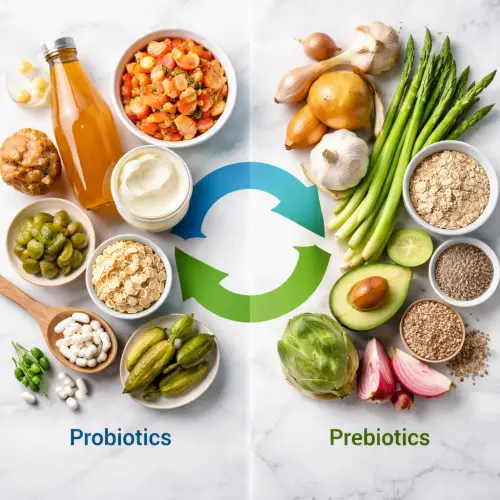
What Are the key differences between probiotics and prebiotics?
If you’ve ever shopped for gut health supplements, you’ve seen both terms on labels. But many people use them interchangeably. The key differences between probiotics and prebiotics come down to their definitions: probiotics are live microorganisms (mostly bacteria) that offer health benefits when consumed, while prebiotics are indigestible fibers that serve as food for those microorganisms. In short: probiotics introduce beneficial bugs, and prebiotics help them thrive. For a related guide, see 12 Surprising Gut Health Hacks for Mental Wellness.
This distinction matters for your health routine. Without prebiotics, probiotics struggle to colonize your gut. Without probiotics, prebiotics have fewer beneficial bacteria to feed. Together, they form a synergistic pair known as synbiotics. Let’s explore the seven main differences to clear up the confusion.
1. Definition: Live Organisms vs. Non-Digestible Fibers
Probiotics Defined
Probiotics are live, active bacteria and yeasts that confer health benefits when consumed in adequate amounts. Common strains include Lactobacillus and Bifidobacterium. They must survive stomach acid and bile to reach the intestines. For a related guide, see 15 Warning Signs Your Gut Microbiome May Be Out of Balance – Avoid These Risks.
Prebiotics Defined
Prebiotics are non-digestible carbohydrates (mostly fiber) that pass through the upper gastrointestinal tract undigested. They selectively stimulate the growth of beneficial bacteria in the colon. Examples include inulin, fructooligosaccharides (FOS), and galactooligosaccharides (GOS).
2. Function: Adding vs. Feeding Bacteria
The differences between probiotics and prebiotics are most apparent in how they function. Probiotics directly add live beneficial microbes to your gut ecosystem. They can help restore balance after antibiotic use or illness. Prebiotics, on the other hand, do not introduce new bacteria. Instead, they act as fertilizer for the beneficial bacteria already living in your colon.
Think of your gut as a garden. Probiotics are the seeds you plant. Prebiotics are the water and nutrients that help those seeds grow. Both are needed for a flourishing garden.
3. Food Sources: Fermented vs. Fiber-Rich Foods
Probiotics and prebiotics foods: Probiotic Sources
Natural probiotics and prebiotics foods differ significantly. Probiotics are found in fermented foods such as yogurt, kefir, sauerkraut, kimchi, miso, tempeh, and kombucha. These foods naturally contain live cultures that survive fermentation.
Prebiotic Food Sources
Prebiotics are abundant in high-fiber plant foods. Top sources include garlic, onions, leeks, asparagus, bananas (especially slightly green), oats, apples, flaxseeds, and chicory root. These foods provide the raw material for beneficial bacteria to produce short-chain fatty acids.
To get both in one meal, try a bowl of yogurt (probiotic) topped with sliced banana and oats (prebiotic).
4. Health Benefits: Direct vs. Indirect Effects
Probiotics offer direct health benefits by modulating the immune system, competing with pathogens, and producing certain vitamins. They are well-studied for reducing antibiotic-associated diarrhea, easing symptoms of irritable bowel syndrome, and supporting vaginal health.
Prebiotics work indirectly by fueling the growth of good bacteria, which then produce health-promoting compounds. The primary benefit is the production of short-chain fatty acids like butyrate, which nourish colon cells, reduce inflammation, and improve mineral absorption (especially calcium and magnesium).
5. Stability: Shelf-Life and Storage Requirements
Probiotics are sensitive to heat, moisture, and time. Many require refrigeration to maintain potency. Even shelf-stable strains lose viability over months. This is why checking expiration dates and storage instructions on gut health supplements is critical.
Prebiotics are much more stable. They are dry, shelf-stable compounds that do not degrade easily. A jar of inulin powder can sit in your pantry for months without losing effectiveness.
6. Dosage and Supplement Forms
Probiotic supplements are measured in colony-forming units (CFUs), typically ranging from 1 billion to 100 billion per dose. Look for products with guaranteed potency through the expiration date.
Prebiotic supplements are measured in grams of fiber (usually 2–10 grams per serving). They are available as powders, capsules, and chewable tablets. Starting with a low dose is wise, as too much too quickly can cause gas and bloating.
7. Who Should Take Which?
If you have taken antibiotics, experienced digestive upset, or have a known imbalance in gut bacteria, you may benefit from probiotics. For general maintenance and long-term gut health, prebiotics are often a better foundation.
Ideally, incorporate both. A daily diet rich in probiotics and prebiotics foods supports a resilient microbiome. If you choose supplements, look for formulas labeled synbiotic, which contain both components.
Comparison Table: Probiotics vs Prebiotics at a Glance
| Feature | Probiotics | Prebiotics |
|---|---|---|
| Type | Live beneficial bacteria | Non-digestible fiber |
| Primary Function | Adds good bacteria to gut | Feeds good bacteria |
| Common Sources | Yogurt, kefir, kimchi | Garlic, onions, oats |
| Health Benefit | Direct immune modulation | Indirect via SCFA production |
| Stability | Heat-sensitive, may need refrigeration | Stable, long shelf life |
| Supplement Dosage | Measured in CFUs | Measured in grams |
| Best For | After antibiotics, gut imbalance | Daily maintenance, general health |
Actionable Tips for Combining Both
Start with Food, Not Supplements
Whole foods provide a matrix of nutrients that supplements cannot replicate. Aim for at least one serving of fermented food and one serving of high-fiber plant food daily.
Introduce Prebiotics Slowly
If you’re new to prebiotic fibers, start with half a serving to avoid gas. Increase gradually over two weeks as your gut adjusts.
Consider a Synbiotic Product
If convenience matters, synbiotic supplements combine probiotics vs prebiotics in one capsule. Look for transparency about strains and intended use.
Useful Resources
For more details on specific probiotic strains, visit the National Center for Biotechnology Information’s review of probiotics and prebiotics.
Learn about dietary fiber recommendations at the Harvard Health guide to fiber-rich eating.
Frequently Asked Questions About Probiotics and Prebiotics
Frequently Asked Questions About key differences between probiotics and prebiotics
Can I take probiotics and prebiotics together?
Yes, taking them together is beneficial and forms a synbiotic combination. Prebiotics help the probiotics grow and colonize more effectively.
What is the main difference between probiotics and prebiotics?
Probiotics are live beneficial bacteria that add to your gut microbiome. Prebiotics are fibers that feed the existing good bacteria.
Are prebiotics better than probiotics?
Neither is better—they serve different functions. Prebiotics support long-term gut health, while probiotics can provide more immediate microbial support.
What foods contain both probiotics and prebiotics?
Some foods naturally contain both, such as kefir (fermented) with oats added, or yogurt with banana and flaxseeds. Synbiotic supplements also combine them.
Do I need a probiotic supplement if I eat yogurt?
Not necessarily—yogurt with live cultures provides beneficial bacteria. However, diversity matters, so rotating fermented foods is recommended.
Can prebiotics cause digestive discomfort?
Yes, especially when starting high doses. Gas, bloating, and cramping can occur. Start with small amounts and increase gradually.
How long does it take for probiotics to work?
Effects vary by individual and strain. Some people feel improvements in digestion within a few days, while others may need two to four weeks.
Are prebiotics safe during pregnancy?
Generally yes, but consult your healthcare provider. Prebiotics from food are safe; supplements should be discussed with a doctor.
What are the best probiotic foods for gut health?
Yogurt, kefir, sauerkraut, kimchi, miso, tempeh, and kombucha are excellent sources of live beneficial bacteria.
What are the best prebiotic foods for gut health?
Garlic, onions, leeks, asparagus, bananas, oats, apples, flaxseeds, and chicory root are top prebiotic food sources.
Can I take too many probiotics?
Excessive amounts may cause mild gas or bloating. High doses are generally safe but not necessarily more effective—stick to recommended doses.
Do prebiotics help with weight loss?
Some studies suggest prebiotics may support weight management by promoting satiety and improving gut microbiome composition, but more research is needed.
Are probiotics killed by stomach acid?
Many probiotic strains are sensitive to stomach acid, but some are naturally resistant or are formulated with protective coatings. Survival varies by strain.
Can I take prebiotics if I have IBS?
It depends. Some prebiotics may worsen symptoms for certain IBS subtypes. FODMAP-sensitive individuals should start with low-FODMAP prebiotic options.
Should I take probiotics with or without food?
Taking probiotics with a meal (especially one containing fat) may improve survival through the stomach by raising pH. Follow label instructions.
What are synbiotics?
Synbiotics are supplements or foods that combine probiotics and prebiotics in a single product to enhance their synergistic effect.
Do children need probiotics or prebiotics?
Children can benefit from both, especially after antibiotics. Probiotic-rich yogurt and high-fiber fruits and vegetables are good starting points.
Can I get enough prebiotics from food alone?
Yes, a diet rich in whole plant foods typically provides adequate prebiotic fiber. Supplements are helpful for those with restricted diets.
What happens if I take prebiotics without probiotics?
Prebiotics support any existing beneficial bacteria, so they are still beneficial. However, combining with probiotics may yield greater benefits.
Are there any side effects of probiotics?
Side effects are rare and usually mild: gas, bloating, or an upset stomach initially. Serious infections are extremely rare and limited to immunocompromised individuals.

Frequently Asked Questions About key differences between probiotics and prebiotics
Can I take probiotics and prebiotics together?
Yes, taking them together is beneficial and forms a synbiotic combination. Prebiotics help the probiotics grow and colonize more effectively.
What is the main difference between probiotics and prebiotics?
Probiotics are live beneficial bacteria that add to your gut microbiome. Prebiotics are fibers that feed the existing good bacteria.
Are prebiotics better than probiotics?
Neither is better—they serve different functions. Prebiotics support long-term gut health, while probiotics can provide more immediate microbial support.
What foods contain both probiotics and prebiotics?
Some foods naturally contain both, such as kefir (fermented) with oats added, or yogurt with banana and flaxseeds. Synbiotic supplements also combine them.
Do I need a probiotic supplement if I eat yogurt?
Not necessarily—yogurt with live cultures provides beneficial bacteria. However, diversity matters, so rotating fermented foods is recommended.
Can prebiotics cause digestive discomfort?
Yes, especially when starting high doses. Gas, bloating, and cramping can occur. Start with small amounts and increase gradually.
How long does it take for probiotics to work?
Effects vary by individual and strain. Some people feel improvements in digestion within a few days, while others may need two to four weeks.
Are prebiotics safe during pregnancy?
Generally yes, but consult your healthcare provider. Prebiotics from food are safe; supplements should be discussed with a doctor.
What are the best probiotic foods for gut health?
Yogurt, kefir, sauerkraut, kimchi, miso, tempeh, and kombucha are excellent sources of live beneficial bacteria.
What are the best prebiotic foods for gut health?
Garlic, onions, leeks, asparagus, bananas, oats, apples, flaxseeds, and chicory root are top prebiotic food sources.
Can I take too many probiotics?
Excessive amounts may cause mild gas or bloating. High doses are generally safe but not necessarily more effective—stick to recommended doses.
Do prebiotics help with weight loss?
Some studies suggest prebiotics may support weight management by promoting satiety and improving gut microbiome composition, but more research is needed.
Are probiotics killed by stomach acid?
Many probiotic strains are sensitive to stomach acid, but some are naturally resistant or are formulated with protective coatings. Survival varies by strain.
Can I take prebiotics if I have IBS?
It depends. Some prebiotics may worsen symptoms for certain IBS subtypes. FODMAP-sensitive individuals should start with low-FODMAP prebiotic options.
Should I take probiotics with or without food?
Taking probiotics with a meal (especially one containing fat) may improve survival through the stomach by raising pH. Follow label instructions.
What are synbiotics?
Synbiotics are supplements or foods that combine probiotics and prebiotics in a single product to enhance their synergistic effect.
Do children need probiotics or prebiotics?
Children can benefit from both, especially after antibiotics. Probiotic-rich yogurt and high-fiber fruits and vegetables are good starting points.
Can I get enough prebiotics from food alone?
Yes, a diet rich in whole plant foods typically provides adequate prebiotic fiber. Supplements are helpful for those with restricted diets.
What happens if I take prebiotics without probiotics?
Prebiotics support any existing beneficial bacteria, so they are still beneficial. However, combining with probiotics may yield greater benefits.
Are there any side effects of probiotics?
Side effects are rare and usually mild: gas, bloating, or an upset stomach initially. Serious infections are extremely rare and limited to immunocompromised individuals.